
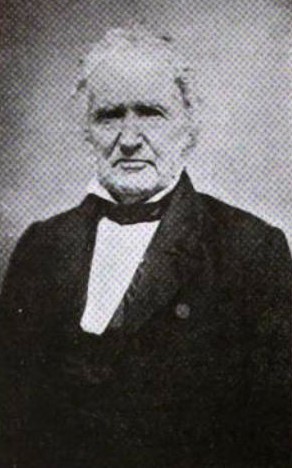
Historical · U.S. House · North Carolina · District 6
Weldon Edwards
Former U.S. Representative · North Carolina District 6 · 1815–1827 · Jackson
Weldon Edwards represented North Carolina's District 6 in the United States House of Representatives (1815–1827) for the Jackson party. The page below collects sourced biographical facts, term history, committee roles, and provenance for Edwards.
Bioguide ID: E000083
Key facts
- Full name
- Weldon Edwards
- State
- North Carolina
- District
- District 6
- Party
- Jackson
- House service
- 1815–1827
- First House term
- 1815
- Status
- Left office
- Current term ends
- —
- Born
- 1788
- Bioguide ID
- E000083
- Committee assignments
- —
- Dataset version
- 1.20260606
Biographical narrative
935 words · sourced from the Wikipedia REST extract
Weldon Edwards was a prominent political figure in early 19th-century America, serving as a U.S. Representative from North Carolina. His political career spanned over a decade in the U.S. House of Representatives, where he was affiliated with various political factions, including the Republican Party, the Crawford Republicans, and the Jacksonians. Edwards's legislative work and leadership roles in Congress reflected his commitment to public service during a formative period in American history. After his congressional tenure, he continued to engage in state politics and played a significant role in the political landscape of North Carolina.
Early life and career
Weldon Edwards was born on January 25, 1788, in Gaston County, North Carolina. His early education took place at Warrenton Academy, where he developed a foundation in law that would serve him well in his future career. After completing his studies, Edwards was admitted to the bar in 1810, allowing him to begin practicing law in Warrenton, North Carolina. His legal career likely provided him with valuable experience in public affairs and governance, which would later inform his political endeavors.
Before entering Congress, Edwards's political career began at the state level. He served as a member of the North Carolina House of Representatives in 1814 and 1815. This experience in the state legislature helped him build a network of political connections and gain insight into the legislative process, preparing him for his subsequent role in the U.S. Congress. His tenure in the state house was characterized by a commitment to the interests of his constituents and the broader goals of his political party.
House tenure
Weldon Edwards's congressional career began when he was elected to the U.S. House of Representatives on February 7, 1816, to fill a vacancy created by the resignation of Nathaniel Macon. He was elected as a Republican, a party that was dominant in the early 19th century and focused on principles such as agrarianism and states' rights. Edwards was subsequently reelected to the Fifteenth, Sixteenth, and Seventeenth Congresses, demonstrating his ability to maintain the support of his constituents over multiple election cycles.
During his time in Congress, Edwards was involved in significant legislative activities and served on various committees. His leadership roles included serving as the chairman of the Committee on Expenditures in the Department of the Treasury during the Eighteenth Congress and as the chairman of the Committee on Public Expenditures during the Nineteenth Congress. These positions allowed him to influence fiscal policy and oversight of government spending, which were critical issues during his tenure.
Edwards's political affiliations evolved over time. He was initially elected as a Republican but later aligned with the Crawford Republicans, a faction that emerged within the party. Eventually, he became associated with the Jacksonian movement, which was characterized by its populist approach and emphasis on the common man's interests. This shift in political alignment reflected the changing dynamics within American politics during the early 19th century.
Despite his successful congressional career, Edwards chose not to seek reelection in 1826. Instead, he decided to return to his plantation, indicating a preference for a more private life after years of public service. His decision to step away from politics at this time marked the end of his direct involvement in the legislative process at the federal level.
Legislative focus and committees
Throughout his congressional tenure, Weldon Edwards's legislative focus was shaped by the political and economic issues of his time. As a member of the House, he participated in discussions and debates that addressed the needs and concerns of his constituents in North Carolina, as well as broader national issues. His work on the Committee on Expenditures in the Department of the Treasury and the Committee on Public Expenditures underscored his engagement with fiscal matters, which were of paramount importance in the early years of the republic.
The early 19th century was a period marked by significant economic growth and expansion in the United States, alongside challenges such as infrastructure development and the management of public funds. Edwards's role on these committees allowed him to contribute to the oversight of government spending and ensure that resources were allocated effectively. His leadership in these areas reflected his commitment to responsible governance and fiscal accountability.
In addition to his committee work, Edwards's political career was marked by his ability to navigate the shifting political landscape of his time. The early 1800s saw the emergence of new political factions and the reconfiguration of existing parties, which influenced legislative priorities and strategies. Edwards's adaptability to these changes, as evidenced by his transitions between political affiliations, demonstrated his understanding of the evolving nature of American politics.
After concluding his congressional service, Edwards continued to be active in state politics. He served in the North Carolina Senate from 1833 to 1844 and participated in the state constitutional convention in 1835. His reelection to the state senate in 1850 and subsequent selection as its speaker highlighted his ongoing influence in North Carolina politics. Furthermore, his role as president of the state secession convention in 1861 positioned him at a critical juncture in the state's history during the Civil War era.
Weldon Edwards passed away on December 18, 1873, in Warren County, North Carolina. He was interred in a private cemetery at his home, "Poplar Mount," located approximately twelve miles from Warrenton. His life and career reflect the complexities of American political development in the early 19th century, as well as the challenges and opportunities faced by public servants during that era. Edwards's legacy is intertwined with the history of North Carolina and the broader narrative of the United States during a transformative period.
Notable legislation
Sponsored and co-sponsored legislation for Weldon Edwards is pending operator curation. The biographical narrative above carries the same provenance trail until per-bill rows are written.
Sources
- [1]https://en.wikipedia.org/wiki/Weldon_Nathaniel_EdwardsWikipedia · retrieved 2026-06-06
Notable quotes
Sourced quotes for Weldon Edwards are pending operator curation. Narrative-scope provenance remains attached below.
Sources
- [1]https://en.wikipedia.org/wiki/Weldon_Nathaniel_EdwardsWikipedia · retrieved 2026-06-06
Key positions
Curated policy positions for Weldon Edwards are pending operator review. The biographical narrative above carries the same provenance trail until per-topic positions are written.
Sources
- [1]https://en.wikipedia.org/wiki/Weldon_Nathaniel_EdwardsWikipedia · retrieved 2026-06-06
Terms served
- 1815–1817U.S. House · Term 1 · Republican
- 1817–1819U.S. House · Term 2 · Republican
- 1819–1821U.S. House · Term 3 · Republican
- 1821–1823U.S. House · Term 4 · Republican
- 1823–1825U.S. House · Term 5 · Republican
- 1825–1827U.S. House · Term 6 · Jackson
Sources & provenance
Every attributable claim above carries a per-section [N] marker that resolves to the corresponding URL below. Each entry records the upstream provider, the canonical URL, and the timestamp at which the source was retrieved by the ingest pipeline.
Key facts
- https://bioguide.congress.gov/search/bio/E000083bioguide · retrieved 2026-06-06
- https://www.govtrack.us/congress/members/403775govtrack · retrieved 2026-06-06
Biographical narrative
- https://en.wikipedia.org/wiki/Weldon_Nathaniel_Edwardswikipedia · retrieved 2026-06-06
Find your representative
Every U.S. state elects representatives by district. Browse North Carolina’s delegation, the full former-representative roster, or explore the role and term length.
Related on The Candidate
- Preceded by William HillEarlier holder of the North Carolina District 6 House seat · Federalist.Open
- Succeeded by Daniel TurnerLater holder of the North Carolina District 6 House seat · Jackson.Open
- Alfred GatlinFormer U.S. Representative · North Carolina District 1 · Crawford RepublicanOpen
- Clinton CobbFormer U.S. Representative · North Carolina District 1 · RepublicanOpen
- Eva ClaytonFormer U.S. Representative · North Carolina District 1 · DemocraticOpen
- Frank Ballance Jr.Former U.S. Representative · North Carolina District 1 · DemocraticOpen