
Historical · U.S. House · North Carolina · District 8
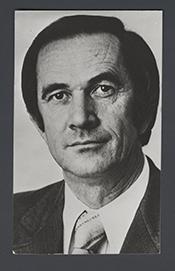
Bill Hefner
Former U.S. Representative · North Carolina District 8 · 1975–1999 · Democratic
Bill Hefner represented North Carolina's District 8 in the United States House of Representatives (1975–1999) for the Democratic party. The page below collects sourced biographical facts, term history, committee roles, and provenance for Hefner.
Bioguide ID: H000448
Key facts
- Full name
- Bill Hefner
- State
- North Carolina
- District
- District 8
- Party
- Democratic
- House service
- 1975–1999
- First House term
- 1975
- Status
- Left office
- Current term ends
- —
- Born
- 1930
- Bioguide ID
- H000448
- Committee assignments
- —
- Dataset version
- 1.20260605
Biographical narrative
893 words · sourced from the Wikipedia REST extract
W. G. (Bill) Hefner was a prominent American politician and radio personality who served as a Democratic U.S. Representative for North Carolina's 8th congressional district from 1975 until 1999. His lengthy tenure in Congress spanned twelve terms, during which he became known for his advocacy on behalf of veterans and his involvement in various community and media initiatives. Hefner's contributions to his constituents and his post-congressional career reflect a commitment to public service that extended beyond his time in office.
Early life and career
Bill Hefner was born on April 11, 1930, in Elora, Tennessee. He completed his high school education in Sardis, Alabama, before pursuing higher education at the University of Alabama. Following his studies, Hefner ventured into the media industry, ultimately becoming the president and owner of WRKB, a radio station located in Kannapolis, North Carolina. His career in radio not only showcased his business acumen but also his ability to connect with the community through broadcasting.
In addition to his work in radio, Hefner was actively involved in the arts, particularly in music. He was a member of the Harvesters Quartet, a gospel music group that performed in North Carolina from 1954 to 1967. This experience in the entertainment field contributed to his public persona and helped him build relationships within the community. Hefner's television appearances on various North Carolina channels further established his presence in the state, allowing him to engage with a broader audience.
Hefner's transition into politics began in the early 1970s, culminating in his election to the U.S. House of Representatives in 1974. He successfully ran as a Democrat, marking the beginning of a significant political career that would last for nearly a quarter of a century. His election to the 94th Congress was a pivotal moment, as it set the stage for his long-term influence in Washington, D.C.
House tenure
Bill Hefner's congressional career began on January 3, 1975, when he took office as a member of the U.S. House of Representatives. Over the course of his twelve terms, he became a well-known figure in North Carolina politics. Hefner's tenure in Congress was characterized by a focus on issues pertinent to his constituents, particularly those related to veterans' affairs, education, and community development.
During his time in office, Hefner participated in various legislative initiatives and worked on numerous committees that aligned with his interests and the needs of his district. His commitment to serving the interests of veterans was particularly notable, as he sought to improve healthcare and support services for those who had served in the military. This advocacy culminated in the renaming of the Veterans Affairs Medical Center in Salisbury, North Carolina, in his honor on April 16, 1999, shortly before he retired from Congress.
Hefner's approach to governance was marked by a dedication to addressing the needs of his constituents. He often engaged with local leaders and organizations to understand the challenges facing his district. His ability to connect with the community and advocate for their concerns contributed to his sustained electoral success throughout his career.
After serving in Congress for nearly 24 years, Hefner concluded his final term on January 3, 1999. His retirement marked the end of an era in North Carolina politics, as he had become a familiar and respected figure in the state. Following his departure from Congress, Hefner continued to be active in public service at the local level.
Legislative focus and committees
Throughout his congressional career, Bill Hefner was involved in various legislative efforts that reflected his priorities and the interests of his constituents. His primary focus was on veterans' affairs, an area in which he was particularly passionate. Hefner worked diligently to advocate for policies that would enhance the quality of life for veterans and their families, ensuring they received the support and recognition they deserved for their service.
In addition to veterans' issues, Hefner's legislative agenda included a commitment to education and community development. He recognized the importance of investing in education as a means of fostering economic growth and improving the lives of his constituents. His efforts in this area were aimed at ensuring access to quality education and resources for students and families within his district.
Hefner's involvement in various congressional committees allowed him to influence policy on a broader scale. His participation in these committees provided him with the opportunity to advocate for legislation that aligned with his priorities and the needs of his constituents. Through his committee work, he was able to engage with fellow lawmakers and collaborate on initiatives that would benefit the community.
After retiring from Congress, Hefner continued to serve the public in different capacities. He moved to Alabama with his wife, Nancy, where he took on the role of District One commissioner for Marshall County from October 2001 until November 2002. This position allowed him to remain engaged in public service and contribute to local governance.
Bill Hefner passed away on September 2, 2009, in Huntsville, Alabama, after suffering a brain aneurysm. His legacy continues to be remembered in North Carolina, where an elementary school is named in his honor, reflecting the impact he had on his community and the lives of those he served. Hefner's career in public service, marked by his dedication to veterans and his commitment to education and community development, remains a significant part of North Carolina's political history.
Notable legislation
Sponsored and co-sponsored legislation for Bill Hefner is pending operator curation. The biographical narrative above carries the same provenance trail until per-bill rows are written.
Sources
- [1]https://en.wikipedia.org/wiki/Bill_HefnerWikipedia · retrieved 2026-06-05
Notable quotes
Sourced quotes for Bill Hefner are pending operator curation. Narrative-scope provenance remains attached below.
Sources
- [1]https://en.wikipedia.org/wiki/Bill_HefnerWikipedia · retrieved 2026-06-05
Key positions
Curated policy positions for Bill Hefner are pending operator review. The biographical narrative above carries the same provenance trail until per-topic positions are written.
Sources
- [1]https://en.wikipedia.org/wiki/Bill_HefnerWikipedia · retrieved 2026-06-05
Terms served
- 1975–1977U.S. House · Term 1 · Democratic
- 1977–1979U.S. House · Term 2 · Democratic
- 1979–1981U.S. House · Term 3 · Democratic
- 1981–1983U.S. House · Term 4 · Democratic
- 1983–1985U.S. House · Term 5 · Democratic
- 1985–1987U.S. House · Term 6 · Democratic
- 1987–1989U.S. House · Term 7 · Democratic
- 1989–1991U.S. House · Term 8 · Democratic
- 1991–1993U.S. House · Term 9 · Democratic
- 1993–1995U.S. House · Term 10 · Democratic
- 1995–1997U.S. House · Term 11 · Democratic
- 1997–1999U.S. House · Term 12 · Democratic
Sources & provenance
Every attributable claim above carries a per-section [N] marker that resolves to the corresponding URL below. Each entry records the upstream provider, the canonical URL, and the timestamp at which the source was retrieved by the ingest pipeline.
Key facts
- https://bioguide.congress.gov/search/bio/H000448bioguide · retrieved 2026-06-05
- https://www.govtrack.us/congress/members/405313govtrack · retrieved 2026-06-05
Biographical narrative
- https://en.wikipedia.org/wiki/Bill_Hefnerwikipedia · retrieved 2026-06-05
Find your representative
Every U.S. state elects representatives by district. Browse North Carolina’s delegation, the full former-representative roster, or explore the role and term length.
Related on The Candidate
- Preceded by Earl RuthEarlier holder of the North Carolina District 8 House seat · Republican.Open
- Succeeded by Robin HayesLater holder of the North Carolina District 8 House seat · Republican.Open
- Alfred GatlinFormer U.S. Representative · North Carolina District 1 · Crawford RepublicanOpen
- Clinton CobbFormer U.S. Representative · North Carolina District 1 · RepublicanOpen
- Eva ClaytonFormer U.S. Representative · North Carolina District 1 · DemocraticOpen
- Frank Ballance Jr.Former U.S. Representative · North Carolina District 1 · DemocraticOpen