
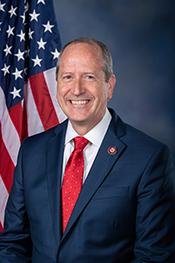
Historical · U.S. House · North Carolina · District 8
Dan Bishop
Former U.S. Representative · North Carolina District 8 · 2019–2025 · Republican
Dan Bishop represented North Carolina's District 8 in the United States House of Representatives (2019–2025) for the Republican party. The page below collects sourced biographical facts, term history, committee roles, and provenance for Bishop.
Bioguide ID: B001311
Key facts
- Full name
- Dan Bishop
- State
- North Carolina
- District
- District 8
- Party
- Republican
- House service
- 2019–2025
- First House term
- 2019
- Status
- Left office
- Current term ends
- —
- Born
- 1964
- Bioguide ID
- B001311
- Committee assignments
- —
- Dataset version
- 1.20260603
Biographical narrative
866 words · sourced from the Wikipedia REST extract
James Daniel Bishop is an American attorney and politician who served as a U.S. Representative for North Carolina's 8th congressional district from 2019 until 2025. A member of the Republican Party, he has held various political positions, including state senator and member of the North Carolina House of Representatives. Bishop is known for his involvement in significant legislative initiatives and has played a prominent role in state and national politics, particularly surrounding issues of public policy and governance.
Early life and career
Dan Bishop was born on July 1, 1964. He pursued higher education at the University of North Carolina at Chapel Hill, where he earned a Bachelor of Science degree in business administration in 1986. Following this, he attended the University of North Carolina School of Law, graduating with a Juris Doctor degree in 1990. His academic background laid the foundation for his career in law and politics.
Bishop began his political career as a member of the Mecklenburg County Commission, serving from 2005 to 2009. After a brief hiatus from elected office, he returned to politics in 2015 when he was elected to the North Carolina House of Representatives, representing District 104. During his term, he succeeded Ruth Samuelson, who retired from the House. Bishop's tenure in the state legislature was relatively short, lasting until 2017, but it marked the beginning of his ascent in North Carolina politics.
In November 2016, Bishop was elected to the North Carolina State Senate, representing District 39. He won the election with a majority of the votes, defeating his Democratic opponent Lloyd Scher. During his time in the State Senate, Bishop was active in various legislative committees, including serving as co-chair of the Select Committee on Judicial Reform and Redistricting and as vice-chair of the Select Committee on Elections. His legislative work during this period contributed to his growing influence within the Republican Party in North Carolina.
House tenure
Bishop's congressional career began with a special election in 2019 for North Carolina's 9th congressional district. The election was necessitated by irregularities in the previous election, which had led to the results being thrown out. Bishop won the Republican primary with a plurality of the votes and subsequently defeated Democrat Dan McCready in the general election held on September 10, 2019. His victory was notable for the narrow margin, as he garnered 50.7% of the vote compared to McCready's 48.7%. This election was particularly significant given the district's historical Republican leanings, having been represented by the party since its configuration as a Charlotte-based district in 1963.
Following his initial election, Bishop continued to serve in the U.S. House of Representatives, winning re-election in 2022 with a substantial majority. His electoral success in 2022 reflected his established presence in the district and the support he garnered from constituents. However, after completing his third term in Congress, he chose not to seek re-election in 2024, instead running for the position of attorney general, a campaign that ultimately did not succeed.
Legislative focus and committees
During his time in the U.S. House of Representatives, Bishop was involved in a range of legislative initiatives and served on various committees that aligned with his political priorities. His legislative focus included issues related to public policy, governance, and social matters. Notably, he was the lead author of North Carolina's Public Facilities Privacy & Security Act, commonly referred to as the "bathroom bill." This legislation aimed to restrict transgender individuals from using public restrooms that did not correspond to the sex listed on their birth certificates. The bill drew significant national attention and controversy, leading to economic repercussions for the state as businesses and organizations withdrew investments in response to the backlash.
Bishop's role in the passage of this legislation raised his profile within the Republican Party, and he utilized his support for the bill in various fundraising efforts. However, the backlash against the law was considerable, culminating in its repeal in 2017 after significant public outcry and economic impact. Bishop's response to the repeal included vocal opposition, where he expressed his views on the matter in public forums and communications.
In addition to his legislative work, Bishop's tenure in the House was marked by his participation in committees that shaped policy and governance at the federal level. His involvement in these committees allowed him to influence a variety of issues and engage with fellow lawmakers on both sides of the aisle. His political career has been characterized by a focus on conservative principles and a commitment to representing the interests of his constituents in North Carolina.
After concluding his service in Congress, Bishop transitioned to a role in the executive branch, being appointed as the deputy director of the Office of Management and Budget in 2025. He was later nominated and confirmed as the interim United States attorney for the Middle District of North Carolina, further extending his influence in public service.
Throughout his career, Dan Bishop has maintained a presence in North Carolina politics, navigating various roles and responsibilities while contributing to the legislative landscape of both the state and the nation. His experiences reflect a trajectory marked by significant political engagement and a commitment to the principles of his party.
Notable legislation
Sponsored and co-sponsored legislation for Dan Bishop is pending operator curation. The biographical narrative above carries the same provenance trail until per-bill rows are written.
Sources
- [1]https://en.wikipedia.org/wiki/Dan_BishopWikipedia · retrieved 2026-06-03
Notable quotes
Sourced quotes for Dan Bishop are pending operator curation. Narrative-scope provenance remains attached below.
Sources
- [1]https://en.wikipedia.org/wiki/Dan_BishopWikipedia · retrieved 2026-06-03
Key positions
Curated policy positions for Dan Bishop are pending operator review. The biographical narrative above carries the same provenance trail until per-topic positions are written.
Sources
- [1]https://en.wikipedia.org/wiki/Dan_BishopWikipedia · retrieved 2026-06-03
Terms served
- 2019–2021U.S. House · Term 1 · Republican
- 2021–2023U.S. House · Term 2 · Republican
- 2023–2025U.S. House · Term 3 · Republican
Sources & provenance
Every attributable claim above carries a per-section [N] marker that resolves to the corresponding URL below. Each entry records the upstream provider, the canonical URL, and the timestamp at which the source was retrieved by the ingest pipeline.
Key facts
- https://bioguide.congress.gov/search/bio/B001311bioguide · retrieved 2026-06-03
- https://danbishop.house.govhouse.gov · retrieved 2026-06-03
Biographical narrative
- https://en.wikipedia.org/wiki/Dan_Bishopwikipedia · retrieved 2026-06-03
Find your representative
Every U.S. state elects representatives by district. Browse North Carolina’s delegation, the full former-representative roster, or explore the role and term length.
Related on The Candidate
- Preceded by Larry KissellEarlier holder of the North Carolina District 8 House seat · Democratic.Open
- Alfred GatlinFormer U.S. Representative · North Carolina District 1 · Crawford RepublicanOpen
- Clinton CobbFormer U.S. Representative · North Carolina District 1 · RepublicanOpen
- Eva ClaytonFormer U.S. Representative · North Carolina District 1 · DemocraticOpen
- Frank Ballance Jr.Former U.S. Representative · North Carolina District 1 · DemocraticOpen
- Republican PartyFederal candidates and office holders on the Republican line.Open