
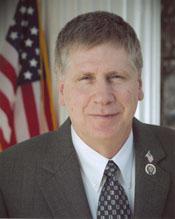
Historical · U.S. House · North Carolina · District 8
Larry Kissell
Former U.S. Representative · North Carolina District 8 · 2009–2013 · Democratic
Larry Kissell represented North Carolina's District 8 in the United States House of Representatives (2009–2013) for the Democratic party. The page below collects sourced biographical facts, term history, committee roles, and provenance for Kissell.
Bioguide ID: K000369
Key facts
- Full name
- Larry Kissell
- State
- North Carolina
- District
- District 8
- Party
- Democratic
- House service
- 2009–2013
- First House term
- 2009
- Status
- Left office
- Current term ends
- —
- Born
- 1951
- Bioguide ID
- K000369
- Committee assignments
- —
- Dataset version
- 1.20260605
Biographical narrative
836 words · sourced from the Wikipedia REST extract
Larry Kissell is a former U.S. Representative who served North Carolina's 8th congressional district from 2009 to 2013. A member of the Democratic Party, Kissell's political career was marked by a focus on local issues and a commitment to his constituents. His tenure in Congress included significant electoral challenges and a diverse legislative agenda, reflecting the complexities of representing a district that spanned from Charlotte to Fayetteville.
Early life and career
Larry Kissell was born on January 31, 1951, in Biscoe, North Carolina, where he spent most of his life. He graduated from Wake Forest University in 1973, earning a degree in economics. Following his education, Kissell began his career at Union Carbide as a manager. However, he transitioned to the textile industry, working at a hosiery factory for 27 years, where he eventually rose to the position of production manager. His experiences in the textile sector led him to become increasingly concerned about the implications of the North American Free Trade Agreement (NAFTA) on the industry, prompting him to resign from his managerial role in 2001.
After leaving the hosiery plant, which ultimately closed in 2003, Kissell took on a new role as a social studies teacher at East Montgomery High School, his former high school. This shift from the corporate world to education reflected his commitment to community service and engagement with local youth.
House tenure
Kissell's political career began in earnest when he ran for the Democratic nomination in North Carolina's 8th congressional district in 2006. He won a competitive four-way primary, securing 53 percent of the vote. In the general election, he faced incumbent Republican Robin Hayes, who had held the seat for four terms. The election was closely contested, with the outcome uncertain for several weeks due to recounts. Ultimately, Kissell lost by a narrow margin of 329 votes, having won six of the district's nine counties but unable to overcome a significant deficit in Cabarrus County, which was Hayes's stronghold. Following this defeat, Kissell announced his intention to run again in 2008.
In the 2008 election, Kissell received support from the Democratic Congressional Campaign Committee, which recognized his potential after his near victory in the previous election. Despite facing scrutiny over his campaign practices, including allegations regarding unpaid employment taxes for campaign workers, Kissell won the election against Hayes by a margin of 55 percent to 45 percent. This victory marked a significant shift in the district, returning the seat to Democratic control after a long Republican tenure.
Kissell's first term in Congress began in January 2009. He quickly made headlines by co-sponsoring a bill aimed at reversing a planned Congressional pay raise. His legislative efforts included a provision requiring the Transportation Security Administration to purchase uniforms made in the United States, reflecting his focus on domestic manufacturing and job creation.
In the 2010 election, Kissell faced Republican Harold Johnson, a former sportscaster. Despite some challenges, including opposition from within his party regarding his stance on health care reform, Kissell secured re-election, receiving 53 percent of the vote.
However, the political landscape shifted dramatically in 2011 due to redistricting, which altered the demographics of Kissell's district, making it more Republican. The new boundaries resulted in the loss of significant portions of Charlotte and Fayetteville, while incorporating more conservative areas. In the 2012 election, Kissell faced Republican Richard Hudson. His support within the Democratic Party waned, particularly among progressive constituents, leading to a loss in the general election.
Legislative focus and committees
During his time in Congress, Kissell was involved in various legislative initiatives and served on multiple committees. He was a member of the Committee on Agriculture, where he participated in the Subcommittee on Rural Development, Research, Biotechnology, and Foreign Agriculture. Additionally, he served on the Committee on Armed Services, contributing to the Subcommittee on Tactical Air and Land Forces and the Subcommittee on Readiness. His committee assignments reflected a focus on both agricultural issues and national defense, highlighting his commitment to addressing the needs of his constituents in these areas.
Kissell was also a member of the Congressional Arts Caucus, indicating an interest in promoting the arts and cultural initiatives within his district and beyond. His legislative priorities often aligned with the interests of his constituents, particularly in areas related to economic development and job creation.
Throughout his congressional career, Kissell faced challenges in balancing the expectations of his constituents with the realities of legislative decision-making. His votes on key issues, such as health care reform, drew both support and criticism. While he initially voted against the Patient Protection and Affordable Care Act, he later voted against efforts to repeal it, which led to discontent among some constituents who felt that his actions did not align with their expectations.
Kissell's tenure in the U.S. House of Representatives concluded on January 3, 2013, following his defeat in the 2012 election. His political career, characterized by grassroots support and a focus on local issues, reflects the complexities of representing a diverse constituency in a rapidly changing political landscape.
Notable legislation
Sponsored and co-sponsored legislation for Larry Kissell is pending operator curation. The biographical narrative above carries the same provenance trail until per-bill rows are written.
Sources
- [1]https://en.wikipedia.org/wiki/Larry_KissellWikipedia · retrieved 2026-06-05
Notable quotes
Sourced quotes for Larry Kissell are pending operator curation. Narrative-scope provenance remains attached below.
Sources
- [1]https://en.wikipedia.org/wiki/Larry_KissellWikipedia · retrieved 2026-06-05
Key positions
Curated policy positions for Larry Kissell are pending operator review. The biographical narrative above carries the same provenance trail until per-topic positions are written.
Sources
- [1]https://en.wikipedia.org/wiki/Larry_KissellWikipedia · retrieved 2026-06-05
Terms served
- 2009–2011U.S. House · Term 1 · Democratic
- 2011–2013U.S. House · Term 2 · Democratic
Sources & provenance
Every attributable claim above carries a per-section [N] marker that resolves to the corresponding URL below. Each entry records the upstream provider, the canonical URL, and the timestamp at which the source was retrieved by the ingest pipeline.
Key facts
- https://bioguide.congress.gov/search/bio/K000369bioguide · retrieved 2026-06-05
- http://kissell.house.govhouse.gov · retrieved 2026-06-05
Biographical narrative
- https://en.wikipedia.org/wiki/Larry_Kissellwikipedia · retrieved 2026-06-05
Find your representative
Every U.S. state elects representatives by district. Browse North Carolina’s delegation, the full former-representative roster, or explore the role and term length.
Related on The Candidate
- Preceded by Robin HayesEarlier holder of the North Carolina District 8 House seat · Republican.Open
- Succeeded by Dan BishopLater holder of the North Carolina District 8 House seat · Republican.Open
- Alfred GatlinFormer U.S. Representative · North Carolina District 1 · Crawford RepublicanOpen
- Clinton CobbFormer U.S. Representative · North Carolina District 1 · RepublicanOpen
- Eva ClaytonFormer U.S. Representative · North Carolina District 1 · DemocraticOpen
- Frank Ballance Jr.Former U.S. Representative · North Carolina District 1 · DemocraticOpen