
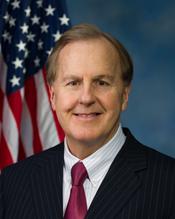
Historical · U.S. House · North Carolina · District 9
Robert Pittenger
Former U.S. Representative · North Carolina District 9 · 2013–2019 · Republican
Robert Pittenger represented North Carolina's District 9 in the United States House of Representatives (2013–2019) for the Republican party. The page below collects sourced biographical facts, term history, committee roles, and provenance for Pittenger.
Bioguide ID: P000606
Key facts
- Full name
- Robert Pittenger
- State
- North Carolina
- District
- District 9
- Party
- Republican
- House service
- 2013–2019
- First House term
- 2013
- Status
- Left office
- Current term ends
- —
- Born
- 1948
- Bioguide ID
- P000606
- Committee assignments
- —
- Dataset version
- 1.20260605
Biographical narrative
980 words · sourced from the Wikipedia REST extract
Robert Pittenger is a former U.S. Representative who served North Carolina's 9th congressional district from 2013 until 2019. A member of the Republican Party, Pittenger's political career includes significant roles at both the state and federal levels. His tenure in the U.S. House of Representatives was marked by a focus on various legislative initiatives, particularly in areas such as child protection, financial services, and conservative social policies. Before his time in Congress, Pittenger had a background in business and state politics, which shaped his approach to governance and policy-making.
Early life and career
Robert Pittenger was born on August 15, 1948, in Texas. He pursued higher education at the University of Texas, where he began to develop his interests in both business and community service. Following his graduation, Pittenger worked with Campus Crusade for Christ, an organization focused on evangelism and spiritual development. This early experience in a faith-based organization likely influenced his later political positions and community involvement.
In 1985, Pittenger relocated to Charlotte, North Carolina, where he transitioned into a career as a real estate investor. His business acumen in real estate would later inform his policy perspectives, particularly regarding economic development and fiscal responsibility. His entrepreneurial background provided him with insights into the challenges faced by businesses and the importance of creating a conducive environment for economic growth.
Pittenger's political career began in earnest when he was elected to the North Carolina Senate in 2002, representing the 40th district. His initial foray into politics was characterized by a commitment to conservative values and fiscal conservatism. He won his first election by defeating the incumbent Democratic State Senator Fountain Odom, which marked the beginning of his legislative career in North Carolina.
House tenure
Pittenger's journey to the U.S. House of Representatives began when he announced his candidacy for North Carolina's 9th congressional district in early 2012, following the retirement of incumbent Sue Myrick. In the Republican primary, he faced a crowded field of candidates but emerged as the frontrunner, securing 32% of the vote. This led to a runoff election, where he defeated former Mecklenburg County Sheriff Jim Pendergraph. Pittenger subsequently won the general election on November 6, 2012, against Democratic candidate Jennifer Roberts, marking his official entry into the U.S. Congress in January 2013.
During his time in the House, Pittenger served three full terms, concluding his tenure on January 3, 2019. His congressional district encompassed several suburban areas around Charlotte, including parts of Union and Iredell counties. His electoral success was notable, particularly in the context of the changing demographics and political landscape of the region.
Throughout his House tenure, Pittenger was involved in various legislative initiatives. One of his significant contributions was the introduction of the Kilah Davenport Child Protection Act of 2013, which aimed to enhance protections against domestic violence and child abuse. This legislation underscored his commitment to child welfare and safety, reflecting broader concerns about domestic violence in the United States.
In the 2014 election cycle, Pittenger faced no significant opposition from Democrats, which allowed him to focus on his legislative agenda and constituency services. He successfully won re-election, solidifying his position within the House. However, the political landscape shifted in subsequent elections, particularly in 2016 when he faced a primary challenge from Baptist pastor Mark Harris. This contest was closely contested, with Pittenger narrowly defeating Harris by a small margin.
The 2018 election cycle proved to be more challenging for Pittenger. He faced Harris again in a rematch during the Republican primary, where he was ultimately defeated. This loss marked a significant moment in his political career, as he became the first congressional incumbent to lose a primary election in that cycle. The aftermath of the election was complicated by allegations of electoral fraud related to Harris's campaign, leading to a special election that Pittenger chose not to contest.
Legislative focus and committees
During his time in the U.S. House of Representatives, Pittenger served on several key committees that shaped his legislative priorities. He was a member of the Committee on Financial Services, where he participated in discussions and decisions regarding banking, housing, and insurance policy. His involvement in this committee reflected his background in business and finance, allowing him to advocate for policies that aligned with his economic views.
Pittenger also served on subcommittees focused on financial institutions and consumer credit, as well as monetary policy and trade. These roles enabled him to engage with critical issues affecting the economy and the financial well-being of his constituents. His participation in the Republican Study Committee further highlighted his alignment with conservative fiscal policies and his commitment to advancing a conservative agenda within Congress.
In addition to his committee work, Pittenger was a member of the United States Congressional International Conservation Caucus and the U.S.-Japan Caucus, indicating his interest in international relations and environmental issues. His legislative focus included a range of topics, from child protection to economic policy, reflecting a diverse set of priorities during his time in office.
Pittenger's political positions were generally aligned with conservative values. He received a lifetime evaluation of 90% from the American Conservative Union, indicating a strong commitment to conservative principles. His stance on environmental issues included skepticism regarding the scientific consensus on climate change, which he expressed during his time in the North Carolina Senate.
In health care, Pittenger supported the American Health Care Act of 2017, which aimed to repeal and replace the Affordable Care Act. His advocacy for this legislation was part of a broader Republican effort to reshape health care policy at the national level.
Overall, Robert Pittenger's career in the U.S. House of Representatives was characterized by a commitment to conservative values, a focus on financial services and child protection legislation, and active participation in various committees that shaped national policy. His tenure concluded in 2019, marking the end of a significant chapter in his political journey.
Notable legislation
Sponsored and co-sponsored legislation for Robert Pittenger is pending operator curation. The biographical narrative above carries the same provenance trail until per-bill rows are written.
Sources
- [1]https://en.wikipedia.org/wiki/Robert_PittengerWikipedia · retrieved 2026-06-05
Notable quotes
Sourced quotes for Robert Pittenger are pending operator curation. Narrative-scope provenance remains attached below.
Sources
- [1]https://en.wikipedia.org/wiki/Robert_PittengerWikipedia · retrieved 2026-06-05
Key positions
Curated policy positions for Robert Pittenger are pending operator review. The biographical narrative above carries the same provenance trail until per-topic positions are written.
Sources
- [1]https://en.wikipedia.org/wiki/Robert_PittengerWikipedia · retrieved 2026-06-05
Terms served
- 2013–2015U.S. House · Term 1 · Republican
- 2015–2017U.S. House · Term 2 · Republican
- 2017–2019U.S. House · Term 3 · Republican
Sources & provenance
Every attributable claim above carries a per-section [N] marker that resolves to the corresponding URL below. Each entry records the upstream provider, the canonical URL, and the timestamp at which the source was retrieved by the ingest pipeline.
Key facts
- https://bioguide.congress.gov/search/bio/P000606bioguide · retrieved 2026-06-05
- https://pittenger.house.govhouse.gov · retrieved 2026-06-05
Biographical narrative
- https://en.wikipedia.org/wiki/Robert_Pittengerwikipedia · retrieved 2026-06-05
Find your representative
Every U.S. state elects representatives by district. Browse North Carolina’s delegation, the full former-representative roster, or explore the role and term length.
Related on The Candidate
- Preceded by Sue MyrickEarlier holder of the North Carolina District 9 House seat · Republican.Open
- Alfred GatlinFormer U.S. Representative · North Carolina District 1 · Crawford RepublicanOpen
- Clinton CobbFormer U.S. Representative · North Carolina District 1 · RepublicanOpen
- Eva ClaytonFormer U.S. Representative · North Carolina District 1 · DemocraticOpen
- Frank Ballance Jr.Former U.S. Representative · North Carolina District 1 · DemocraticOpen
- Republican PartyFederal candidates and office holders on the Republican line.Open