
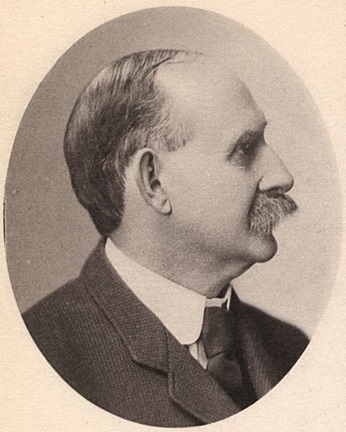
Historical · U.S. House · Nebraska · District 1
Jesse Strode
Former U.S. Representative · Nebraska District 1 · 1895–1899 · Republican
Jesse Strode represented Nebraska's District 1 in the United States House of Representatives (1895–1899) for the Republican party. The page below collects sourced biographical facts, term history, committee roles, and provenance for Strode.
Bioguide ID: S001007
Key facts
- Full name
- Jesse Strode
- State
- Nebraska
- District
- District 1
- Party
- Republican
- House service
- 1895–1899
- First House term
- 1895
- Status
- Left office
- Current term ends
- —
- Born
- 1845
- Bioguide ID
- S001007
- Committee assignments
- —
- Dataset version
- 1.20260606
Biographical narrative
909 words · sourced from the Wikipedia REST extract
Jesse Strode was an American politician and member of the Republican Party who served as a U.S. Representative for Nebraska's 1st congressional district. His political career spanned several decades, during which he held various roles at both the local and national levels. Strode's tenure in the U.S. House of Representatives included two terms, during which he contributed to the legislative process in the post-Civil War era. After leaving Congress, he continued to engage in public service and legal practice until his death in 1924.
Early life and career
Jesse Strode was born on February 18, 1845, in Fulton County, Illinois. He grew up in a region that would later become significant in American history, particularly during the Civil War. Strode pursued higher education at Abingdon College in Abingdon, Illinois, an institution that would later merge with Eureka College. His academic background laid the foundation for his future endeavors in law and public service.
The outbreak of the American Civil War prompted Strode to enlist in the military. He joined Company G of the Fiftieth Regiment of the Illinois Volunteer Infantry, serving from September 10, 1861, until the conclusion of the war. His military service during this tumultuous period not only shaped his character but also instilled in him a sense of duty and commitment to his country.
Following the war, Strode returned to Abingdon, where he began his career in education. He served as the principal of local schools from 1865 to 1873, a role that allowed him to influence the lives of many young students in the community. His dedication to education and public service was further demonstrated through his election to the city council six times and his two terms as mayor. These positions provided him with valuable experience in governance and community leadership.
In pursuit of a legal career, Strode moved to Plattsmouth, Nebraska, where he studied law and successfully passed the bar examination in 1879. His legal practice began shortly thereafter, marking the start of a new chapter in his professional life. Strode's legal expertise led him to serve as the district attorney for the region from 1882 to 1888. In 1887, he relocated to Lincoln, Nebraska, where he continued to build his career in law and public service.
Strode's judicial career began in 1892 when he was appointed as a district court judge. This role further solidified his reputation as a respected figure in the legal community and provided him with insights into the workings of the judicial system. His experiences in both education and law prepared him for a transition into the political arena, where he would eventually serve in the U.S. Congress.
House tenure
Jesse Strode's political career reached a significant milestone when he was elected to the Fifty-fourth United States Congress, representing Nebraska's 1st congressional district. His first term in the House of Representatives began in 1895, a period marked by various national challenges and changes. Strode's election to Congress was a reflection of his established reputation and the support he garnered from constituents in Nebraska.
During his time in the House, Strode was reelected to the Fifty-fifth United States Congress, allowing him to continue his legislative work. His tenure in Congress coincided with a period of significant growth and development in the United States, as the nation was recovering from the Civil War and experiencing rapid industrialization. Strode's contributions during this time were part of the broader efforts to address the needs and concerns of a changing society.
Despite his success in Congress, Strode chose not to seek reelection in 1898. Instead, he returned to Nebraska, where he took on the role of prosecuting attorney for the third district of Nebraska. This decision marked a shift in his career, as he transitioned from national politics back to local legal practice. His work as a prosecutor allowed him to continue serving the public and addressing legal matters within his community.
Legislative focus and committees
While specific details regarding Strode's legislative focus and committee assignments during his time in Congress are not provided, it can be inferred that his background in law and public service likely influenced his priorities as a legislator. Given the era in which he served, Strode would have been involved in discussions and decisions related to post-war reconstruction, economic development, and the expansion of infrastructure, which were critical issues of the time.
Strode's experience as a district court judge and district attorney would have equipped him with a unique perspective on legal and judicial matters, potentially guiding his contributions to legislation related to the justice system and public policy. His commitment to public service, demonstrated through his various roles in education, local government, and law, suggests that he was likely focused on issues that affected the welfare of his constituents and the broader community.
After concluding his congressional service, Strode remained active in public life. He was appointed as the department commander of the Grand Army of the Republic in 1919 and 1920, an organization that supported veterans and their families. This role further exemplified his dedication to serving those who had served the nation.
Jesse Strode passed away on November 10, 1924, in Lincoln, Nebraska. His contributions to his community, state, and nation are remembered as part of the historical narrative of American politics during the late 19th and early 20th centuries. He was laid to rest in Wyuka Cemetery, leaving behind a legacy of public service and commitment to the principles of democracy.
Notable legislation
Sponsored and co-sponsored legislation for Jesse Strode is pending operator curation. The biographical narrative above carries the same provenance trail until per-bill rows are written.
Sources
- [1]https://en.wikipedia.org/wiki/Jesse_B._StrodeWikipedia · retrieved 2026-06-06
Notable quotes
Sourced quotes for Jesse Strode are pending operator curation. Narrative-scope provenance remains attached below.
Sources
- [1]https://en.wikipedia.org/wiki/Jesse_B._StrodeWikipedia · retrieved 2026-06-06
Key positions
Curated policy positions for Jesse Strode are pending operator review. The biographical narrative above carries the same provenance trail until per-topic positions are written.
Sources
- [1]https://en.wikipedia.org/wiki/Jesse_B._StrodeWikipedia · retrieved 2026-06-06
Terms served
- 1895–1897U.S. House · Term 1 · Republican
- 1897–1899U.S. House · Term 2 · Republican
Sources & provenance
Every attributable claim above carries a per-section [N] marker that resolves to the corresponding URL below. Each entry records the upstream provider, the canonical URL, and the timestamp at which the source was retrieved by the ingest pipeline.
Key facts
- https://bioguide.congress.gov/search/bio/S001007bioguide · retrieved 2026-06-06
- https://www.govtrack.us/congress/members/410464govtrack · retrieved 2026-06-06
Biographical narrative
- https://en.wikipedia.org/wiki/Jesse_B._Strodewikipedia · retrieved 2026-06-06
Find your representative
Every U.S. state elects representatives by district. Browse Nebraska’s delegation, the full former-representative roster, or explore the role and term length.
Related on The Candidate
- Preceded by William BryanEarlier holder of the Nebraska District 1 House seat · Democratic.Open
- Succeeded by Ernest PollardLater holder of the Nebraska District 1 House seat · Republican.Open
- Archibald WeaverFormer U.S. Representative · Nebraska District 1 · RepublicanOpen
- Charles ReavisFormer U.S. Representative · Nebraska District 1 · RepublicanOpen
- Charles ThoneFormer U.S. Representative · Nebraska District 1 · RepublicanOpen
- Clair CallanFormer U.S. Representative · Nebraska District 1 · DemocraticOpen