
Historical · U.S. House · Nebraska · District 2
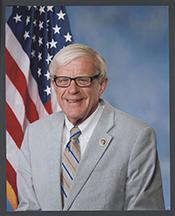
Brad Ashford
Former U.S. Representative · Nebraska District 2 · 2015–2017 · Democratic
Brad Ashford represented Nebraska's District 2 in the United States House of Representatives (2015–2017) for the Democratic party. The page below collects sourced biographical facts, term history, committee roles, and provenance for Ashford.
Bioguide ID: A000373
Key facts
- Full name
- Brad Ashford
- State
- Nebraska
- District
- District 2
- Party
- Democratic
- House service
- 2015–2017
- First House term
- 2015
- Status
- Left office
- Current term ends
- —
- Born
- 1949
- Bioguide ID
- A000373
- Committee assignments
- —
- Dataset version
- 1.20260605
Biographical narrative
871 words · sourced from the Wikipedia REST extract
John Bradley Ashford was an American politician who served as a U.S. Representative for Nebraska's 2nd congressional district from 2015 to 2017. A member of the Democratic Party, he was notable for being the most recent Democrat to represent Nebraska in Congress. Prior to his tenure in the U.S. House of Representatives, Ashford had an extensive career in state politics, including service in the Nebraska Legislature. His political journey was marked by a series of elections and party affiliations, reflecting his evolving views and the political landscape of Nebraska.
Early life and career
Brad Ashford was born on November 10, 1949, in Omaha, Nebraska, to Don Ashford and Ellen Swanson. His father, a World War II veteran, served as a bomber and was awarded the Distinguished Flying Cross for his service. His mother, Ellen, was of Swedish descent; her family immigrated to the United States, and her father, Otto Swanson, was a businessman in Omaha who played a role in fostering interfaith dialogue through the establishment of the National Conference of Christians and Jews in response to local anti-Semitic sentiments.
Ashford completed his secondary education at Westside High School in Omaha, graduating in 1967. He then pursued higher education at Colgate University, where he earned a Bachelor of Arts degree in 1971. During his time at Colgate, he engaged in political activities, including serving as an intern for Senator Roman Hruska and participating in an anti-Vietnam War rally, experiences that likely shaped his political views. Following his undergraduate studies, Ashford attended Creighton University, where he obtained a Juris Doctor degree in 1974. His early career included a position as a staff attorney for the Federal Highway Administration from 1974 to 1975.
In his personal life, Ashford married Ann Ferlic, and the couple had three children. His family life and educational background provided a foundation for his later political endeavors.
House tenure
Brad Ashford's political career began in earnest when he was elected to the Nebraska Legislature, where he served from 1987 to 1995. Initially, he sought the Democratic nomination for Nebraska's 2nd congressional district in 1986 but ultimately decided to run for the state legislature instead, believing that state-level decisions were more pressing and that a state campaign would be less costly. He successfully won a seat in the state legislature, defeating the Republican nominee Robert G. Cunningham in the general election.
During his time in the Nebraska Legislature, Ashford was appointed to various committees, including Judiciary, Transportation, and Appropriations. His leadership abilities were recognized as he served as chairman of the Intergovernmental Cooperation committee during his final term in the legislature. However, his political affiliations shifted when he changed his party from Democrat to Republican in 1988, a move that was publicly supported by Governor Kay A. Orr. Despite this shift, he later endorsed Democratic candidates, indicating a complex relationship with party politics.
After a hiatus from elected office, Ashford returned to the Nebraska Legislature in 2007, representing the 20th district until 2015. His re-election campaigns were marked by his focus on education and judicial issues, and he served as chairman of the Judiciary committee during his second tenure. In 2014, speculation arose about his potential candidacy for the U.S. Senate or the position of attorney general, but he ultimately chose not to run for those offices.
In 2014, Ashford decided to run for the U.S. House of Representatives, challenging the incumbent Republican representative Lee Terry. His campaign was successful, and he took office in January 2015. His tenure in the House lasted until January 2017, when he was defeated by Republican Don Bacon in the general election.
Legislative focus and committees
During his time in the U.S. House of Representatives, Ashford was involved in various legislative initiatives and served on multiple committees that aligned with his interests and expertise. His focus included issues related to job creation, welfare reform, and public safety, reflecting his background in state politics and his commitment to addressing the needs of his constituents in Nebraska.
Ashford's legislative work was characterized by a pragmatic approach, often seeking bipartisan support for his initiatives. His experience in the Nebraska Legislature provided him with a unique perspective on the importance of collaboration across party lines, which he aimed to replicate in his role at the federal level. Although specific details of his legislative achievements during his House tenure are not provided, it is clear that his background in law and public service informed his approach to governance.
After serving one term in the House, Ashford sought to reclaim his seat in the 2018 Democratic primary but was unsuccessful. His defeat marked the end of his direct involvement in federal politics, although his contributions to Nebraska's political landscape remained significant.
Brad Ashford's political career spanned several decades and included notable shifts in party affiliation and focus. His legacy includes a commitment to public service and a willingness to engage in the political process at both the state and federal levels. His experiences reflect the complexities of American politics, particularly in a state like Nebraska, where party dynamics can shift over time. Ashford passed away on April 19, 2022, leaving behind a record of service that contributed to the ongoing dialogue about governance and representation in Nebraska.
Notable legislation
Sponsored and co-sponsored legislation for Brad Ashford is pending operator curation. The biographical narrative above carries the same provenance trail until per-bill rows are written.
Sources
- [1]https://en.wikipedia.org/wiki/Brad_AshfordWikipedia · retrieved 2026-06-05
Notable quotes
Sourced quotes for Brad Ashford are pending operator curation. Narrative-scope provenance remains attached below.
Sources
- [1]https://en.wikipedia.org/wiki/Brad_AshfordWikipedia · retrieved 2026-06-05
Key positions
Curated policy positions for Brad Ashford are pending operator review. The biographical narrative above carries the same provenance trail until per-topic positions are written.
Sources
- [1]https://en.wikipedia.org/wiki/Brad_AshfordWikipedia · retrieved 2026-06-05
Terms served
- 2015–2017U.S. House · Term 1 · Democratic
Sources & provenance
Every attributable claim above carries a per-section [N] marker that resolves to the corresponding URL below. Each entry records the upstream provider, the canonical URL, and the timestamp at which the source was retrieved by the ingest pipeline.
Key facts
- https://bioguide.congress.gov/search/bio/A000373bioguide · retrieved 2026-06-05
- https://ashford.house.govhouse.gov · retrieved 2026-06-05
Biographical narrative
- https://en.wikipedia.org/wiki/Brad_Ashfordwikipedia · retrieved 2026-06-05
Find your representative
Every U.S. state elects representatives by district. Browse Nebraska’s delegation, the full former-representative roster, or explore the role and term length.
Related on The Candidate
- Preceded by Lee TerryEarlier holder of the Nebraska District 2 House seat · Republican.Open
- Archibald WeaverFormer U.S. Representative · Nebraska District 1 · RepublicanOpen
- Charles ReavisFormer U.S. Representative · Nebraska District 1 · RepublicanOpen
- Charles ThoneFormer U.S. Representative · Nebraska District 1 · RepublicanOpen
- Clair CallanFormer U.S. Representative · Nebraska District 1 · DemocraticOpen
- Democratic PartyFederal candidates and office holders on the Democratic line.Open