
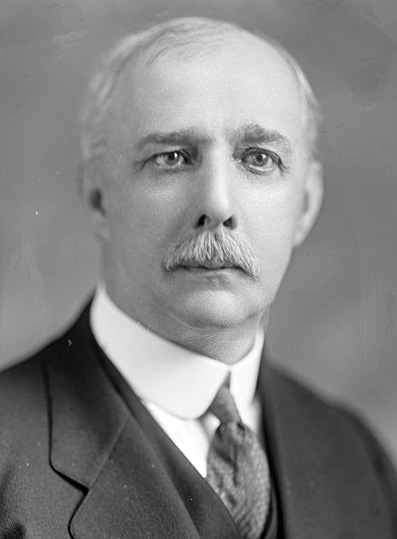
Historical · U.S. House · Nebraska · District 2
Charles Lobeck
Former U.S. Representative · Nebraska District 2 · 1911–1919 · Democratic
Charles Lobeck represented Nebraska's District 2 in the United States House of Representatives (1911–1919) for the Democratic party. The page below collects sourced biographical facts, term history, committee roles, and provenance for Lobeck.
Bioguide ID: L000385
Key facts
- Full name
- Charles Lobeck
- State
- Nebraska
- District
- District 2
- Party
- Democratic
- House service
- 1911–1919
- First House term
- 1911
- Status
- Left office
- Current term ends
- —
- Born
- 1852
- Bioguide ID
- L000385
- Committee assignments
- —
- Dataset version
- 1.20260606
Biographical narrative
960 words · sourced from the Wikipedia REST extract
Charles Lobeck was a notable American politician who served as a U.S. Representative for Nebraska's 2nd congressional district. A member of the Democratic Party, Lobeck held office from 1911 until 1919, completing four terms in the House of Representatives. His political career was marked by various roles at both the state and local levels, and he played a significant part in the legislative processes of his time.
Early life and career
Charles Otto Lobeck was born on April 6, 1852, in Andover, Illinois. His early education included attendance at German Wallace College, which is now known as Baldwin-Wallace College, located in Berea, Ohio. Lobeck later pursued studies at Dyhrenfurth Commercial College in Chicago, Illinois, which equipped him with skills that would serve him well in his future business endeavors.
In 1869, Lobeck moved to Dayton, Iowa, where he began his professional career as a clerk in a general store. This initial position provided him with valuable experience in commerce and customer service. By 1875, he transitioned into the role of a commercial traveler, a position that required him to travel extensively throughout Iowa and Nebraska until 1892. This experience likely contributed to his understanding of regional economic conditions and the needs of local businesses.
In 1892, Lobeck ventured into the hardware business in Omaha, Nebraska, where he worked until 1895. His entrepreneurial spirit was evident as he explored various avenues for professional advancement. That same year, he entered the political arena by winning election to the Nebraska state senate as a Republican, serving a single term in 1893. Following his time in the state senate, Lobeck continued his public service by serving on the Omaha city council from 1897 to 1903. During this period, he also engaged in real estate and insurance, further diversifying his professional portfolio.
Lobeck's political affiliations evolved over time; he switched from the Republican Party to the Democratic Party, reflecting a shift in his political beliefs and strategies. In 1900, he served as a Presidential Elector for Nebraska, an important role that highlighted his growing influence within the Democratic Party. In 1903, he was appointed as the city controller of Omaha, a position he held until 1911, during which he gained significant experience in financial oversight and municipal governance.
House tenure
Lobeck's congressional career began when he was elected as a Democrat to the Sixty-second United States Congress, with his first term commencing on March 4, 1911. He was subsequently re-elected to three additional terms, serving in the House until March 3, 1919. His tenure in Congress was characterized by his involvement in various legislative initiatives and his leadership roles within the House.
During his time in the House, Lobeck was appointed chairman of the U.S. House Committee on Expenditures in the Treasury Department. This position allowed him to oversee financial matters related to the Treasury, an important role given the economic challenges of the time. His leadership on this committee spanned the Sixty-third through Sixty-fifth Congresses, during which he was responsible for ensuring accountability and transparency in government spending.
Lobeck's legislative activities were influenced by the political climate of the early 20th century, a period marked by significant social and economic changes in the United States. He navigated the complexities of national policy-making and worked to address the concerns of his constituents in Nebraska. His experience in local government and business likely informed his approach to federal legislation, as he sought to balance the interests of his district with broader national priorities.
Despite his accomplishments, Lobeck faced challenges in his political career. In 1918, he ran for re-election but was unsuccessful in securing another term in the House. Following his departure from Congress, he returned to the private sector, resuming his work in real estate and insurance. His post-congressional career reflected a return to the business world, where he had initially built his professional reputation.
Legislative focus and committees
Throughout his congressional tenure, Lobeck's legislative focus was shaped by his background in commerce and local governance. His role as chairman of the House Committee on Expenditures in the Treasury Department positioned him at the intersection of fiscal policy and governmental oversight. In this capacity, he was responsible for examining the financial operations of the Treasury, ensuring that expenditures were justified and aligned with legislative intent.
Lobeck's work on the committee involved scrutiny of budgetary allocations and financial management practices, which were critical during a time of evolving economic conditions in the United States. His experience in local government likely provided him with insights into the importance of fiscal responsibility and the impact of federal policies on state and local economies.
In addition to his committee work, Lobeck was involved in broader legislative discussions that addressed the needs of his constituents in Nebraska. His background in business and local governance informed his understanding of the challenges faced by individuals and businesses in his district. Although specific legislative initiatives he supported are not detailed, it can be inferred that his priorities would have included issues relevant to economic development, infrastructure, and public services.
Lobeck's commitment to public service extended beyond his congressional duties. He was a member of the Methodist church, reflecting his engagement with the community and the values that guided his political and personal life. His involvement in religious and civic organizations likely contributed to his understanding of the social issues affecting his constituents.
Charles Lobeck passed away on January 30, 1920, in Omaha, Nebraska. He is interred in Prospect Hill Cemetery in Omaha, leaving behind a legacy of public service that spanned several decades and encompassed various roles in government and business. His career reflects the complexities of American political life in the early 20th century and the evolving nature of public service in response to the needs of the community.
Notable legislation
Sponsored and co-sponsored legislation for Charles Lobeck is pending operator curation. The biographical narrative above carries the same provenance trail until per-bill rows are written.
Sources
- [1]https://en.wikipedia.org/wiki/Charles_O._LobeckWikipedia · retrieved 2026-06-06
Notable quotes
Sourced quotes for Charles Lobeck are pending operator curation. Narrative-scope provenance remains attached below.
Sources
- [1]https://en.wikipedia.org/wiki/Charles_O._LobeckWikipedia · retrieved 2026-06-06
Key positions
Curated policy positions for Charles Lobeck are pending operator review. The biographical narrative above carries the same provenance trail until per-topic positions are written.
Sources
- [1]https://en.wikipedia.org/wiki/Charles_O._LobeckWikipedia · retrieved 2026-06-06
Terms served
- 1911–1913U.S. House · Term 1 · Democratic
- 1913–1915U.S. House · Term 2 · Democratic
- 1915–1917U.S. House · Term 3 · Democratic
- 1917–1919U.S. House · Term 4 · Democratic
Sources & provenance
Every attributable claim above carries a per-section [N] marker that resolves to the corresponding URL below. Each entry records the upstream provider, the canonical URL, and the timestamp at which the source was retrieved by the ingest pipeline.
Key facts
- https://bioguide.congress.gov/search/bio/L000385bioguide · retrieved 2026-06-06
- https://www.govtrack.us/congress/members/406877govtrack · retrieved 2026-06-06
Biographical narrative
- https://en.wikipedia.org/wiki/Charles_O._Lobeckwikipedia · retrieved 2026-06-06
Find your representative
Every U.S. state elects representatives by district. Browse Nebraska’s delegation, the full former-representative roster, or explore the role and term length.
Related on The Candidate
- Preceded by John KennedyEarlier holder of the Nebraska District 2 House seat · Republican.Open
- Succeeded by Albert JefferisLater holder of the Nebraska District 2 House seat · Republican.Open
- Archibald WeaverFormer U.S. Representative · Nebraska District 1 · RepublicanOpen
- Charles ReavisFormer U.S. Representative · Nebraska District 1 · RepublicanOpen
- Charles ThoneFormer U.S. Representative · Nebraska District 1 · RepublicanOpen
- Clair CallanFormer U.S. Representative · Nebraska District 1 · DemocraticOpen