
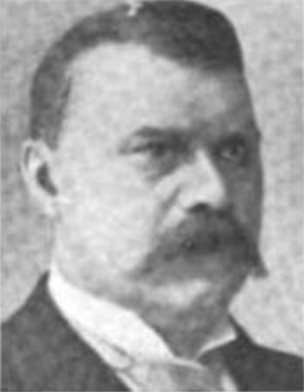
Historical · U.S. House · Nebraska · District 2
David Mercer
Former U.S. Representative · Nebraska District 2 · 1893–1903 · Republican
David Mercer represented Nebraska's District 2 in the United States House of Representatives (1893–1903) for the Republican party. The page below collects sourced biographical facts, term history, committee roles, and provenance for Mercer.
Bioguide ID: M000643
Key facts
- Full name
- David Mercer
- State
- Nebraska
- District
- District 2
- Party
- Republican
- House service
- 1893–1903
- First House term
- 1893
- Status
- Left office
- Current term ends
- —
- Born
- 1857
- Bioguide ID
- M000643
- Committee assignments
- —
- Dataset version
- 1.20260606
Biographical narrative
909 words · sourced from the Wikipedia REST extract
David Mercer was an American politician affiliated with the Republican Party who served as a U.S. Representative for Nebraska's 2nd congressional district. His tenure in the House of Representatives spanned a decade, from 1893 to 1903, during which he was involved in various legislative activities and held significant committee positions. Born in 1857 in Iowa, Mercer had a diverse background that included law practice and local political engagement prior to his congressional career. After leaving Congress, he continued his legal practice until his death in 1919.
Early life and career
David Henry Mercer was born on July 9, 1857, in Benton County, Iowa. His family relocated to Adams County, Illinois, in 1858, shortly after his birth. This early move was part of a broader trend of migration during the mid-19th century, as families sought new opportunities in the expanding American frontier. Following the conclusion of the American Civil War, Mercer and his family moved to Brownville, Nebraska, where he would later establish his career.
Mercer pursued higher education, graduating from the University of Nebraska in 1880. He furthered his studies at the University of Michigan in Ann Arbor, where he completed his law degree in 1882. After being admitted to the bar, Mercer began practicing law in Brownville, where he also engaged in local governance. His early political career included serving as city clerk and police judge, positions that allowed him to gain experience in public service and local administration.
In 1885, Mercer relocated to Omaha, Nebraska, a significant urban center that would play a crucial role in his political career. In Omaha, he became actively involved in the Republican Party, serving as chairman of both the city and county committees for several years. His leadership roles within the party demonstrated his commitment to Republican principles and his ability to mobilize support for party candidates and initiatives. In 1896, he was appointed secretary of the Republican State Central Committee, further solidifying his influence within the party. That same year, he was elected as secretary of the Republican National Congressional Committee, a position that underscored his growing prominence in national political circles.
Mercer's political engagement continued to expand, and in 1897, he was appointed chairman of the Republican State Central Committee of Nebraska, a role he held through 1898. His leadership during this period was marked by efforts to strengthen the party's presence and effectiveness in Nebraska, positioning him as a key figure in the state's political landscape.
House tenure
David Mercer was elected to the Fifty-third United States Congress as a Republican, marking the beginning of his congressional career on March 4, 1893. He was subsequently re-elected to four additional terms, serving a total of five consecutive terms in the House of Representatives until March 3, 1903. His tenure coincided with a period of significant political and social change in the United States, as the nation grappled with issues related to industrialization, urbanization, and economic growth.
During his time in Congress, Mercer was actively involved in various legislative initiatives and discussions. He was appointed chairman of the U.S. House Committee on Public Buildings and Grounds during the Fifty-fifth, Fifty-sixth, and Fifty-seventh Congresses. In this capacity, he played a vital role in overseeing matters related to the construction and maintenance of public buildings, which included federal facilities and infrastructure projects. His leadership on this committee allowed him to influence decisions that would have lasting impacts on the development of public spaces and government facilities.
Despite his contributions and service, Mercer faced challenges in his political career. In 1902, he ran for re-election but was unsuccessful in his bid to continue serving in Congress. This defeat marked the end of his formal legislative career, but it did not signify the conclusion of his involvement in public service. Following his departure from Congress, Mercer settled in Washington, D.C., where he resumed his law practice, applying his legal expertise in a new context.
Legislative focus and committees
Throughout his congressional tenure, David Mercer focused on issues related to public infrastructure and government operations. As chairman of the House Committee on Public Buildings and Grounds, he was responsible for overseeing the management and development of federal properties. This role was particularly significant during a time when the United States was expanding its physical and institutional infrastructure to accommodate a growing population and increasing governmental responsibilities.
Mercer's work on the committee involved evaluating proposals for new construction projects, assessing the condition of existing federal buildings, and advocating for funding to ensure that public facilities met the needs of citizens and government operations. His leadership in this area reflected a broader commitment to enhancing the functionality and accessibility of government services, which was a key concern for many lawmakers during this period.
In addition to his committee work, Mercer was involved in broader legislative discussions that addressed the challenges facing the nation at the turn of the 20th century. His experience in local governance and his understanding of the needs of his constituents informed his approach to legislation, as he sought to balance the interests of his district with the national agenda.
After leaving Congress, Mercer continued to engage with the legal community and remained active in professional circles. He passed away on January 10, 1919, in Omaha, Nebraska, where he was laid to rest in Forest Lawn Cemetery. His contributions to public service and the Republican Party during a transformative era in American history are remembered as part of Nebraska's political legacy.
Notable legislation
Sponsored and co-sponsored legislation for David Mercer is pending operator curation. The biographical narrative above carries the same provenance trail until per-bill rows are written.
Sources
- [1]https://en.wikipedia.org/wiki/David_Henry_MercerWikipedia · retrieved 2026-06-06
Notable quotes
Sourced quotes for David Mercer are pending operator curation. Narrative-scope provenance remains attached below.
Sources
- [1]https://en.wikipedia.org/wiki/David_Henry_MercerWikipedia · retrieved 2026-06-06
Key positions
Curated policy positions for David Mercer are pending operator review. The biographical narrative above carries the same provenance trail until per-topic positions are written.
Sources
- [1]https://en.wikipedia.org/wiki/David_Henry_MercerWikipedia · retrieved 2026-06-06
Terms served
- 1893–1895U.S. House · Term 1 · Republican
- 1895–1897U.S. House · Term 2 · Republican
- 1897–1899U.S. House · Term 3 · Republican
- 1899–1901U.S. House · Term 4 · Republican
- 1901–1903U.S. House · Term 5 · Republican
Sources & provenance
Every attributable claim above carries a per-section [N] marker that resolves to the corresponding URL below. Each entry records the upstream provider, the canonical URL, and the timestamp at which the source was retrieved by the ingest pipeline.
Key facts
- https://bioguide.congress.gov/search/bio/M000643bioguide · retrieved 2026-06-06
- https://www.govtrack.us/congress/members/407629govtrack · retrieved 2026-06-06
Biographical narrative
- https://en.wikipedia.org/wiki/David_Henry_Mercerwikipedia · retrieved 2026-06-06
Find your representative
Every U.S. state elects representatives by district. Browse Nebraska’s delegation, the full former-representative roster, or explore the role and term length.
Related on The Candidate
- Preceded by Gilbert LawsEarlier holder of the Nebraska District 2 House seat · Republican.Open
- Succeeded by John KennedyLater holder of the Nebraska District 2 House seat · Republican.Open
- Archibald WeaverFormer U.S. Representative · Nebraska District 1 · RepublicanOpen
- Charles ReavisFormer U.S. Representative · Nebraska District 1 · RepublicanOpen
- Charles ThoneFormer U.S. Representative · Nebraska District 1 · RepublicanOpen
- Clair CallanFormer U.S. Representative · Nebraska District 1 · DemocraticOpen