
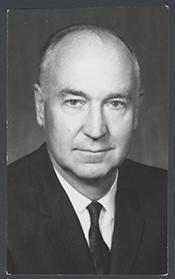
Historical · U.S. House · Nebraska · District 3
David Martin
Former U.S. Representative · Nebraska District 3 · 1961–1975 · Republican
David Martin represented Nebraska's District 3 in the United States House of Representatives (1961–1975) for the Republican party. The page below collects sourced biographical facts, term history, committee roles, and provenance for Martin.
Bioguide ID: M000175
Key facts
- Full name
- David Martin
- State
- Nebraska
- District
- District 3
- Party
- Republican
- House service
- 1961–1975
- First House term
- 1961
- Status
- Left office
- Current term ends
- —
- Born
- 1907
- Bioguide ID
- M000175
- Committee assignments
- —
- Dataset version
- 1.20260605
Biographical narrative
868 words · sourced from the Wikipedia REST extract
David T. Martin was an American politician who served as a Republican member of the United States House of Representatives, representing Nebraska's 3rd congressional district from 1961 until 1975. Throughout his seven terms in office, Martin was involved in various legislative efforts and held significant positions within the House, contributing to his party's agenda during a transformative period in American politics.
Early life and career
David Thomas Martin was born on July 9, 1907, in Kearney, Nebraska. He pursued higher education at Dartmouth College, where he graduated in 1929. Following his graduation, Martin entered the lumber business, which provided him with a foundation in the private sector. His professional background in business likely influenced his later political career, as he developed an understanding of economic issues and the needs of his constituents.
In the 1950s, Martin became active in politics, aligning himself with the Republican Party. He served on the Nebraska Republican Committee and the Republican National Committee, gaining experience in party organization and electoral strategy. His political ambitions led him to run for the United States Senate in 1954, although he was unsuccessful in the primary election. This early foray into politics set the stage for his later candidacy for the House of Representatives.
In 1960, Martin launched his campaign for Congress, seeking to represent Nebraska's 3rd congressional district. He faced off against the incumbent Democrat, Donald McGinley, in a competitive election. Martin's campaign was marked by a narrow victory, which allowed him to take office in January 1961. His initial election signified a shift in the political landscape of Nebraska, as he became part of a growing Republican presence in the House.
House tenure
David T. Martin's tenure in the U.S. House of Representatives spanned from 1961 to 1975, during which he served a total of seven terms. His time in office was characterized by active participation in legislative processes and committee work. Martin was appointed as the minority chairman of the House Rules Committee, a position that allowed him to play a crucial role in shaping the legislative agenda and managing the flow of legislation in the House.
Throughout his congressional career, Martin was known for his leadership within the Rules Committee, particularly in his last three terms when he served as the ranking Republican member. This role placed him at the center of significant legislative negotiations and discussions, where he worked to advance the interests of his party and constituents.
In addition to his responsibilities on the Rules Committee, Martin was a member of the Education and Labor Committee. His involvement in this committee indicated a focus on issues related to education, labor rights, and workforce development, which were critical topics during the 1960s and early 1970s. His legislative work in these areas contributed to the broader discussions surrounding education reform and labor policies during a time of social change in the United States.
Martin's influence extended beyond committee work; he co-chaired the Select Committee on the Reorganization of the Congress in 1973-1974 alongside Representative Richard Howard Ichord Jr. of Missouri. This committee was tasked with examining and proposing changes to the structure and operations of Congress, reflecting the evolving needs of the legislative branch in response to contemporary challenges.
In 1974, Martin played a notable role as a floor leader during the confirmation process of Nelson Rockefeller as Vice President of the United States. This event highlighted his position within the House and his ability to navigate complex political situations, further solidifying his reputation as a seasoned legislator.
Legislative focus and committees
During his time in Congress, David T. Martin's legislative focus encompassed a variety of issues, particularly those related to education and labor. His role on the Education and Labor Committee allowed him to engage with policies that affected schools, teachers, and workers, reflecting the priorities of his constituents in Nebraska.
As minority chairman of the House Rules Committee, Martin was instrumental in determining how legislation was presented and debated on the House floor. This position required a deep understanding of parliamentary procedures and the ability to work collaboratively with members from both parties to facilitate the legislative process. His leadership in this capacity was essential in managing the complexities of a divided Congress during a time of significant political and social change.
Martin's commitment to public service extended beyond his congressional career. After leaving the House in 1975, he continued to contribute to education and governance as a member of the Nebraska State College Board. He also served as a visiting professor at Kearney State College, now known as the University of Nebraska at Kearney, where he shared his knowledge and experience with students.
In 1980, Martin took on a leadership role in Nebraska politics by serving as the state chairman for George H. W. Bush's presidential campaign, although the campaign ultimately did not succeed. His involvement in national politics demonstrated his ongoing engagement with the Republican Party and its initiatives.
David T. Martin passed away on May 15, 1997, in his hometown of Kearney, Nebraska, at the age of 89. His life and career reflect a dedication to public service and a commitment to the principles of the Republican Party during a dynamic period in American history.
Notable legislation
Sponsored and co-sponsored legislation for David Martin is pending operator curation. The biographical narrative above carries the same provenance trail until per-bill rows are written.
Sources
- [1]https://en.wikipedia.org/wiki/David_Martin_(Nebraska_politician)Wikipedia · retrieved 2026-06-05
Notable quotes
Sourced quotes for David Martin are pending operator curation. Narrative-scope provenance remains attached below.
Sources
- [1]https://en.wikipedia.org/wiki/David_Martin_(Nebraska_politician)Wikipedia · retrieved 2026-06-05
Key positions
Curated policy positions for David Martin are pending operator review. The biographical narrative above carries the same provenance trail until per-topic positions are written.
Sources
- [1]https://en.wikipedia.org/wiki/David_Martin_(Nebraska_politician)Wikipedia · retrieved 2026-06-05
Terms served
- 1961–1963U.S. House · Term 1 · Republican
- 1963–1965U.S. House · Term 2 · Republican
- 1965–1967U.S. House · Term 3 · Republican
- 1967–1969U.S. House · Term 4 · Republican
- 1969–1971U.S. House · Term 5 · Republican
- 1971–1973U.S. House · Term 6 · Republican
- 1973–1975U.S. House · Term 7 · Republican
Sources & provenance
Every attributable claim above carries a per-section [N] marker that resolves to the corresponding URL below. Each entry records the upstream provider, the canonical URL, and the timestamp at which the source was retrieved by the ingest pipeline.
Key facts
- https://bioguide.congress.gov/search/bio/M000175bioguide · retrieved 2026-06-05
- https://www.govtrack.us/congress/members/407197govtrack · retrieved 2026-06-05
Biographical narrative
- https://en.wikipedia.org/wiki/David_Martin_(Nebraska_politician)wikipedia · retrieved 2026-06-05
Find your representative
Every U.S. state elects representatives by district. Browse Nebraska’s delegation, the full former-representative roster, or explore the role and term length.
Related on The Candidate
- Preceded by Lawrence BrockEarlier holder of the Nebraska District 3 House seat · Democratic.Open
- Succeeded by Virginia SmithLater holder of the Nebraska District 3 House seat · Republican.Open
- Archibald WeaverFormer U.S. Representative · Nebraska District 1 · RepublicanOpen
- Charles ReavisFormer U.S. Representative · Nebraska District 1 · RepublicanOpen
- Charles ThoneFormer U.S. Representative · Nebraska District 1 · RepublicanOpen
- Clair CallanFormer U.S. Representative · Nebraska District 1 · DemocraticOpen