
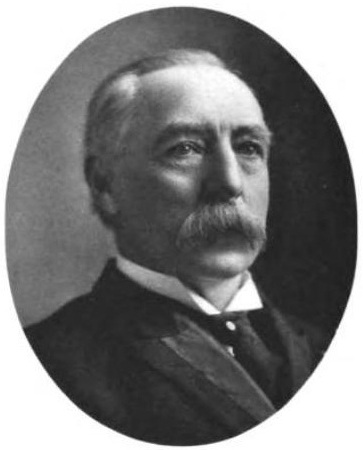
Historical · U.S. House · Nebraska · District 3
George Dorsey
Former U.S. Representative · Nebraska District 3 · 1885–1891 · Republican
George Dorsey represented Nebraska's District 3 in the United States House of Representatives (1885–1891) for the Republican party. The page below collects sourced biographical facts, term history, committee roles, and provenance for Dorsey.
Bioguide ID: D000439
Key facts
- Full name
- George Dorsey
- State
- Nebraska
- District
- District 3
- Party
- Republican
- House service
- 1885–1891
- First House term
- 1885
- Status
- Left office
- Current term ends
- —
- Born
- 1842
- Bioguide ID
- D000439
- Committee assignments
- —
- Dataset version
- 1.20260606
Biographical narrative
871 words · sourced from the Wikipedia REST extract
George Dorsey was a prominent figure in American politics during the late 19th century, serving as a U.S. Representative from Nebraska. A member of the Republican Party, Dorsey represented Nebraska's third congressional district for three terms in the House of Representatives from 1885 until 1891. His career in public service was preceded by a significant military background and a diverse professional life that included law, banking, and mining.
Early life and career
George Dorsey was born on January 25, 1842, in Loudoun County, Virginia. His early life was marked by a significant relocation when his family moved to Preston County, Virginia, in 1856, an area that is now part of West Virginia. Dorsey received his education at private institutions, including Oak Hill Academy, which provided him with a foundation for his future endeavors.
As the nation became embroiled in the Civil War, Dorsey took an active role in the conflict. In August 1861, he enlisted in the Union Army, where he initially served as a first lieutenant in the 6th Regiment West Virginia Infantry. His military service was distinguished, and he was promoted to the rank of captain and later major due to his meritorious service. Dorsey remained in the Army until August 1865, when he was mustered out with the Army of the Shenandoah, concluding his military career.
Following the war, Dorsey relocated to Nebraska in 1866, where he began to study law. His legal education culminated in his admission to the bar in 1869, allowing him to commence a practice that would serve as a springboard for his future political career. In addition to his legal work, Dorsey engaged in banking, which further diversified his professional portfolio. He also took on leadership roles within the community, serving as vice president of the State Board of Agriculture and as chairman of the Republican State Central Committee. These positions not only reflected his commitment to public service but also helped establish his reputation within the Republican Party.
House tenure
Dorsey’s political career in the U.S. House of Representatives began when he was elected as a Republican to the Forty-ninth Congress, which commenced on March 4, 1885. He was subsequently re-elected to the Fiftieth and Fifty-first Congresses, serving until March 3, 1891. During his time in Congress, Dorsey was involved in various legislative activities and contributed to discussions on issues pertinent to his constituents and the nation.
His tenure in the House was characterized by his role as chairman of the Committee on Banking and Currency during the Fifty-first Congress. This position placed him at the forefront of discussions surrounding financial legislation, an area of significant importance during a period marked by economic challenges and the evolving landscape of American finance. Dorsey’s involvement in this committee underscored his expertise in banking matters, likely influenced by his background in the banking sector prior to his congressional service.
Despite his contributions and experience, Dorsey faced challenges in his political career. He was an unsuccessful candidate for re-election in 1890, which marked the end of his congressional tenure. This defeat reflected the competitive nature of politics during that era and the shifting dynamics within the Republican Party and the electorate.
Legislative focus and committees
Throughout his time in the House of Representatives, Dorsey’s legislative focus was primarily on banking and currency issues, as evidenced by his chairmanship of the Committee on Banking and Currency. This committee played a crucial role in shaping financial policy and addressing the economic concerns of the time. Dorsey’s expertise in banking, gained from his professional background, likely informed his contributions to the committee's work and the broader legislative agenda.
In addition to his focus on banking, Dorsey’s legislative efforts would have encompassed a range of issues relevant to his constituents in Nebraska. As a representative from a state that was still developing its infrastructure and economy during the late 19th century, he would have been involved in discussions about agricultural policies, land use, and transportation, all of which were vital to the growth and prosperity of Nebraska and the broader Midwest region.
Dorsey’s legislative work occurred during a time of significant change in the United States, as the country was transitioning from a primarily agrarian society to one that was increasingly industrialized. This transition brought about various challenges and opportunities, and Dorsey’s role in Congress would have involved navigating these complexities while advocating for the interests of his constituents.
After his congressional career, Dorsey continued to engage in various professional pursuits, including mining enterprises in Nevada and Utah. This shift in focus from public service to private enterprise reflects the diverse interests and capabilities that characterized his professional life. His involvement in mining also indicates an adaptability to the economic opportunities that arose during this period of American history.
George Dorsey passed away on June 12, 1911, in Salt Lake City, Utah. His remains were interred in the City Cemetery in Fremont, Nebraska, where he is remembered as a figure who contributed to the political landscape of his time. His life and career encapsulate the experiences of many individuals who navigated the complexities of American society during a transformative era, balancing military service, legal practice, and public office in their pursuit of civic engagement and community development.
Notable legislation
Sponsored and co-sponsored legislation for George Dorsey is pending operator curation. The biographical narrative above carries the same provenance trail until per-bill rows are written.
Sources
- [1]https://en.wikipedia.org/wiki/George_W._E._DorseyWikipedia · retrieved 2026-06-06
Notable quotes
Sourced quotes for George Dorsey are pending operator curation. Narrative-scope provenance remains attached below.
Sources
- [1]https://en.wikipedia.org/wiki/George_W._E._DorseyWikipedia · retrieved 2026-06-06
Key positions
Curated policy positions for George Dorsey are pending operator review. The biographical narrative above carries the same provenance trail until per-topic positions are written.
Sources
- [1]https://en.wikipedia.org/wiki/George_W._E._DorseyWikipedia · retrieved 2026-06-06
Terms served
- 1885–1887U.S. House · Term 1 · Republican
- 1887–1889U.S. House · Term 2 · Republican
- 1889–1891U.S. House · Term 3 · Republican
Sources & provenance
Every attributable claim above carries a per-section [N] marker that resolves to the corresponding URL below. Each entry records the upstream provider, the canonical URL, and the timestamp at which the source was retrieved by the ingest pipeline.
Key facts
- https://bioguide.congress.gov/search/bio/D000439bioguide · retrieved 2026-06-06
- https://www.govtrack.us/congress/members/403549govtrack · retrieved 2026-06-06
Biographical narrative
- https://en.wikipedia.org/wiki/George_W._E._Dorseywikipedia · retrieved 2026-06-06
Find your representative
Every U.S. state elects representatives by district. Browse Nebraska’s delegation, the full former-representative roster, or explore the role and term length.
Related on The Candidate
- Preceded by Edward ValentineEarlier holder of the Nebraska District 3 House seat · Republican.Open
- Succeeded by George MeiklejohnLater holder of the Nebraska District 3 House seat · Republican.Open
- Archibald WeaverFormer U.S. Representative · Nebraska District 1 · RepublicanOpen
- Charles ReavisFormer U.S. Representative · Nebraska District 1 · RepublicanOpen
- Charles ThoneFormer U.S. Representative · Nebraska District 1 · RepublicanOpen
- Clair CallanFormer U.S. Representative · Nebraska District 1 · DemocraticOpen