
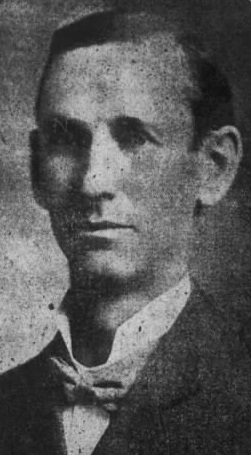
Historical · U.S. House · Nebraska · District 3
John Boyd
Former U.S. Representative · Nebraska District 3 · 1907–1909 · Republican
John Boyd represented Nebraska's District 3 in the United States House of Representatives (1907–1909) for the Republican party. The page below collects sourced biographical facts, term history, committee roles, and provenance for Boyd.
Bioguide ID: B000717
Key facts
- Full name
- John Boyd
- State
- Nebraska
- District
- District 3
- Party
- Republican
- House service
- 1907–1909
- First House term
- 1907
- Status
- Left office
- Current term ends
- —
- Born
- 1853
- Bioguide ID
- B000717
- Committee assignments
- —
- Dataset version
- 1.20260606
Biographical narrative
867 words · sourced from the Wikipedia REST extract
John Boyd was a Republican politician who served as a U.S. Representative for Nebraska's third congressional district from 1907 to 1909. His political career was preceded by a background in law and local governance, which shaped his approach to public service. Born in Pennsylvania and later moving to Illinois, Boyd's early life experiences and professional endeavors laid the foundation for his eventual entry into national politics. After serving a single term in the House of Representatives, he returned to his legal practice and later relocated to California, where he lived until his death in 1945.
Early life and career
John Boyd was born on August 8, 1853, in Connellsville, Pennsylvania. His family relocated to Henry County, Illinois, in 1857, which marked the beginning of his formative years in the Midwest. Boyd's education took place in the public school system, where he developed a foundational understanding of various subjects. He furthered his academic pursuits at Abingdon College, an institution that would later merge with Eureka College. During his time at Abingdon, Boyd studied law, a field that would become central to his professional life.
After completing his legal studies, Boyd was admitted to the bar in 1878. He initially established his law practice in Galva, Illinois, where he began to build his reputation as a legal professional. In 1883, he moved to Oakdale, Nebraska, where he continued his law practice and became more involved in the local community. His legal career progressed as he took on the role of prosecuting attorney for Antelope County, Nebraska, from 1888 to 1894. This position allowed him to gain valuable experience in the legal system and public administration, further preparing him for future political endeavors.
In 1901, Boyd relocated to Neligh, Nebraska, where he continued to practice law. His commitment to public service and legal affairs led him to a judicial position when he was appointed as judge of the Ninth Judicial District Court of Nebraska in 1900. He served in this capacity until 1907, during which time he honed his judicial skills and gained a deeper understanding of the legal challenges facing his community and the state.
House tenure
John Boyd's political career took a significant turn in 1907 when he was elected as a Republican to the Sixtieth Congress, representing Nebraska's third congressional district. His term in the House of Representatives began on March 4, 1907, and lasted until March 3, 1909. As a member of Congress, Boyd participated in the legislative process during a period marked by significant national developments, including the Progressive Era, which sought to address issues such as corruption, social justice, and economic reform.
During his time in the House, Boyd engaged with various legislative matters, although specific details regarding his contributions and the bills he supported are not documented in the available records. His background as a lawyer and judge likely influenced his perspectives on legal and judicial issues, which may have informed his legislative priorities. Boyd's tenure in Congress was characterized by a commitment to the values and interests of his constituents in Nebraska, reflecting the Republican Party's platform during that era.
In the 1908 election, Boyd sought re-election but was defeated by James P. Latta. Following his loss, he returned to Neligh, where he resumed his law practice. Boyd's single term in Congress marked a brief but notable chapter in his professional life, as he transitioned from a judicial role to a legislative one and then back to his legal career.
Legislative focus and committees
While specific details regarding John Boyd's legislative focus and committee assignments during his time in the House of Representatives are not extensively documented, it is reasonable to infer that his legal background and experience as a judge would have influenced his approach to legislation. As a member of the Republican Party, Boyd likely aligned with the party's priorities, which during the early 20th century included issues related to economic development, infrastructure, and governance reform.
The Progressive Era, which encompassed Boyd's time in Congress, was characterized by a push for reforms aimed at addressing social issues, improving government accountability, and enhancing the welfare of citizens. Although the records do not specify Boyd's particular legislative initiatives or committee assignments, it is plausible that he engaged with issues pertinent to his constituents, including matters related to agriculture, education, and local governance.
After his congressional term ended in 1909, Boyd returned to his legal practice in Neligh, where he continued to contribute to the community through his work as an attorney. His experiences in Congress may have further informed his understanding of the legal and political landscape, allowing him to provide informed counsel to his clients and engage with local issues effectively.
In 1929, Boyd made the decision to retire and relocate to Los Angeles, California. This move marked the conclusion of his active professional life, although he remained a figure of interest due to his previous political service. John Boyd passed away on May 28, 1945, in Los Angeles, and he was laid to rest at Forest Lawn Cemetery in Glendale, California. His life and career reflect the journey of a local lawyer who ascended to the national stage, albeit briefly, during a transformative period in American history.
Notable legislation
Sponsored and co-sponsored legislation for John Boyd is pending operator curation. The biographical narrative above carries the same provenance trail until per-bill rows are written.
Sources
- [1]https://en.wikipedia.org/wiki/John_Frank_BoydWikipedia · retrieved 2026-06-06
Notable quotes
Sourced quotes for John Boyd are pending operator curation. Narrative-scope provenance remains attached below.
Sources
- [1]https://en.wikipedia.org/wiki/John_Frank_BoydWikipedia · retrieved 2026-06-06
Key positions
Curated policy positions for John Boyd are pending operator review. The biographical narrative above carries the same provenance trail until per-topic positions are written.
Sources
- [1]https://en.wikipedia.org/wiki/John_Frank_BoydWikipedia · retrieved 2026-06-06
Terms served
- 1907–1909U.S. House · Term 1 · Republican
Sources & provenance
Every attributable claim above carries a per-section [N] marker that resolves to the corresponding URL below. Each entry records the upstream provider, the canonical URL, and the timestamp at which the source was retrieved by the ingest pipeline.
Key facts
- https://bioguide.congress.gov/search/bio/B000717bioguide · retrieved 2026-06-06
- https://www.govtrack.us/congress/members/401677govtrack · retrieved 2026-06-06
Biographical narrative
- https://en.wikipedia.org/wiki/John_Frank_Boydwikipedia · retrieved 2026-06-06
Find your representative
Every U.S. state elects representatives by district. Browse Nebraska’s delegation, the full former-representative roster, or explore the role and term length.
Related on The Candidate
- Preceded by John McCarthyEarlier holder of the Nebraska District 3 House seat · Republican.Open
- Succeeded by James LattaLater holder of the Nebraska District 3 House seat · Democratic.Open
- Archibald WeaverFormer U.S. Representative · Nebraska District 1 · RepublicanOpen
- Charles ReavisFormer U.S. Representative · Nebraska District 1 · RepublicanOpen
- Charles ThoneFormer U.S. Representative · Nebraska District 1 · RepublicanOpen
- Clair CallanFormer U.S. Representative · Nebraska District 1 · DemocraticOpen