
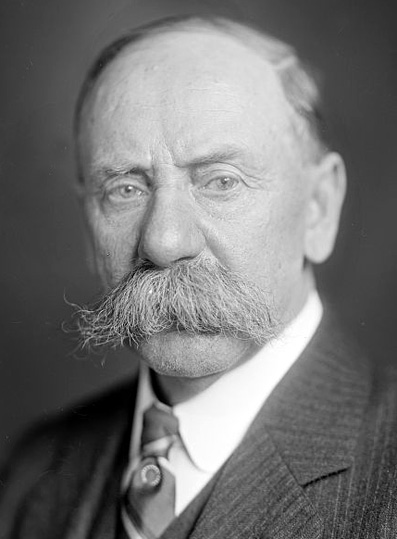
Historical · U.S. House · Nebraska · District 3
Robert Evans
Former U.S. Representative · Nebraska District 3 · 1919–1923 · Republican
Robert Evans represented Nebraska's District 3 in the United States House of Representatives (1919–1923) for the Republican party. The page below collects sourced biographical facts, term history, committee roles, and provenance for Evans.
Bioguide ID: E000256
Key facts
- Full name
- Robert Evans
- State
- Nebraska
- District
- District 3
- Party
- Republican
- House service
- 1919–1923
- First House term
- 1919
- Status
- Left office
- Current term ends
- —
- Born
- 1856
- Bioguide ID
- E000256
- Committee assignments
- —
- Dataset version
- 1.20260606
Biographical narrative
911 words · sourced from the Wikipedia REST extract
Robert Emory Evans was a prominent figure in Nebraska's political landscape during the early 20th century. A member of the Republican Party, he served as a U.S. Representative for Nebraska's 3rd congressional district from 1919 to 1923. His career was marked by a transition from local legal and educational roles to national politics, reflecting a commitment to public service and the legal profession. Following his tenure in Congress, he returned to the judiciary, where he continued to influence Nebraska's legal system until his death in 1925.
Early life and career
Robert Emory Evans was born on July 15, 1856, in Coalmont, Pennsylvania. His early education took place at the Pennsylvania Normal School located in Millersville, Pennsylvania, and later at the Indiana Normal School. These institutions provided him with a foundational education that would serve him well in his subsequent career. After completing his schooling, Evans worked as a machinist from 1877 to 1883, gaining practical skills that would later inform his approach to various roles in public service.
In 1886, he graduated from the law department of the University of Michigan in Ann Arbor, a significant achievement that allowed him to enter the legal profession. Following his admission to the bar, he relocated to Dakota City, Nebraska, in 1887, where he would establish his career and become an influential figure in the community. His initial foray into public service began when he became the superintendent of the Winnebago Industrial School, a position he held from 1889 to 1891. This role demonstrated his commitment to education and the welfare of youth, particularly in a state that was undergoing significant demographic and social changes during that period.
Evans's legal career progressed when he was elected as the prosecuting attorney for Dakota County in 1895. However, he soon resigned from this position to take on a more significant role as a judge in the Nebraska Eighth Judicial District, a position he held from 1895 to 1899. His judicial experience provided him with a deep understanding of the law and the judicial process, which would later inform his legislative work. In 1912, Evans was a delegate to the Republican National Convention, where he participated in the broader political discourse of the time. His leadership capabilities were further recognized when he became the president of the Nebraska State Bar Association in 1919, underscoring his influence within the legal community.
House tenure
Evans's political career took a significant turn when he successfully ran for the U.S. House of Representatives, representing Nebraska's 3rd congressional district. He was elected to the Sixty-sixth Congress, defeating the incumbent Dan V. Stephens. His first term began on March 4, 1919, and he was re-elected for a second term in the Sixty-seventh Congress, serving until March 3, 1923. During his time in Congress, Evans participated in various legislative activities and contributed to discussions on national issues, reflecting the interests and needs of his constituents in Nebraska.
His tenure in the House coincided with a period of significant change in the United States, including the aftermath of World War I and the beginning of the Roaring Twenties. These years were marked by economic growth, social change, and a shifting political landscape. Evans's legislative activities would have been influenced by these broader national trends, as well as the specific needs of his district, which was characterized by agricultural interests and a growing population.
Despite his efforts and contributions, Evans faced electoral challenges. He lost his bid for re-election in 1922 to Edgar Howard, marking the end of his congressional career. Following his departure from the House, Evans returned to Dakota City, where he resumed his law practice, continuing to serve the legal needs of his community.
Legislative focus and committees
While specific details regarding the committees Evans served on during his time in the House are not provided, it can be inferred that his background as a lawyer and judge would have influenced his legislative focus. Given the context of his era, it is likely that he engaged with issues pertinent to his constituents, such as agricultural policy, veterans' affairs, and legal reforms. His experience in the judiciary would have equipped him with a unique perspective on legislative matters, particularly those related to the legal system and public policy.
Evans's legislative work would have been shaped by the political dynamics of the time, including the Republican Party's stance on various issues. As a member of the House, he would have participated in debates and discussions that reflected the interests of his district while also aligning with the broader goals of his party. His role as a former judge and president of the Nebraska State Bar Association likely positioned him as a knowledgeable voice on legal matters, contributing to the development of policies that impacted the legal landscape of Nebraska and the nation.
After his congressional tenure, Evans continued to engage in public service by being elected as a judge of the Supreme Court from the Third District of Nebraska in 1924. This role allowed him to further influence the legal framework of the state and uphold the principles of justice until his death on July 8, 1925, in Lincoln, Nebraska. His legacy is marked by his contributions to both the legislative and judicial branches of government, reflecting a lifelong commitment to public service and the rule of law. He is interred at Graceland Park Cemetery in Sioux City, Iowa, where he is remembered for his service to the state and the nation.
Notable legislation
Sponsored and co-sponsored legislation for Robert Evans is pending operator curation. The biographical narrative above carries the same provenance trail until per-bill rows are written.
Sources
- [1]https://en.wikipedia.org/wiki/Robert_E._EvansWikipedia · retrieved 2026-06-06
Notable quotes
Sourced quotes for Robert Evans are pending operator curation. Narrative-scope provenance remains attached below.
Sources
- [1]https://en.wikipedia.org/wiki/Robert_E._EvansWikipedia · retrieved 2026-06-06
Key positions
Curated policy positions for Robert Evans are pending operator review. The biographical narrative above carries the same provenance trail until per-topic positions are written.
Sources
- [1]https://en.wikipedia.org/wiki/Robert_E._EvansWikipedia · retrieved 2026-06-06
Terms served
- 1919–1921U.S. House · Term 1 · Republican
- 1921–1923U.S. House · Term 2 · Republican
Sources & provenance
Every attributable claim above carries a per-section [N] marker that resolves to the corresponding URL below. Each entry records the upstream provider, the canonical URL, and the timestamp at which the source was retrieved by the ingest pipeline.
Key facts
- https://bioguide.congress.gov/search/bio/E000256bioguide · retrieved 2026-06-06
- https://www.govtrack.us/congress/members/403938govtrack · retrieved 2026-06-06
Biographical narrative
- https://en.wikipedia.org/wiki/Robert_E._Evanswikipedia · retrieved 2026-06-06
Find your representative
Every U.S. state elects representatives by district. Browse Nebraska’s delegation, the full former-representative roster, or explore the role and term length.
Related on The Candidate
- Preceded by Dan StephensEarlier holder of the Nebraska District 3 House seat · Democratic.Open
- Succeeded by Edgar HowardLater holder of the Nebraska District 3 House seat · Democratic.Open
- Archibald WeaverFormer U.S. Representative · Nebraska District 1 · RepublicanOpen
- Charles ReavisFormer U.S. Representative · Nebraska District 1 · RepublicanOpen
- Charles ThoneFormer U.S. Representative · Nebraska District 1 · RepublicanOpen
- Clair CallanFormer U.S. Representative · Nebraska District 1 · DemocraticOpen