
Historical · U.S. House · Nebraska · District 6
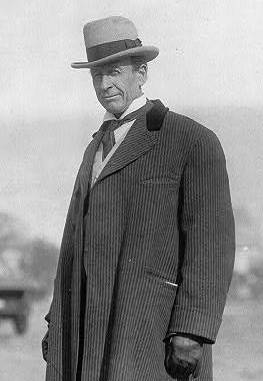
Moses Kinkaid
Former U.S. Representative · Nebraska District 6 · 1903–1923 · Republican
Moses Kinkaid represented Nebraska's District 6 in the United States House of Representatives (1903–1923) for the Republican party. The page below collects sourced biographical facts, term history, committee roles, and provenance for Kinkaid.
Bioguide ID: K000221
Key facts
- Full name
- Moses Kinkaid
- State
- Nebraska
- District
- District 6
- Party
- Republican
- House service
- 1903–1923
- First House term
- 1903
- Status
- Left office
- Current term ends
- —
- Born
- 1856
- Bioguide ID
- K000221
- Committee assignments
- —
- Dataset version
- 1.20260606
Biographical narrative
935 words · sourced from the Wikipedia REST extract
Moses Kinkaid was an American politician who served as a U.S. Representative for Nebraska's Sixth Congressional District. A member of the Republican Party, Kinkaid's congressional career spanned two decades, during which he was instrumental in legislation that significantly impacted land settlement in the western regions of Nebraska. His most notable achievement was the sponsorship of the Kinkaid Act, which expanded the Homestead Act to allow settlers to claim larger parcels of land in arid areas. Kinkaid's tenure in Congress lasted until his death in 1922, marking him as a significant figure in Nebraska's political history.
Early life and career
Moses Kinkaid was born on January 24, 1856, near Morgantown, Virginia, an area that is now part of West Virginia. His early life was marked by a commitment to aiding those in need, as he assisted fugitive slaves in their escape to freedom by guiding them to his grandparents' home in Pennsylvania. Kinkaid pursued his education through public schools and graduated from the law department of the University of Michigan at Ann Arbor in 1876. Following his graduation, he was admitted to the bar and began practicing law in Henry County, Illinois, where he worked from 1876 until 1880. He then moved to Pierre in the Dakota Territory, where he continued his legal practice for a brief period before relocating to O'Neill, Nebraska, in 1881.
In O'Neill, Kinkaid established a law practice and became involved in local banking, serving as an officer of the Holt County Bank from its inception in 1884 until 1886. His political career began in the Nebraska state Senate, where he served in 1883. Kinkaid's judicial experience includes a tenure as a district judge from 1887 to 1900. His initial attempt to enter the U.S. House of Representatives came in 1900, but he was unsuccessful. However, he ran again in 1902 and won, beginning his first term in Congress in 1903.
House tenure
Kinkaid's congressional career was marked by his representation of Nebraska's Sixth District, which encompassed much of the Nebraska Sandhills, a region characterized by its unique geography and challenges for agriculture. The area was primarily used for cattle ranching due to its sandy soil, which was not conducive to traditional farming. During his time in Congress, Kinkaid served a total of ten terms, demonstrating a sustained commitment to his constituents and the issues facing his district.
One of Kinkaid's significant legislative contributions was the Kinkaid Act, which he sponsored and successfully passed in 1904. This act amended the existing Homestead Act, allowing settlers in certain arid regions of western Nebraska to claim up to 640 acres of government land, significantly more than the previous limit of 160 acres. The legislation aimed to encourage settlement in the Sandhills, where larger land claims were necessary for families to sustain themselves. The Kinkaid Act was signed into law by President Theodore Roosevelt and had a profound impact on land settlement patterns in Nebraska, leading to an influx of new settlers and the claiming of millions of acres.
Throughout his tenure, Kinkaid was involved in various committees and legislative efforts, focusing on issues pertinent to his district and the broader needs of the western United States. He served as Chairman of the Committee on Irrigation of Arid Lands during the 66th and 67th Congresses, reflecting his commitment to addressing the challenges of water management and agricultural development in arid regions.
Legislative focus and committees
Kinkaid's legislative focus was primarily centered on land use, agriculture, and the needs of settlers in the western United States. His sponsorship of the Kinkaid Act exemplified his dedication to improving the lives of those seeking to establish themselves in the challenging environment of the Nebraska Sandhills. The act not only facilitated land acquisition for settlers but also contributed to the transformation of the region's agricultural landscape, as it encouraged the establishment of smaller farms in place of larger ranches.
In addition to his work on land legislation, Kinkaid's role as Chairman of the Committee on Irrigation of Arid Lands positioned him as a key figure in discussions about water resource management, which was critical for agricultural success in arid regions. His efforts in this area were aimed at ensuring that settlers had access to the necessary resources to cultivate their land effectively.
Kinkaid's influence extended beyond his legislative achievements; he was a prominent figure in Nebraska's political landscape during his time in office. His long tenure in Congress allowed him to build relationships and advocate for the interests of his constituents effectively. He remained a member of the Republican Party throughout his career, aligning with the party's values and policies of the time.
Kinkaid's life and career came to an end on July 6, 1922, shortly before the conclusion of his tenth term in office. He was buried in Prospect Hill Cemetery in O'Neill, Nebraska, leaving behind a legacy that included significant contributions to land legislation and the development of the western United States. His law office in O'Neill, where he practiced for many years, has been preserved as a historical site and is now part of the Holt County Historical Museum, listed in the National Register of Historic Places. Additionally, the Kinkaider Brewing Company in Broken Bow, Nebraska, honors his memory and the settlers known as "Kinkaiders" who shaped the region.
Kinkaid's induction into the Hall of Great Westerners of the National Cowboy & Western Heritage Museum in 1963 further solidified his legacy as a significant figure in the history of Nebraska and the American West. His contributions to land policy and settlement patterns continue to be recognized as important aspects of the region's development.
Notable legislation
Sponsored and co-sponsored legislation for Moses Kinkaid is pending operator curation. The biographical narrative above carries the same provenance trail until per-bill rows are written.
Sources
- [1]https://en.wikipedia.org/wiki/Moses_KinkaidWikipedia · retrieved 2026-06-06
Notable quotes
Sourced quotes for Moses Kinkaid are pending operator curation. Narrative-scope provenance remains attached below.
Sources
- [1]https://en.wikipedia.org/wiki/Moses_KinkaidWikipedia · retrieved 2026-06-06
Key positions
Curated policy positions for Moses Kinkaid are pending operator review. The biographical narrative above carries the same provenance trail until per-topic positions are written.
Sources
- [1]https://en.wikipedia.org/wiki/Moses_KinkaidWikipedia · retrieved 2026-06-06
Terms served
- 1903–1905U.S. House · Term 1 · Republican
- 1905–1907U.S. House · Term 2 · Republican
- 1907–1909U.S. House · Term 3 · Republican
- 1909–1911U.S. House · Term 4 · Republican
- 1911–1913U.S. House · Term 5 · Republican
- 1913–1915U.S. House · Term 6 · Republican
- 1915–1917U.S. House · Term 7 · Republican
- 1917–1919U.S. House · Term 8 · Republican
- 1919–1921U.S. House · Term 9 · Republican
- 1921–1923U.S. House · Term 10 · Republican
Sources & provenance
Every attributable claim above carries a per-section [N] marker that resolves to the corresponding URL below. Each entry records the upstream provider, the canonical URL, and the timestamp at which the source was retrieved by the ingest pipeline.
Key facts
- https://bioguide.congress.gov/search/bio/K000221bioguide · retrieved 2026-06-06
- https://www.govtrack.us/congress/members/406380govtrack · retrieved 2026-06-06
Biographical narrative
- https://en.wikipedia.org/wiki/Moses_Kinkaidwikipedia · retrieved 2026-06-06
Find your representative
Every U.S. state elects representatives by district. Browse Nebraska’s delegation, the full former-representative roster, or explore the role and term length.
Related on The Candidate
- Preceded by William NevilleEarlier holder of the Nebraska District 6 House seat · Populist.Open
- Succeeded by Robert SimmonsLater holder of the Nebraska District 6 House seat · Republican.Open
- Archibald WeaverFormer U.S. Representative · Nebraska District 1 · RepublicanOpen
- Charles ReavisFormer U.S. Representative · Nebraska District 1 · RepublicanOpen
- Charles ThoneFormer U.S. Representative · Nebraska District 1 · RepublicanOpen
- Clair CallanFormer U.S. Representative · Nebraska District 1 · DemocraticOpen