
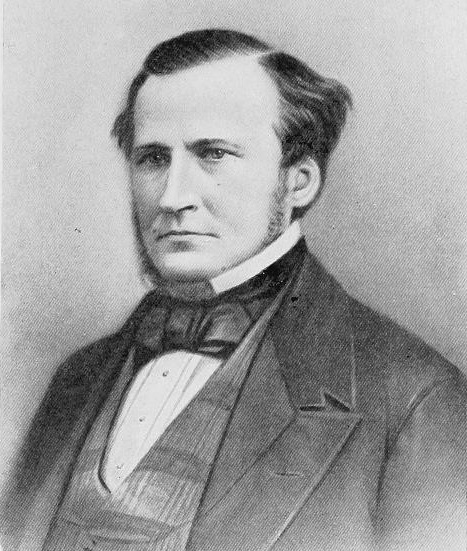
Historical · U.S. House · Nebraska · At-Large
Fenner Ferguson
Former U.S. Representative · Nebraska At-Large · 1857–1859 · Democratic
Fenner Ferguson represented Nebraska's At-Large in the United States House of Representatives (1857–1859) for the Democratic party. The page below collects sourced biographical facts, term history, committee roles, and provenance for Ferguson.
Bioguide ID: F000080
Key facts
- Full name
- Fenner Ferguson
- State
- Nebraska
- District
- At-Large
- Party
- Democratic
- House service
- 1857–1859
- First House term
- 1857
- Status
- Left office
- Current term ends
- —
- Born
- 1814
- Bioguide ID
- F000080
- Committee assignments
- —
- Dataset version
- 1.20260606
Biographical narrative
977 words · sourced from the Wikipedia REST extract
Fenner Ferguson was an American attorney and politician who served as a U.S. Representative for the Nebraska Territory during the mid-19th century. A member of the Democratic Party, Ferguson's political career included significant roles in both the Michigan House of Representatives and the judiciary of the Nebraska Territory. His tenure in the U.S. House of Representatives lasted from 1857 until 1859, marking a pivotal period in the early governance of Nebraska as it transitioned from a territory to a state. Ferguson's contributions to the legal and political frameworks of Nebraska are notable, particularly during a time of significant change in American history.
Early life and career
Fenner Ferguson was born on April 25, 1814, in Nassau, New York. He was the son of Stephen Ferguson and Dorothy Palmer Ferguson. Growing up on a farm owned by his father, Ferguson was immersed in the rural lifestyle of upstate New York. His early education took place in local schools, where he laid the groundwork for his future academic and professional pursuits. After completing his studies at Nassau Academy, Ferguson decided to pursue a career in law, which led him to the Albany, New York, law firm of Coon and Branhall. He studied diligently under the tutelage of established attorneys and was admitted to the bar in 1840.
Following his admission, Ferguson began his legal practice in Albany, where he became a partner in the firm of Coon, Branhall, and Ferguson. His early career in law was marked by a commitment to public service and community involvement. In 1846, seeking new opportunities, Ferguson relocated to Albion, Michigan. In Michigan, he continued to practice law and became actively involved in local governance. He held the position of master in chancery and served as district attorney, which allowed him to gain valuable experience in both legal and political matters. His political career took a significant step forward in 1849 when he was elected to the Michigan House of Representatives, where he represented the interests of his constituents.
House tenure
Ferguson's political journey continued to evolve when he was appointed chief justice of the Nebraska Territory in 1854 by President Franklin Pierce. This appointment marked a significant transition in his career, as it took him from Michigan to the burgeoning Nebraska Territory. Upon relocating to Bellevue, Nebraska, Ferguson took on the responsibilities of establishing the judicial system in a territory that was still in its formative stages. As chief justice, he played a crucial role in organizing the first district and supreme courts of Nebraska. His efforts were instrumental in laying the groundwork for the legal infrastructure that would support the territory's governance.
Ferguson's judicial tenure was characterized by his involvement in the drafting of the first code of laws for the Nebraska Territory. This code was essential for the administration of justice and governance in a region that was experiencing rapid growth and change. His work in this capacity demonstrated his commitment to ensuring that the legal system was both effective and reflective of the needs of the territory's inhabitants.
In 1857, Ferguson resigned from his position as chief justice to pursue a role in the U.S. Congress. He was elected as the non-voting delegate for the Nebraska Territory to the 35th Congress, where he served from March 4, 1857, until March 3, 1859. As a delegate, Ferguson represented the interests of the Nebraska Territory at a time when the region was on the cusp of significant political and social developments. His role was particularly important as Nebraska was transitioning from a territory to a state, and he was involved in discussions and decisions that would shape its future.
During his time in Congress, Ferguson participated in various legislative activities, although as a non-voting delegate, his influence was limited compared to that of full voting members. He engaged with issues pertinent to the territory, advocating for the needs and aspirations of its residents. However, after serving a single term, Ferguson chose not to seek re-nomination in 1858, marking the end of his congressional career.
Legislative focus and committees
Throughout his career, Fenner Ferguson's legislative focus was closely tied to the development and governance of the Nebraska Territory. His background as an attorney and chief justice provided him with a unique perspective on the legal and political challenges facing the territory. While specific details about the legislation he supported or the committees he served on during his time in Congress are not extensively documented, it is evident that his experiences in the judiciary informed his approach to legislative matters.
Ferguson's work in the Nebraska Territory was characterized by a commitment to establishing a stable legal framework that would support the region's growth. His involvement in drafting the first code of laws was a significant achievement that underscored his dedication to creating a just and functional legal system. As a delegate in Congress, he likely focused on issues related to land rights, governance, and the integration of Nebraska into the broader political landscape of the United States.
After leaving Congress, Ferguson returned to Bellevue, Nebraska, where he continued to be involved in the community until his death on October 11, 1859. He was buried at Bellevue Cemetery, leaving behind a legacy as a key figure in the early political and judicial history of Nebraska. His contributions to the establishment of the territory's legal system and his role in the U.S. Congress reflect the complexities of governance during a transformative period in American history.
Fenner Ferguson's life and career illustrate the interplay between law and politics in the development of the Nebraska Territory. His journey from a farm in New York to significant political roles in Michigan and Nebraska highlights the opportunities and challenges faced by early American politicians. Ferguson's legacy is marked by his commitment to public service and the foundational work he undertook in shaping the legal landscape of Nebraska.
Notable legislation
Sponsored and co-sponsored legislation for Fenner Ferguson is pending operator curation. The biographical narrative above carries the same provenance trail until per-bill rows are written.
Sources
- [1]https://en.wikipedia.org/wiki/Fenner_FergusonWikipedia · retrieved 2026-06-06
Notable quotes
Sourced quotes for Fenner Ferguson are pending operator curation. Narrative-scope provenance remains attached below.
Sources
- [1]https://en.wikipedia.org/wiki/Fenner_FergusonWikipedia · retrieved 2026-06-06
Key positions
Curated policy positions for Fenner Ferguson are pending operator review. The biographical narrative above carries the same provenance trail until per-topic positions are written.
Sources
- [1]https://en.wikipedia.org/wiki/Fenner_FergusonWikipedia · retrieved 2026-06-06
Terms served
- 1857–1859U.S. House · Term 1 · Democratic
Sources & provenance
Every attributable claim above carries a per-section [N] marker that resolves to the corresponding URL below. Each entry records the upstream provider, the canonical URL, and the timestamp at which the source was retrieved by the ingest pipeline.
Key facts
- https://bioguide.congress.gov/search/bio/F000080bioguide · retrieved 2026-06-06
- https://www.govtrack.us/congress/members/404038govtrack · retrieved 2026-06-06
Biographical narrative
- https://en.wikipedia.org/wiki/Fenner_Fergusonwikipedia · retrieved 2026-06-06
Find your representative
Every U.S. state elects representatives by district. Browse Nebraska’s delegation, the full former-representative roster, or explore the role and term length.
Related on The Candidate
- Preceded by Bird ChapmanEarlier holder of the Nebraska At-Large House seat · Democratic.Open
- Succeeded by Experience EstabrookLater holder of the Nebraska At-Large House seat.Open
- Archibald WeaverFormer U.S. Representative · Nebraska District 1 · RepublicanOpen
- Charles ReavisFormer U.S. Representative · Nebraska District 1 · RepublicanOpen
- Charles ThoneFormer U.S. Representative · Nebraska District 1 · RepublicanOpen
- Clair CallanFormer U.S. Representative · Nebraska District 1 · DemocraticOpen