
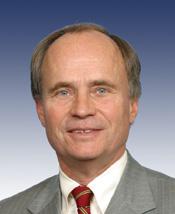
Historical · U.S. House · New Hampshire · District 2
Charlie Bass
Former U.S. Representative · New Hampshire District 2 · 1995–2013 · Republican
Charlie Bass represented New Hampshire's District 2 in the United States House of Representatives (1995–2013) for the Republican party. The page below collects sourced biographical facts, term history, committee roles, and provenance for Bass.
Bioguide ID: B000220
Key facts
- Full name
- Charlie Bass
- State
- New Hampshire
- District
- District 2
- Party
- Republican
- House service
- 1995–2013
- First House term
- 1995
- Status
- Left office
- Current term ends
- —
- Born
- 1952
- Bioguide ID
- B000220
- Committee assignments
- —
- Dataset version
- 1.20260605
Biographical narrative
1,012 words · sourced from the Wikipedia REST extract
Charles F. Bass is a former American politician who served as a member of the Republican Party in the United States House of Representatives, representing New Hampshire's 2nd congressional district. His tenure in Congress spanned from 1995 to 2007 and then again from 2011 to 2013. Bass has a notable political lineage, being the son of Perkins Bass, who also served as a U.S. Congressman for the same district in the 1950s and 1960s. Throughout his political career, Bass was involved in various legislative efforts and maintained a consistent presence in New Hampshire politics.
Early life and career
Charles Foster Bass was born on January 8, 1952, in Boston, Massachusetts, to Katharine and Perkins Bass. His family has a significant political history in New Hampshire; his father was a Republican U.S. Congressman, and his grandfather, Robert Bass, served as the Republican governor of New Hampshire from 1911 to 1912. Robert Bass was also a prominent figure in the Progressive Republican movement and had close ties with President Theodore Roosevelt. This political background likely influenced Charles Bass's own career trajectory.
Bass attended the Holderness School in Holderness, New Hampshire, where he demonstrated leadership skills by being elected President of the school during his senior year. He furthered his education at Dartmouth College, graduating in 1974. Following his graduation, Bass began his political career by working for Republican Congressman William Cohen of Maine in 1974. He continued to build his political experience by working for another Maine Republican Congressman, David F. Emery, from 1975 to 1979.
In addition to his work in Congress, Bass served in the New Hampshire General Court, the state legislature, from 1982 to 1988. His political ambitions led him to run for the New Hampshire Senate in 1988, where he successfully defeated the incumbent, Jean White, in the Republican primary and subsequently won the general election against Daniel M. Burnham. During his time in the State Senate, he represented the town of Peterborough and was known for his support of tort reform and some abortion rights, reflecting a moderate stance on certain social issues.
House tenure
Bass's journey to the U.S. House of Representatives began in 1980 when he attempted to succeed retiring Congressman James Colgate Cleveland in New Hampshire's 2nd congressional district. In that Republican primary, he faced several candidates, including Judd Gregg, who ultimately won the nomination. Bass finished third in that contest and did not run for the seat again until 1994.
In 1994, Bass successfully won the Republican primary with 29% of the vote, defeating several challengers. He then went on to win the general election, riding the wave of the Republican Revolution, which saw significant gains for the party nationwide. Bass defeated incumbent Democrat Richard Swett by a margin of 51% to 46%, marking the beginning of his congressional career.
During his initial terms in Congress from 1995 to 2007, Bass was re-elected multiple times, often by increasing margins. In 1996, he faced a primary challenge but won decisively, securing 66% of the vote. In the general election, he defeated former State Senator Deborah Arnie Arnesen by 51% to 44%. His electoral success continued through the years, with victories in 1998, 2000, 2002, and 2004, where he achieved his best performance, defeating Paul Hodes by 59% to 38%.
However, in 2006, Bass faced a challenging re-election campaign against Hodes, who had previously lost to him. Despite early leads in polling, Bass ultimately lost the election, conceding defeat after Hodes garnered 53% of the vote compared to Bass's 45%.
After a brief hiatus from Congress, Bass returned to the political arena in 2010 when Hodes opted not to seek re-election and instead ran for the U.S. Senate. Bass won the Republican primary with 42% of the vote and faced Ann McLane Kuster in the general election. The race was competitive, with polls indicating a narrowing margin as the election approached. Ultimately, Bass won the election by a narrow margin of approximately 3,550 votes, securing 48% of the vote against Kuster's 47%.
In 2012, Bass sought re-election and won the Republican primary with a significant majority, receiving 81% of the vote. However, in the general election, he was defeated by Kuster, who had previously challenged him. This loss marked the end of Bass's congressional career, with his last term concluding on January 3, 2013.
Legislative focus and committees
During his time in the U.S. House of Representatives, Charles Bass was involved in various legislative initiatives and served on several committees. His legislative focus included issues pertinent to his constituents in New Hampshire, as well as broader national concerns. While specific details about the bills he sponsored or co-sponsored are not provided, Bass's political background and his time in the New Hampshire Senate suggest that he was engaged in discussions around economic development, healthcare, and education.
Bass's experience in the New Hampshire Senate likely informed his approach to legislation in Congress, where he aimed to address the needs and interests of his district. His support for tort reform and moderate positions on social issues indicate a willingness to engage with both sides of the political spectrum, which may have contributed to his electoral success in a state known for its independent-minded voters.
Throughout his congressional career, Bass was recognized for his ability to navigate the complexities of federal legislation while remaining connected to local concerns. His tenure in Congress was marked by a commitment to representing the interests of New Hampshire's 2nd congressional district, and his background in state politics provided him with a unique perspective on the challenges facing both constituents and lawmakers.
In summary, Charles F. Bass's political career reflects a blend of family legacy and personal ambition, culminating in a significant tenure in the U.S. House of Representatives. His experiences in early political roles and the New Hampshire Senate laid the groundwork for his congressional service, where he engaged in legislative efforts that resonated with his constituents. Although his time in Congress concluded in 2013, his contributions to New Hampshire politics and the Republican Party remain a notable aspect of his biography.
Notable legislation
Sponsored and co-sponsored legislation for Charlie Bass is pending operator curation. The biographical narrative above carries the same provenance trail until per-bill rows are written.
Sources
- [1]https://en.wikipedia.org/wiki/Charles_BassWikipedia · retrieved 2026-06-05
Notable quotes
Sourced quotes for Charlie Bass are pending operator curation. Narrative-scope provenance remains attached below.
Sources
- [1]https://en.wikipedia.org/wiki/Charles_BassWikipedia · retrieved 2026-06-05
Key positions
Curated policy positions for Charlie Bass are pending operator review. The biographical narrative above carries the same provenance trail until per-topic positions are written.
Sources
- [1]https://en.wikipedia.org/wiki/Charles_BassWikipedia · retrieved 2026-06-05
Terms served
- 1995–1997U.S. House · Term 1 · Republican
- 1997–1999U.S. House · Term 2 · Republican
- 1999–2001U.S. House · Term 3 · Republican
- 2001–2003U.S. House · Term 4 · Republican
- 2003–2005U.S. House · Term 5 · Republican
- 2005–2007U.S. House · Term 6 · Republican
- 2011–2013U.S. House · Term 7 · Republican
Sources & provenance
Every attributable claim above carries a per-section [N] marker that resolves to the corresponding URL below. Each entry records the upstream provider, the canonical URL, and the timestamp at which the source was retrieved by the ingest pipeline.
Key facts
- https://bioguide.congress.gov/search/bio/B000220bioguide · retrieved 2026-06-05
- http://bass.house.gov/house.gov · retrieved 2026-06-05
Biographical narrative
- https://en.wikipedia.org/wiki/Charles_Basswikipedia · retrieved 2026-06-05
Find your representative
Every U.S. state elects representatives by district. Browse New Hampshire’s delegation, the full former-representative roster, or explore the role and term length.
Related on The Candidate
- Preceded by Richard SwettEarlier holder of the New Hampshire District 2 House seat · Democratic.Open
- Succeeded by Ann KusterLater holder of the New Hampshire District 2 House seat · Democratic.Open
- Alonzo NuteFormer U.S. Representative · New Hampshire District 1 · RepublicanOpen
- Alphonse RoyFormer U.S. Representative · New Hampshire District 1 · DemocraticOpen
- Amos TuckFormer U.S. Representative · New Hampshire District 1 · WhigOpen
- Arthur JenksFormer U.S. Representative · New Hampshire District 1 · RepublicanOpen