
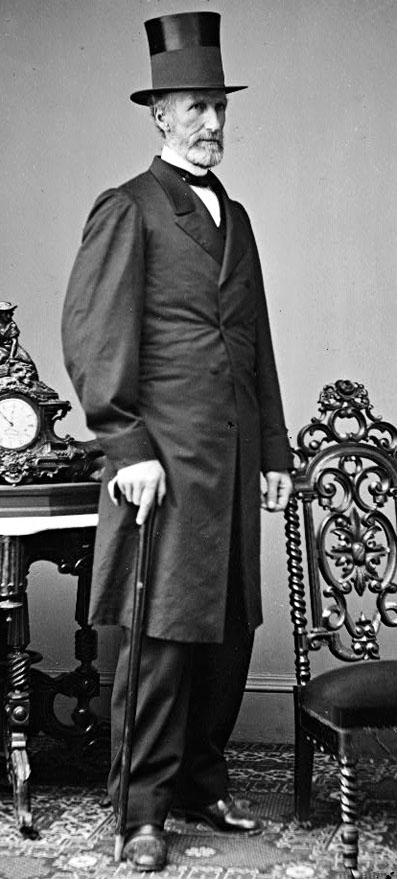
Historical · U.S. House · Nevada · At-Large
Gordon Mott
Former U.S. Representative · Nevada At-Large · 1863–1865 · Republican
Gordon Mott represented Nevada's At-Large in the United States House of Representatives (1863–1865) for the Republican party. The page below collects sourced biographical facts, term history, committee roles, and provenance for Mott.
Bioguide ID: M001038
Key facts
- Full name
- Gordon Mott
- State
- Nevada
- District
- At-Large
- Party
- Republican
- House service
- 1863–1865
- First House term
- 1863
- Status
- Left office
- Current term ends
- —
- Born
- 1812
- Bioguide ID
- M001038
- Committee assignments
- —
- Dataset version
- 1.20260606
Biographical narrative
1,025 words · sourced from the Wikipedia REST extract
Gordon Mott was a notable figure in American political history, serving as a U.S. Representative for Nevada during a pivotal time in the territory's transition to statehood. A member of the Republican Party, Mott's congressional tenure was marked by his role as the second and final delegate from the Nevada Territory to the United States House of Representatives. His political career was intertwined with significant events in American history, including the Civil War and the westward expansion of the United States. Mott's life spanned from his birth in Ohio in 1812 to his death in California in 1887, during which he engaged in various professions, including law and public service.
Early life and career
Gordon Mott was born on October 21, 1812, in Zanesville, Ohio. He pursued his education through preparatory studies before embarking on a legal career. Mott was admitted to the bar in 1836, marking the beginning of his professional life as a lawyer in Zanesville. His early career in Ohio was characterized by his dedication to the legal profession, where he built a foundation that would serve him throughout his life.
In the early 1830s, Mott moved to Texas, a region that was then embroiled in its struggle for independence from Mexico. He volunteered to serve in the Texas army, contributing to the fight for independence for approximately nine months. After this period, he returned to Ohio, where he resumed his law practice. Mott's experiences in Texas likely influenced his views on governance and the rights of territories, shaping his future political career.
In 1849, during the California Gold Rush, Mott relocated to California, seeking new opportunities. His legal expertise led him to serve as the judge of Sutter County in 1850, a role that positioned him within the burgeoning legal and political landscape of California. He later became the district judge from 1851 to 1854, further solidifying his reputation as a legal authority in the region. Mott's time in California was marked by significant growth and change, as the state was rapidly developing in the wake of the Gold Rush.
In 1861, Mott moved to Nevada, a territory that was still in the early stages of its development. His arrival coincided with a period of significant political and social change in the region. Shortly after his relocation, he was appointed by President Abraham Lincoln as the associate justice of the supreme court of the Nevada Territory on March 27, 1861. This appointment underscored Mott's legal acumen and the trust placed in him by the federal government. He served in this judicial capacity until 1863, when he resigned to pursue a political career in Congress.
House tenure
Mott's political career took a significant turn when he was elected as a Republican to the Thirty-eighth Congress, beginning his term on March 4, 1863. His election came during a tumultuous period in American history, as the nation was embroiled in the Civil War. Mott's role as a delegate from the Nevada Territory was crucial, as he represented a region that was on the brink of statehood. His tenure in the House of Representatives was relatively brief, as he served until October 31, 1864, when Nevada was admitted as a state.
During his time in Congress, Mott was involved in discussions and decisions that would shape the future of Nevada and its integration into the Union. However, his congressional career was marked by an unusual circumstance. Although he was elected to represent Nevada, he did not take his seat in Congress. Reports suggest that Mott was expected to travel to Washington, D.C., to fulfill his duties, but instead, he chose to return to Ohio, allegedly due to health concerns. This decision meant that he did not actively participate in the legislative process during his time as a delegate.
Mott's congressional term was significant in that it coincided with Nevada's transition from a territory to a state. His election as a delegate was part of the broader efforts to secure representation for the newly formed state, which was eager to establish its presence in the federal government. Despite his limited participation in Congress, Mott's election was a reflection of the growing political importance of Nevada during this era.
Following his congressional term, Mott did not seek further elective office in the newly established state of Nevada. His decision to step back from politics marked the end of his formal political career, although his contributions to the legal and political landscape of the region remained significant.
Legislative focus and committees
While specific details regarding Mott's legislative focus and committee assignments during his time in Congress are not extensively documented, it is important to contextualize his role within the broader legislative framework of the period. As a delegate from a territory on the cusp of statehood, Mott's primary responsibilities would have included advocating for the interests of Nevada and addressing the unique challenges faced by the territory.
During the 1860s, issues such as land rights, mining regulations, and infrastructure development were paramount in the western territories. Mott's background as a lawyer and judge likely informed his understanding of these issues, enabling him to represent the concerns of his constituents effectively. The transition from territory to statehood brought with it a host of legislative challenges, including the need for representation in Congress and the establishment of a state government.
Mott's tenure in Congress occurred during a time of significant national strife, with the Civil War influencing many aspects of governance and legislation. The war impacted various policies, including those related to territorial expansion and statehood. Mott's role as a delegate would have required navigating these complex political dynamics, balancing the needs of his constituents with the broader national interests.
After his departure from Congress, Mott continued to reside in California, where he passed away on April 27, 1887. He was interred in Laurel Hill Cemetery, leaving behind a legacy tied to the early political history of Nevada and the broader narrative of American expansion during the 19th century. Mott's life and career reflect the complexities of American governance during a transformative period, highlighting the interplay between law, politics, and the evolving identity of the western territories.
Notable legislation
Sponsored and co-sponsored legislation for Gordon Mott is pending operator curation. The biographical narrative above carries the same provenance trail until per-bill rows are written.
Sources
- [1]https://en.wikipedia.org/wiki/Gordon_Newell_MottWikipedia · retrieved 2026-06-06
Notable quotes
Sourced quotes for Gordon Mott are pending operator curation. Narrative-scope provenance remains attached below.
Sources
- [1]https://en.wikipedia.org/wiki/Gordon_Newell_MottWikipedia · retrieved 2026-06-06
Key positions
Curated policy positions for Gordon Mott are pending operator review. The biographical narrative above carries the same provenance trail until per-topic positions are written.
Sources
- [1]https://en.wikipedia.org/wiki/Gordon_Newell_MottWikipedia · retrieved 2026-06-06
Terms served
- 1863–1865U.S. House · Term 1 · Republican
Sources & provenance
Every attributable claim above carries a per-section [N] marker that resolves to the corresponding URL below. Each entry records the upstream provider, the canonical URL, and the timestamp at which the source was retrieved by the ingest pipeline.
Key facts
- https://bioguide.congress.gov/search/bio/M001038bioguide · retrieved 2026-06-06
- https://www.govtrack.us/congress/members/408005govtrack · retrieved 2026-06-06
Biographical narrative
- https://en.wikipedia.org/wiki/Gordon_Newell_Mottwikipedia · retrieved 2026-06-06
Find your representative
Every U.S. state elects representatives by district. Browse Nevada’s delegation, the full former-representative roster, or explore the role and term length.
Related on The Candidate
- Preceded by John CradlebaughEarlier holder of the Nevada At-Large House seat.Open
- Succeeded by Delos AshleyLater holder of the Nevada At-Large House seat · Republican.Open
- James BilbrayFormer U.S. Representative · Nevada District 1 · DemocraticOpen
- Shelley BerkleyFormer U.S. Representative · Nevada District 1 · DemocraticOpen
- Barbara VucanovichFormer U.S. Representative · Nevada District 2 · RepublicanOpen
- Jim GibbonsFormer U.S. Representative · Nevada District 2 · RepublicanOpen