
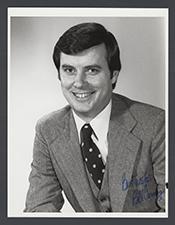
Historical · U.S. House · New York · District 1
William Carney
Former U.S. Representative · New York District 1 · 1979–1987 · Republican
William Carney represented New York's District 1 in the United States House of Representatives (1979–1987) for the Republican party. The page below collects sourced biographical facts, term history, committee roles, and provenance for Carney.
Bioguide ID: C000165
Key facts
- Full name
- William Carney
- State
- New York
- District
- District 1
- Party
- Republican
- House service
- 1979–1987
- First House term
- 1979
- Status
- Left office
- Current term ends
- —
- Born
- 1942
- Bioguide ID
- C000165
- Committee assignments
- —
- Dataset version
- 1.20260605
Biographical narrative
955 words · sourced from the Wikipedia REST extract
William Carney was an American politician who served as a U.S. Representative for New York's 1st congressional district from 1979 until 1987. A member of the Republican Party, Carney is notable for being the only registered member of the Conservative Party of New York State to be elected to the U.S. House of Representatives. His political career included a tenure in the Suffolk County Legislature prior to his election to Congress, and he was known for his involvement in various legislative issues during his time in office.
Early life and career
William Carney was born on July 1, 1942, in Brooklyn, New York City, to Joseph and Sally Carney. He completed his secondary education at Delehanty High School in 1960 and subsequently attended Florida State University for a brief period from 1960 to 1961. Carney's early adult life included military service; he was a member of the United States Army Medical Corps from 1961 to 1964.
In April 1965, Carney met Barbara Ann Haverlin, and they became engaged shortly thereafter. The couple married on May 14, 1966, and they had two children together. Before entering the political arena, Carney worked as a salesman for heavy equipment in Hauppauge, New York, which provided him with experience in business and public relations.
Carney's political career began in 1975 when he received the Conservative Party's nomination to run for the Suffolk County Legislature, representing the sixth district. He successfully defeated the incumbent legislator, Angela Christenson, in the general election and took office in January 1976. Carney served in the Suffolk County Legislature until December 1978, when he chose to run for a seat in the United States House of Representatives.
House tenure
Carney's entry into the U.S. House of Representatives was facilitated by a unique political arrangement during the 1978 gubernatorial election in New York. Perry B. Duryea Jr., the Republican nominee for governor, sought the Conservative Party's ballot line, leading to a compromise that allowed Carney to run in the Republican primary for the 1st congressional district. He won the primary against four opponents and subsequently defeated Democratic candidate John Randolph in the general election. This victory marked Carney as the first registered member of the Conservative Party to be elected to the U.S. Congress.
During his tenure, Carney was re-elected three additional times. In the 1980 elections, he won the Republican primary against John Hart and also received nominations from the Conservative Party and the New York State Right to Life Party. He continued to build on his electoral success by defeating Democratic nominee Thomas Twomey in the general election. In 1982, Carney announced his intention to seek re-election and won decisively against Democratic nominee Ethan Eldon, garnering over sixty percent of the popular vote with the support of the Republican, Conservative, and Right to Life parties.
In 1984, Carney faced a more competitive race. He won the Republican primary against Suffolk County legislator Gregory Blass, who sought a recount after the primary results. In the general election, Carney narrowly defeated George J. Hochbrueckner, a Democratic candidate who had formed a coalition known as Ratepayers Against Lilco in opposition to the Shoreham Nuclear Power Plant, which Carney supported.
Throughout his time in Congress, Carney maintained a notable attendance record, achieving a 100% voting attendance rate during his tenure. He was recognized for his conservative positions, although he received a zero percent rating from the American Civil Liberties Union in 1980, indicating a strong alignment with conservative values. In 1981, he was selected by President Ronald Reagan to meet with Pope John Paul II during a brief stop in Anchorage, Alaska, an event that highlighted his engagement in significant national and international matters.
In 1985, Carney was appointed to the House Committee on Armed Services, reflecting his interest in defense and military issues. Later that year, he announced a change in his party affiliation from Conservative to Republican, a strategic move aimed at enhancing his prospects for a leadership role within the Republican caucus. This decision was met with mixed reactions, particularly from Conservative Party leaders in his district.
Despite his previous electoral successes, Carney's popularity began to decline due to his support for the Shoreham Nuclear Power Plant, which faced significant opposition from constituents. On May 22, 1986, he announced that he would not seek re-election, acknowledging the rising discontent among voters regarding his stance on the controversial project.
Legislative focus and committees
During his time in the House of Representatives, Carney's legislative focus included issues related to defense, energy, and local governance. His appointment to the House Committee on Armed Services positioned him to influence military policy and defense appropriations, areas of significant importance during the Cold War era. Carney's alignment with conservative principles was evident in his voting record and public statements, reflecting the priorities of his constituents and the broader Republican agenda.
Carney's tenure was characterized by a commitment to his party's values, which included a strong emphasis on national defense and limited government intervention. His involvement in the Suffolk County Executive's re-election committee in 1983 further demonstrated his engagement in local political dynamics and his efforts to support fellow Republicans.
After leaving Congress in 1987, Carney continued to be involved in public service and was appointed to a position with the American Security Council Foundation, where he earned a substantial salary. His later years were marked by a battle with prostate cancer, which he was diagnosed with in 2013. William Carney passed away on May 22, 2017, in Washington, D.C., leaving behind a legacy as a notable figure in New York's political landscape. His contributions to the U.S. House of Representatives and his unique position as a member of the Conservative Party remain significant aspects of his political biography.
Notable legislation
Sponsored and co-sponsored legislation for William Carney is pending operator curation. The biographical narrative above carries the same provenance trail until per-bill rows are written.
Sources
- [1]https://en.wikipedia.org/wiki/William_Carney_(politician)Wikipedia · retrieved 2026-06-05
Notable quotes
Sourced quotes for William Carney are pending operator curation. Narrative-scope provenance remains attached below.
Sources
- [1]https://en.wikipedia.org/wiki/William_Carney_(politician)Wikipedia · retrieved 2026-06-05
Key positions
Curated policy positions for William Carney are pending operator review. The biographical narrative above carries the same provenance trail until per-topic positions are written.
Sources
- [1]https://en.wikipedia.org/wiki/William_Carney_(politician)Wikipedia · retrieved 2026-06-05
Terms served
- 1979–1981U.S. House · Term 1 · Republican
- 1981–1983U.S. House · Term 2 · Republican
- 1983–1985U.S. House · Term 3 · Republican
- 1985–1987U.S. House · Term 4 · Republican
Sources & provenance
Every attributable claim above carries a per-section [N] marker that resolves to the corresponding URL below. Each entry records the upstream provider, the canonical URL, and the timestamp at which the source was retrieved by the ingest pipeline.
Key facts
- https://bioguide.congress.gov/search/bio/C000165bioguide · retrieved 2026-06-05
- https://www.govtrack.us/congress/members/402313govtrack · retrieved 2026-06-05
Biographical narrative
- https://en.wikipedia.org/wiki/William_Carney_(politician)wikipedia · retrieved 2026-06-05
Find your representative
Every U.S. state elects representatives by district. Browse New York’s delegation, the full former-representative roster, or explore the role and term length.
Related on The Candidate
- Preceded by Otis PikeEarlier holder of the New York District 1 House seat · Democratic.Open
- Succeeded by George HochbruecknerLater holder of the New York District 1 House seat · Democratic.Open
- Abel HuntingtonFormer U.S. Representative · New York District 1 · JacksonOpen
- Alfred ChapinFormer U.S. Representative · New York District 1 · DemocraticOpen
- Cadwallader ColdenFormer U.S. Representative · New York District 1 · FederalistOpen
- Charles FloydFormer U.S. Representative · New York District 1 · DemocraticOpen