
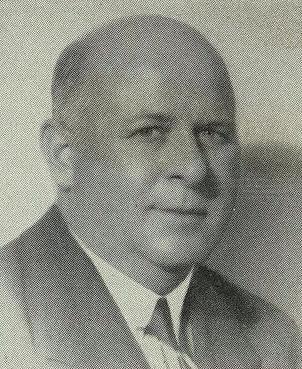
Historical · U.S. House · New York · District 16
James Murphy
Former U.S. Representative · New York District 16 · 1949–1953 · Democratic
James Murphy represented New York's District 16 in the United States House of Representatives (1949–1953) for the Democratic party. The page below collects sourced biographical facts, term history, committee roles, and provenance for Murphy.
Bioguide ID: M001094
Key facts
- Full name
- James Murphy
- State
- New York
- District
- District 16
- Party
- Democratic
- House service
- 1949–1953
- First House term
- 1949
- Status
- Left office
- Current term ends
- —
- Born
- 1898
- Bioguide ID
- M001094
- Committee assignments
- —
- Dataset version
- 1.20260605
Biographical narrative
951 words · sourced from the Wikipedia REST extract
James Murphy was an American businessman and politician who served as a U.S. Representative for New York's 16th congressional district from 1949 to 1953. A member of the Democratic Party, Murphy's political career was marked by his commitment to public service, which was informed by his experiences as a World War I veteran and his background in business. His tenure in the House of Representatives was characterized by a focus on issues pertinent to his constituents, and he remained active in local politics even after his congressional service.
Early life and career
James Joseph Murphy was born on November 3, 1898, in Brooklyn, New York. He grew up in a family that valued education, and he received his early schooling in the public schools of Staten Island. This educational foundation would serve him well as he navigated various professional paths throughout his life.
Murphy's early career was significantly influenced by his military service. In 1916, he served as a noncommissioned officer with the 1st New York Cavalry during the Pancho Villa Expedition, which was a military operation aimed at capturing the Mexican revolutionary leader Francisco "Pancho" Villa. This experience provided Murphy with early leadership skills and a sense of duty to his country. His military service continued during World War I, where he served as a sergeant in the 104th Machine Gun Battalion, part of the 27th Division. His unit was deployed to France and Belgium, where they participated in key battles that were critical to the outcome of the war. The experiences he gained during this time likely shaped his perspectives on leadership, service, and the importance of civic engagement.
Following his military service, Murphy transitioned into the business world, where he engaged in the import and export shipping industry in New York City. This role allowed him to develop a keen understanding of commerce and trade, which would later inform his legislative priorities. His business acumen and experience in shipping positioned him well for a career in politics, where economic issues often intersect with public policy.
House tenure
Murphy's political career began to take shape in the late 1940s when he decided to run for office. In 1948, he successfully campaigned for a seat in the U.S. House of Representatives, representing New York's 16th congressional district. His election to the 81st Congress marked the beginning of his formal political career at the national level. Murphy was a member of the Democratic Party, which was influential in shaping the political landscape of the time.
He took office on January 3, 1949, and quickly became involved in the legislative process. During his time in Congress, he served two full terms, having been reelected in 1950. His tenure in the House was characterized by active participation in various legislative discussions and initiatives. Murphy's focus on the needs of his constituents was evident as he addressed issues relevant to the district he represented.
Despite his efforts and contributions, Murphy faced challenges in his political career. He sought reelection in 1952 but was ultimately unsuccessful in his bid to continue serving in the House. His term ended on January 3, 1953, marking a significant transition in his career. However, his commitment to public service did not end with his departure from Congress.
After leaving the House, Murphy continued to engage in local politics and public service. He served on the New York City Council from 1954 to 1957, further demonstrating his dedication to the community and the political process. His experience in the City Council allowed him to remain involved in governance and local issues, reinforcing his belief in the importance of civic engagement.
Legislative focus and committees
During his time in the House of Representatives, James Murphy was known for his focus on issues that directly impacted his constituents and the broader community. While specific details about the legislation he supported or the committees he served on are not provided, it is common for representatives to engage with matters related to economic development, infrastructure, and social services, particularly in urban districts like New York's 16th.
Murphy's background in business likely influenced his approach to economic issues, as he would have been attuned to the needs of local businesses and the importance of fostering a healthy economic environment. His experience in the shipping industry may have also led him to advocate for policies that supported trade and commerce, which are vital to New York's economy.
In addition to economic matters, representatives often address social issues that affect their constituents. Given the time period in which Murphy served, he may have been involved in discussions surrounding post-war recovery, housing, and labor rights, all of which were significant topics during the late 1940s and early 1950s. His military service may have also instilled in him a commitment to veterans' issues, which were particularly relevant as many servicemen and women returned to civilian life after the war.
After his congressional tenure, Murphy's continued involvement in local politics through the New York City Council allowed him to maintain a focus on legislative matters that affected the community. His work in this capacity would have provided him with further opportunities to address the needs of his constituents and advocate for policies that promoted the welfare of the people he represented.
James Murphy passed away on October 19, 1962, in Staten Island, where he had resided for much of his life. He was buried at Saint Peter's Cemetery on Staten Island, leaving behind a legacy of public service and commitment to his community. His life and career reflect the journey of a dedicated individual who transitioned from military service to business and ultimately to a role in public office, embodying the values of civic duty and engagement.
Notable legislation
Sponsored and co-sponsored legislation for James Murphy is pending operator curation. The biographical narrative above carries the same provenance trail until per-bill rows are written.
Sources
- [1]https://en.wikipedia.org/wiki/James_J._MurphyWikipedia · retrieved 2026-06-05
Notable quotes
Sourced quotes for James Murphy are pending operator curation. Narrative-scope provenance remains attached below.
Sources
- [1]https://en.wikipedia.org/wiki/James_J._MurphyWikipedia · retrieved 2026-06-05
Key positions
Curated policy positions for James Murphy are pending operator review. The biographical narrative above carries the same provenance trail until per-topic positions are written.
Sources
- [1]https://en.wikipedia.org/wiki/James_J._MurphyWikipedia · retrieved 2026-06-05
Terms served
- 1949–1951U.S. House · Term 1 · Democratic
- 1951–1953U.S. House · Term 2 · Democratic
Sources & provenance
Every attributable claim above carries a per-section [N] marker that resolves to the corresponding URL below. Each entry records the upstream provider, the canonical URL, and the timestamp at which the source was retrieved by the ingest pipeline.
Key facts
- https://bioguide.congress.gov/search/bio/M001094bioguide · retrieved 2026-06-05
- https://www.govtrack.us/congress/members/408058govtrack · retrieved 2026-06-05
Biographical narrative
- https://en.wikipedia.org/wiki/James_J._Murphywikipedia · retrieved 2026-06-05
Find your representative
Every U.S. state elects representatives by district. Browse New York’s delegation, the full former-representative roster, or explore the role and term length.
Related on The Candidate
- Preceded by Ellsworth BuckEarlier holder of the New York District 16 House seat · Republican.Open
- Succeeded by Elizabeth HoltzmanLater holder of the New York District 16 House seat · Democratic.Open
- Abel HuntingtonFormer U.S. Representative · New York District 1 · JacksonOpen
- Alfred ChapinFormer U.S. Representative · New York District 1 · DemocraticOpen
- Cadwallader ColdenFormer U.S. Representative · New York District 1 · FederalistOpen
- Charles FloydFormer U.S. Representative · New York District 1 · DemocraticOpen