
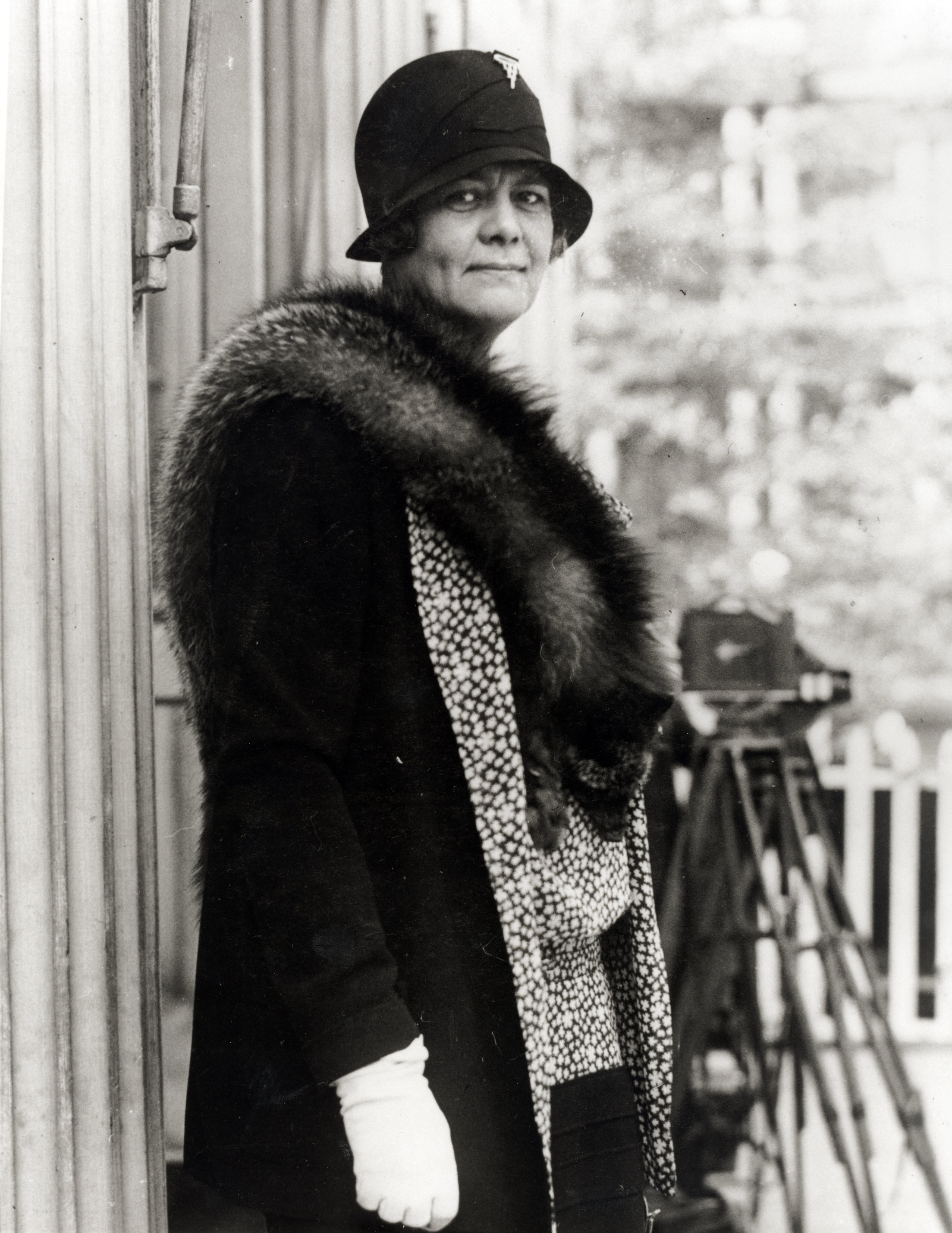
Historical · U.S. House · New York · District 17
Ruth Pratt
Former U.S. Representative · New York District 17 · 1929–1933 · Republican
Ruth Pratt represented New York's District 17 in the United States House of Representatives (1929–1933) for the Republican party. The page below collects sourced biographical facts, term history, committee roles, and provenance for Pratt.
Bioguide ID: P000505
Key facts
- Full name
- Ruth Pratt
- State
- New York
- District
- District 17
- Party
- Republican
- House service
- 1929–1933
- First House term
- 1929
- Status
- Left office
- Current term ends
- —
- Born
- 1877
- Bioguide ID
- P000505
- Committee assignments
- —
- Dataset version
- 1.20260606
Biographical narrative
876 words · sourced from the Wikipedia REST extract
Ruth Pratt was an American politician who served as a U.S. Representative for New York's 17th congressional district from 1929 to 1933. A member of the Republican Party, she made history as the first woman elected to Congress from New York. Pratt's tenure in the House of Representatives was marked by her involvement in significant legislation and her active participation in various political organizations. Her contributions to public service extended beyond her congressional career, reflecting her commitment to civic engagement and women's representation in politics.
Early life and career
Ruth Sears Pratt was born on August 24, 1877, in Ware, Massachusetts, to Carrie V. Baker and Edwin H. Baker, who was a cotton manufacturer. Growing up in a family with a strong emphasis on education, Pratt attended Dana Hall, a private school known for its rigorous academic curriculum. She furthered her education at Wellesley College, where she studied mathematics, demonstrating her aptitude for analytical thinking and problem-solving. In addition to her academic pursuits, Pratt spent a year and a half studying violin at the Conservatory of Liège in Belgium, showcasing her artistic talents.
Pratt's political career began to take shape in the 1920s. She played a notable role in the 1920 presidential election as a presidential elector for candidates Warren G. Harding and Calvin Coolidge. Her involvement in politics deepened when she supported Frank J. Coleman Jr. in his candidacy for leadership within the Fifteenth Assembly District in 1924, helping to galvanize women's support for his campaign. Following this, she was appointed as an associate leader of the District and later became its secretary.
In 1925, Pratt made history by becoming the first woman to serve on the Board of Aldermen in New York City. She was re-elected in 1927 and served in this capacity until March 1, 1929. Her election to the Board of Aldermen marked a significant milestone in the representation of women in local government. Additionally, Pratt was active in the Republican National Committee from 1929 to 1943 and participated as a delegate in several Republican National Conventions throughout the 1920s and 1930s. She also served as president of the Women's National Republican Club from 1943 to 1946, further solidifying her role as a leader in women's political organizations.
House tenure
Ruth Pratt was elected to the U.S. House of Representatives as a Republican in 1928, beginning her first term in 1929. Her election was significant as she became the first woman to represent New York in Congress, a notable achievement in a time when women's participation in politics was still limited. During her time in the House, she served in the 71st and 72nd Congresses, where she was involved in various legislative activities.
Pratt's congressional career included a notable legislative accomplishment: she co-introduced the Pratt-Smoot Act alongside Senator Reed Smoot. This act, which was passed by Congress and signed into law by President Herbert Hoover on March 3, 1931, allocated $100,000 to the Library of Congress for the purpose of providing books to blind adults. This initiative, known as Books for the Blind, has undergone numerous amendments and expansions over the years, continuing to serve its purpose today.
Despite her achievements, Pratt faced challenges in her political career. In 1932, she ran for re-election but was defeated by Democratic candidate Theodore Peyser. This loss marked the end of her tenure in the House of Representatives, concluding her time in Congress on March 3, 1933. Her political journey, however, left a lasting impact on the representation of women in government and set a precedent for future female politicians in New York.
Legislative focus and committees
During her time in the House of Representatives, Ruth Pratt focused on issues that were significant to her constituents and aligned with her values as a Republican. Her involvement in the Pratt-Smoot Act highlighted her commitment to social welfare and accessibility for individuals with disabilities. By advocating for resources to support blind adults, Pratt demonstrated an understanding of the importance of education and access to information for all members of society.
In addition to her work on the Pratt-Smoot Act, Pratt's legislative activities encompassed a range of topics relevant to her district and the nation. While specific details about her committee assignments and additional legislative initiatives are not extensively documented, her role as a pioneering female representative undoubtedly influenced her approach to governance and policy-making. As a member of the Republican National Committee and a delegate to multiple national conventions, Pratt was also involved in shaping party platforms and strategies, further extending her influence beyond her congressional duties.
Pratt's legacy as a trailblazer for women in politics is underscored by her active participation in various political organizations and her commitment to civic engagement throughout her life. After her congressional career, she continued to be involved in political activities, serving in leadership roles within the Republican Party and advocating for women's rights and representation.
Ruth Pratt passed away on August 23, 1965, just one day shy of her 88th birthday. She was interred at the Pratt Family Mausoleum in Glen Cove, Long Island. Her life and career remain significant in the history of women's participation in American politics, particularly in New York, where she broke barriers and paved the way for future generations of female leaders.
Notable legislation
Sponsored and co-sponsored legislation for Ruth Pratt is pending operator curation. The biographical narrative above carries the same provenance trail until per-bill rows are written.
Sources
- [1]https://en.wikipedia.org/wiki/Ruth_Baker_PrattWikipedia · retrieved 2026-06-06
Notable quotes
Sourced quotes for Ruth Pratt are pending operator curation. Narrative-scope provenance remains attached below.
Sources
- [1]https://en.wikipedia.org/wiki/Ruth_Baker_PrattWikipedia · retrieved 2026-06-06
Key positions
Curated policy positions for Ruth Pratt are pending operator review. The biographical narrative above carries the same provenance trail until per-topic positions are written.
Sources
- [1]https://en.wikipedia.org/wiki/Ruth_Baker_PrattWikipedia · retrieved 2026-06-06
Terms served
- 1929–1931U.S. House · Term 1 · Republican
- 1931–1933U.S. House · Term 2 · Republican
Sources & provenance
Every attributable claim above carries a per-section [N] marker that resolves to the corresponding URL below. Each entry records the upstream provider, the canonical URL, and the timestamp at which the source was retrieved by the ingest pipeline.
Key facts
- https://bioguide.congress.gov/search/bio/P000505bioguide · retrieved 2026-06-06
- https://www.govtrack.us/congress/members/408890govtrack · retrieved 2026-06-06
Biographical narrative
- https://en.wikipedia.org/wiki/Ruth_Baker_Prattwikipedia · retrieved 2026-06-06
Find your representative
Every U.S. state elects representatives by district. Browse New York’s delegation, the full former-representative roster, or explore the role and term length.
Related on The Candidate
- Preceded by William CohenEarlier holder of the New York District 17 House seat · Democratic.Open
- Succeeded by Theodore PeyserLater holder of the New York District 17 House seat · Democratic.Open
- Abel HuntingtonFormer U.S. Representative · New York District 1 · JacksonOpen
- Alfred ChapinFormer U.S. Representative · New York District 1 · DemocraticOpen
- Cadwallader ColdenFormer U.S. Representative · New York District 1 · FederalistOpen
- Charles FloydFormer U.S. Representative · New York District 1 · DemocraticOpen