
Historical · U.S. House · Ohio · District 1
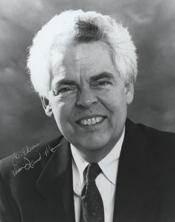
David Mann
Former U.S. Representative · Ohio District 1 · 1993–1995 · Democratic
David Mann represented Ohio's District 1 in the United States House of Representatives (1993–1995) for the Democratic party. The page below collects sourced biographical facts, term history, committee roles, and provenance for Mann.
Bioguide ID: M000100
Key facts
- Full name
- David Mann
- State
- Ohio
- District
- District 1
- Party
- Democratic
- House service
- 1993–1995
- First House term
- 1993
- Status
- Left office
- Current term ends
- —
- Born
- 1939
- Bioguide ID
- M000100
- Committee assignments
- —
- Dataset version
- 1.20260605
Biographical narrative
911 words · sourced from the Wikipedia REST extract
David Mann is a former American politician and lawyer who served as a U.S. Representative for Ohio's 1st congressional district from 1993 to 1995. A member of the Democratic Party, Mann's political career includes significant local governance roles, including serving on the Cincinnati City Council and holding the office of mayor on two occasions. His tenure in the U.S. Congress was marked by a mix of support and opposition to key Democratic initiatives during the presidency of Bill Clinton.
Early life and career
David Mann was born on September 25, 1939, in Park Hills, Kentucky, a suburb of Cincinnati. His early life was shaped by his family's experiences during World War II, as his father served in the United States Navy. During this time, Mann lived with his mother in her hometown of Horse Cave, Kentucky, before moving to the Bronx, where his father was stationed. Eventually, the family settled in Cincinnati, where Mann would later pursue his education and career.
Mann completed his high school education at Dixie Heights High School and went on to Harvard University, where he was awarded a Navy ROTC scholarship. He graduated cum laude in 1961 with a degree in biochemical science. Following his graduation, Mann served in the Navy from 1961 to 1965, achieving the rank of lieutenant and serving aboard the destroyer USS English during the Cuban Missile Crisis. His military service had a profound impact on him, particularly the assassination of President John F. Kennedy, which influenced his decision to attend law school instead of pursuing a medical career. He enrolled at Harvard Law School, earning a Bachelor of Laws degree magna cum laude in 1968, during which time he also served as an editor of the Harvard Law Review.
After completing his legal education, Mann returned to the Cincinnati area to be closer to his family. His initial foray into politics began with grassroots efforts, such as erecting yard signs for Jack Gilligan's unsuccessful Senate campaign in 1968. Although he sought to contribute more substantively to the campaign, his request to help with policy proposals was not accepted. He later supported Tom Luken's campaign for a seat on the Cincinnati City Council, marking the beginning of his long-standing involvement in local politics.
House tenure
Mann's political career at the municipal level began in earnest when he was appointed to Cincinnati's City Council in 1974, following an unsuccessful bid for the position the previous year. He was appointed to fill the vacancy left by Jerry Springer, who resigned amid a scandal. During his time on the City Council, Mann was active in various initiatives, including implementing a consent decree for the Cincinnati Police Department that aimed to address issues of racial and gender representation in hiring practices.
Mann's leadership extended to the role of mayor, which he held twice during his tenure on the City Council. His first term as mayor lasted from December 1980 to November 1982, and he served again from January to November 1991. During these periods, the mayoral office was largely ceremonial, with the position being filled by a vote among council members. Mann's political influence grew, and he became a prominent figure in local governance.
In the early 1990s, with the decision of incumbent Congressman Charlie Luken not to seek re-election, Mann transitioned from local to national politics. He decided to run for the U.S. House of Representatives in Ohio's 1st congressional district, leveraging his established name recognition. Mann won the Democratic primary in a closely contested race and subsequently secured victory in the general election, beginning his term in the 103rd Congress in 1993.
Legislative focus and committees
During his time in the U.S. House of Representatives, Mann was a member of the House Armed Services Committee and the House Judiciary Committee. His legislative record includes sponsoring five bills, reflecting his engagement with various policy issues. Mann's voting patterns were characterized by a mix of support and skepticism towards the Clinton administration's initiatives. He opposed President Bill Clinton's stimulus package and budget proposal, expressing reservations about the administration's health care plan. Additionally, he called for further investigation into the Whitewater controversy, which was a significant political issue at the time.
Despite his alignment with some Democratic policies, Mann's support for certain initiatives, such as the Brady Bill—which established a waiting period for handgun purchases—demonstrated his willingness to engage with gun control measures. However, his vote in favor of the North American Free Trade Agreement (NAFTA) drew criticism from labor groups, impacting his standing among some of his traditional allies. Mann later expressed regret for his support of the 1994 Crime Bill, indicating a complex relationship with the evolving Democratic agenda.
Mann's tenure in Congress was marked by challenges, particularly in the lead-up to the 1994 elections. Facing backlash from labor unions due to his support for NAFTA, he was challenged in the Democratic primary by State Senator William Bowen. The primary race was notable for the involvement of the Clinton administration, which backed Mann. Despite this support, Mann's political fortunes changed, and he ultimately lost his bid for re-election.
Mann's congressional career concluded when his term ended on January 3, 1995. Following his departure from the House, he continued to engage in public service at the local level, returning to the Cincinnati City Council from 2013 to 2022. His political journey reflects a commitment to public service that has spanned several decades, encompassing various roles and responsibilities within both local and national governance.
Notable legislation
Sponsored and co-sponsored legislation for David Mann is pending operator curation. The biographical narrative above carries the same provenance trail until per-bill rows are written.
Sources
- [1]https://en.wikipedia.org/wiki/David_S._MannWikipedia · retrieved 2026-06-05
Notable quotes
Sourced quotes for David Mann are pending operator curation. Narrative-scope provenance remains attached below.
Sources
- [1]https://en.wikipedia.org/wiki/David_S._MannWikipedia · retrieved 2026-06-05
Key positions
Curated policy positions for David Mann are pending operator review. The biographical narrative above carries the same provenance trail until per-topic positions are written.
Sources
- [1]https://en.wikipedia.org/wiki/David_S._MannWikipedia · retrieved 2026-06-05
Terms served
- 1993–1995U.S. House · Term 1 · Democratic
Sources & provenance
Every attributable claim above carries a per-section [N] marker that resolves to the corresponding URL below. Each entry records the upstream provider, the canonical URL, and the timestamp at which the source was retrieved by the ingest pipeline.
Key facts
- https://bioguide.congress.gov/search/bio/M000100bioguide · retrieved 2026-06-05
- https://www.govtrack.us/congress/members/407124govtrack · retrieved 2026-06-05
Biographical narrative
- https://en.wikipedia.org/wiki/David_S._Mannwikipedia · retrieved 2026-06-05
Find your representative
Every U.S. state elects representatives by district. Browse Ohio’s delegation, the full former-representative roster, or explore the role and term length.
Related on The Candidate
- Preceded by Charles LukenEarlier holder of the Ohio District 1 House seat · Democratic.Open
- Succeeded by Steve ChabotLater holder of the Ohio District 1 House seat · Republican.Open
- Aaron PerryFormer U.S. Representative · Ohio District 1 · RepublicanOpen
- Alexander DuncanFormer U.S. Representative · Ohio District 1 · DemocraticOpen
- Bellamy StorerFormer U.S. Representative · Ohio District 1 · WhigOpen
- Bellamy StorerFormer U.S. Representative · Ohio District 1 · RepublicanOpen