
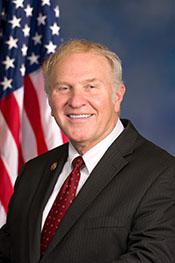
Historical · U.S. House · Ohio · District 1
Steve Chabot
Former U.S. Representative · Ohio District 1 · 1995–2023 · Republican
Steve Chabot represented Ohio's District 1 in the United States House of Representatives (1995–2023) for the Republican party. The page below collects sourced biographical facts, term history, committee roles, and provenance for Chabot.
Bioguide ID: C000266
Key facts
- Full name
- Steve Chabot
- State
- Ohio
- District
- District 1
- Party
- Republican
- House service
- 1995–2023
- First House term
- 1995
- Status
- Left office
- Current term ends
- —
- Born
- 1953
- Bioguide ID
- C000266
- Committee assignments
- —
- Dataset version
- 1.20260603
Biographical narrative
864 words · sourced from the Wikipedia REST extract
Steven Joseph Chabot is a former American politician and lawyer who served as a U.S. Representative for Ohio's 1st congressional district. A member of the Republican Party, Chabot's congressional career spanned from 1995 to 2009 and then again from 2011 until his departure from office in January 2023. Throughout his tenure, he was known for his involvement in various legislative matters and committee assignments, reflecting his political priorities and the interests of his constituents.
Early life and career
Steve Chabot was born on January 22, 1953, in Cincinnati, Ohio. He is the son of Gerard Joseph Chabot and Doris Leona Chabot (née Tilley) and has French-Canadian ancestry on his father's side. Chabot completed his secondary education at La Salle High School in Cincinnati, graduating in 1971. He pursued higher education at the College of William and Mary, where he earned a Bachelor of Arts degree in physical education in 1975. Following his undergraduate studies, Chabot attended Northern Kentucky University Salmon P. Chase College of Law, obtaining his Juris Doctor degree in 1978.
Before entering politics, Chabot worked as an elementary school teacher from 1975 to 1976 while attending law school at night. He later taught political science at the University of Cincinnati and held a leadership position as the chair of the Boy Scouts of Cincinnati. After completing his law degree, Chabot practiced law as a sole practitioner from 1978 until 1994, focusing on domestic disputes and the drafting of wills from his small office in Westwood, Ohio.
Chabot's early political career began with an unsuccessful bid for the Cincinnati City Council as an independent candidate in 1979, followed by another unsuccessful attempt as a Republican in 1983. He successfully won a seat on the council in 1985 and was re-elected for four consecutive years. In 1988, he challenged the seven-term incumbent Democrat Tom Luken for a seat in the U.S. House of Representatives but was defeated. Chabot was appointed as a Commissioner of Hamilton County, Ohio, in 1990, and he was subsequently elected to that position in 1990 and 1992, serving until 1994.
House tenure
Chabot's congressional career began in 1995 when he ran for the U.S. House of Representatives and defeated Democratic incumbent David S. Mann in Ohio's 1st congressional district. Over the years, he successfully defended his seat against various Democratic challengers, including Mark Longabaugh, Roxanne Qualls, John Cranley, and Greg Harris. His electoral victories were characterized by a series of competitive races, with some elections being decided by narrow margins.
In 2008, Chabot faced a setback when he lost his re-election bid to Democrat Steve Driehaus. However, he made a political comeback in 2010, reclaiming his seat in a rematch against Driehaus. Chabot continued to win re-election in subsequent cycles, benefiting from redistricting in 2010 that shifted the demographics of his district to include more Republican voters. His electoral successes included victories over Democratic nominees Jeff Sinnard, Fred Kundrata, Michele Young, Aftab Pureval, and Kate Schroder in the following years.
In 2022, Chabot's district underwent significant changes due to redistricting, becoming more Democratic in composition. He ultimately lost his re-election bid to Democrat Greg Landsman, marking the end of his congressional career. At the time of his departure, Chabot was recognized as the last remaining member of the "Republican Revolution" of 1994 still serving in Congress.
Legislative focus and committees
During his time in the House of Representatives, Chabot was involved in various legislative initiatives and served on multiple committees. Notably, he was one of the House managers during the impeachment trial of President Bill Clinton in 1999. His voting record indicated a strong alignment with Republican leadership, as he voted against both articles of impeachment against President Donald Trump in December 2019. In January 2021, he objected to the certification of the 2020 presidential election results, citing concerns about alleged voter fraud.
Chabot's legislative priorities included issues related to health care, where he authored a bill aimed at prohibiting a specific form of late-term abortion known as partial-birth abortion. His voting behavior during the Trump administration reflected a high level of support for the president's policies, aligning with Trump's stated positions approximately 93.1% of the time. Conversely, his alignment with President Joe Biden's policies was significantly lower, at around 16.4%.
Chabot held several committee assignments during his tenure, including the Committee on Foreign Affairs, where he served on the Subcommittee on Asia and the Pacific and the Subcommittee on the Middle East and South Asia. He was also a member of the Committee on the Judiciary, participating in the Subcommittee on the Constitution and the Subcommittee on Intellectual Property, Competition, and the Internet. Additionally, he served on the Committee on Small Business, reflecting his interest in economic issues.
Chabot was active in various caucuses, including co-chairing the Congressional Taiwan Caucus and participating in the House Baltic Caucus and the House Cambodia Caucus. He was also a member of the Republican Study Committee, which focuses on conservative policy initiatives.
Throughout his long career in the U.S. House of Representatives, Steve Chabot's legislative actions and committee work reflected his commitment to the priorities of his constituents and the Republican Party, contributing to his long-standing presence in Ohio politics.
Notable legislation
Sponsored and co-sponsored legislation for Steve Chabot is pending operator curation. The biographical narrative above carries the same provenance trail until per-bill rows are written.
Sources
- [1]https://en.wikipedia.org/wiki/Steve_ChabotWikipedia · retrieved 2026-06-03
Notable quotes
Sourced quotes for Steve Chabot are pending operator curation. Narrative-scope provenance remains attached below.
Sources
- [1]https://en.wikipedia.org/wiki/Steve_ChabotWikipedia · retrieved 2026-06-03
Key positions
Curated policy positions for Steve Chabot are pending operator review. The biographical narrative above carries the same provenance trail until per-topic positions are written.
Sources
- [1]https://en.wikipedia.org/wiki/Steve_ChabotWikipedia · retrieved 2026-06-03
Terms served
- 1995–1997U.S. House · Term 1 · Republican
- 1997–1999U.S. House · Term 2 · Republican
- 1999–2001U.S. House · Term 3 · Republican
- 2001–2003U.S. House · Term 4 · Republican
- 2003–2005U.S. House · Term 5 · Republican
- 2005–2007U.S. House · Term 6 · Republican
- 2007–2009U.S. House · Term 7 · Republican
- 2011–2013U.S. House · Term 8 · Republican
- 2013–2015U.S. House · Term 9 · Republican
- 2015–2017U.S. House · Term 10 · Republican
- 2017–2019U.S. House · Term 11 · Republican
- 2019–2021U.S. House · Term 12 · Republican
- 2021–2023U.S. House · Term 13 · Republican
Sources & provenance
Every attributable claim above carries a per-section [N] marker that resolves to the corresponding URL below. Each entry records the upstream provider, the canonical URL, and the timestamp at which the source was retrieved by the ingest pipeline.
Key facts
- https://bioguide.congress.gov/search/bio/C000266bioguide · retrieved 2026-06-03
- https://chabot.house.govhouse.gov · retrieved 2026-06-03
Biographical narrative
- https://en.wikipedia.org/wiki/Steve_Chabotwikipedia · retrieved 2026-06-03
Find your representative
Every U.S. state elects representatives by district. Browse Ohio’s delegation, the full former-representative roster, or explore the role and term length.
Related on The Candidate
- Preceded by David MannEarlier holder of the Ohio District 1 House seat · Democratic.Open
- Aaron PerryFormer U.S. Representative · Ohio District 1 · RepublicanOpen
- Alexander DuncanFormer U.S. Representative · Ohio District 1 · DemocraticOpen
- Bellamy StorerFormer U.S. Representative · Ohio District 1 · WhigOpen
- Bellamy StorerFormer U.S. Representative · Ohio District 1 · RepublicanOpen
- Republican PartyFederal candidates and office holders on the Republican line.Open