
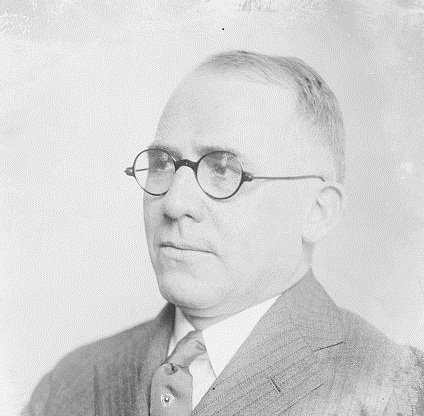
Historical · U.S. House · Ohio · District 10
Israel Foster
Former U.S. Representative · Ohio District 10 · 1919–1925 · Republican
Israel Foster represented Ohio's District 10 in the United States House of Representatives (1919–1925) for the Republican party. The page below collects sourced biographical facts, term history, committee roles, and provenance for Foster.
Bioguide ID: F000306
Key facts
- Full name
- Israel Foster
- State
- Ohio
- District
- District 10
- Party
- Republican
- House service
- 1919–1925
- First House term
- 1919
- Status
- Left office
- Current term ends
- —
- Born
- 1873
- Bioguide ID
- F000306
- Committee assignments
- —
- Dataset version
- 1.20260606
Biographical narrative
807 words · sourced from the Wikipedia REST extract
Israel Foster was a Republican politician who served as a U.S. Representative from Ohio's 10th congressional district from 1919 to 1925. His legislative career was marked by his advocacy for the Child Labor Amendment to the United States Constitution. Following his time in Congress, he continued his public service as a commissioner of the court of claims until 1942.
Early life and career
Israel Foster was born on January 12, 1873, in Athens, Ohio. He received his early education in the public school system before pursuing higher education at Ohio University in Athens, where he graduated in 1895. Following his undergraduate studies, Foster attended Harvard Law School for a brief period in 1895 and 1896. He ultimately graduated from the Ohio State Law School in 1898, marking the beginning of his legal career in Athens.
Foster's professional life was closely tied to his community. He began practicing law in Athens shortly after his graduation. His legal expertise and commitment to public service led him to serve as the prosecuting attorney for Athens County from 1902 to 1910. This role allowed him to gain significant experience in the legal and political landscape of Ohio, further establishing his reputation in the region.
In addition to his legal practice, Foster was actively involved in educational governance. He served as a member and secretary of the board of trustees of Ohio University for twenty-four years, contributing to the administration and oversight of the institution. His engagement in local politics extended to the state level, where he held the position of Secretary of the Republican State Central Committee in 1912. These roles provided Foster with a solid foundation in both legal and political affairs, setting the stage for his future congressional career.
House tenure
Foster's entry into national politics came when he was elected as a Republican to the Sixty-sixth Congress, beginning his term on March 4, 1919. He was subsequently re-elected to the Sixty-seventh and Sixty-eighth Congresses, serving until March 4, 1925. During his time in the House of Representatives, Foster was involved in various legislative initiatives and discussions, though he is particularly noted for his support of the Child Labor Amendment, which aimed to address the issue of child labor in the United States.
Despite his active participation in Congress, Foster faced challenges in maintaining his political position. He was an unsuccessful candidate for renomination in 1924, which marked the end of his tenure in the House. His legislative contributions and the issues he championed during his time in office reflected the social and political climate of the early 20th century, particularly concerning labor rights and child welfare.
Legislative focus and committees
Throughout his congressional career, Israel Foster's legislative focus was notably centered on labor issues, particularly the welfare of children in the workforce. His advocacy for the Child Labor Amendment underscored his commitment to addressing the exploitation of minors in various industries. This amendment sought to empower the federal government to regulate child labor, a significant concern during a period when many children were employed in hazardous conditions.
Foster's work in Congress was characterized by his alignment with the Republican Party's platform, which often emphasized individual rights and economic growth. His legal background likely informed his approach to legislation, as he navigated the complexities of lawmaking and sought to advance policies that aligned with his values and the interests of his constituents.
In addition to his focus on child labor, Foster's involvement in various committees during his time in office allowed him to engage with a range of issues pertinent to his district and the nation. While specific committee assignments are not detailed, it is common for representatives to serve on committees that align with their legislative interests and the needs of their constituents.
After leaving Congress, Foster continued his public service by being appointed as a commissioner of the court of claims on April 1, 1925. He held this position until his retirement on April 1, 1942. This role allowed him to remain engaged in the legal and governmental processes, contributing to the adjudication of claims against the federal government.
Foster's life came to an end on June 10, 1950, in Washington, D.C. He was laid to rest in Rock Creek Cemetery, a site that serves as the final resting place for many notable figures. His legacy includes a residence hall at Ohio University that bore his name, reflecting his connection to the institution and his contributions to the community. However, this building was demolished in 2016.
Israel Foster's career in public service, both as a congressman and a legal professional, illustrates the pathways of early 20th-century American politics and the ongoing discussions surrounding labor rights and child welfare. His work in Congress, particularly his advocacy for the Child Labor Amendment, remains a notable aspect of his legacy in the context of American legislative history.
Notable legislation
Sponsored and co-sponsored legislation for Israel Foster is pending operator curation. The biographical narrative above carries the same provenance trail until per-bill rows are written.
Sources
- [1]https://en.wikipedia.org/wiki/Israel_Moore_FosterWikipedia · retrieved 2026-06-06
Notable quotes
Sourced quotes for Israel Foster are pending operator curation. Narrative-scope provenance remains attached below.
Sources
- [1]https://en.wikipedia.org/wiki/Israel_Moore_FosterWikipedia · retrieved 2026-06-06
Key positions
Curated policy positions for Israel Foster are pending operator review. The biographical narrative above carries the same provenance trail until per-topic positions are written.
Sources
- [1]https://en.wikipedia.org/wiki/Israel_Moore_FosterWikipedia · retrieved 2026-06-06
Terms served
- 1919–1921U.S. House · Term 1 · Republican
- 1921–1923U.S. House · Term 2 · Republican
- 1923–1925U.S. House · Term 3 · Republican
Sources & provenance
Every attributable claim above carries a per-section [N] marker that resolves to the corresponding URL below. Each entry records the upstream provider, the canonical URL, and the timestamp at which the source was retrieved by the ingest pipeline.
Key facts
- https://bioguide.congress.gov/search/bio/F000306bioguide · retrieved 2026-06-06
- https://www.govtrack.us/congress/members/404255govtrack · retrieved 2026-06-06
Biographical narrative
- https://en.wikipedia.org/wiki/Israel_Moore_Fosterwikipedia · retrieved 2026-06-06
Find your representative
Every U.S. state elects representatives by district. Browse Ohio’s delegation, the full former-representative roster, or explore the role and term length.
Related on The Candidate
- Preceded by Robert SwitzerEarlier holder of the Ohio District 10 House seat · Republican.Open
- Succeeded by Thomas JenkinsLater holder of the Ohio District 10 House seat · Republican.Open
- Aaron PerryFormer U.S. Representative · Ohio District 1 · RepublicanOpen
- Alexander DuncanFormer U.S. Representative · Ohio District 1 · DemocraticOpen
- Bellamy StorerFormer U.S. Representative · Ohio District 1 · WhigOpen
- Bellamy StorerFormer U.S. Representative · Ohio District 1 · RepublicanOpen