
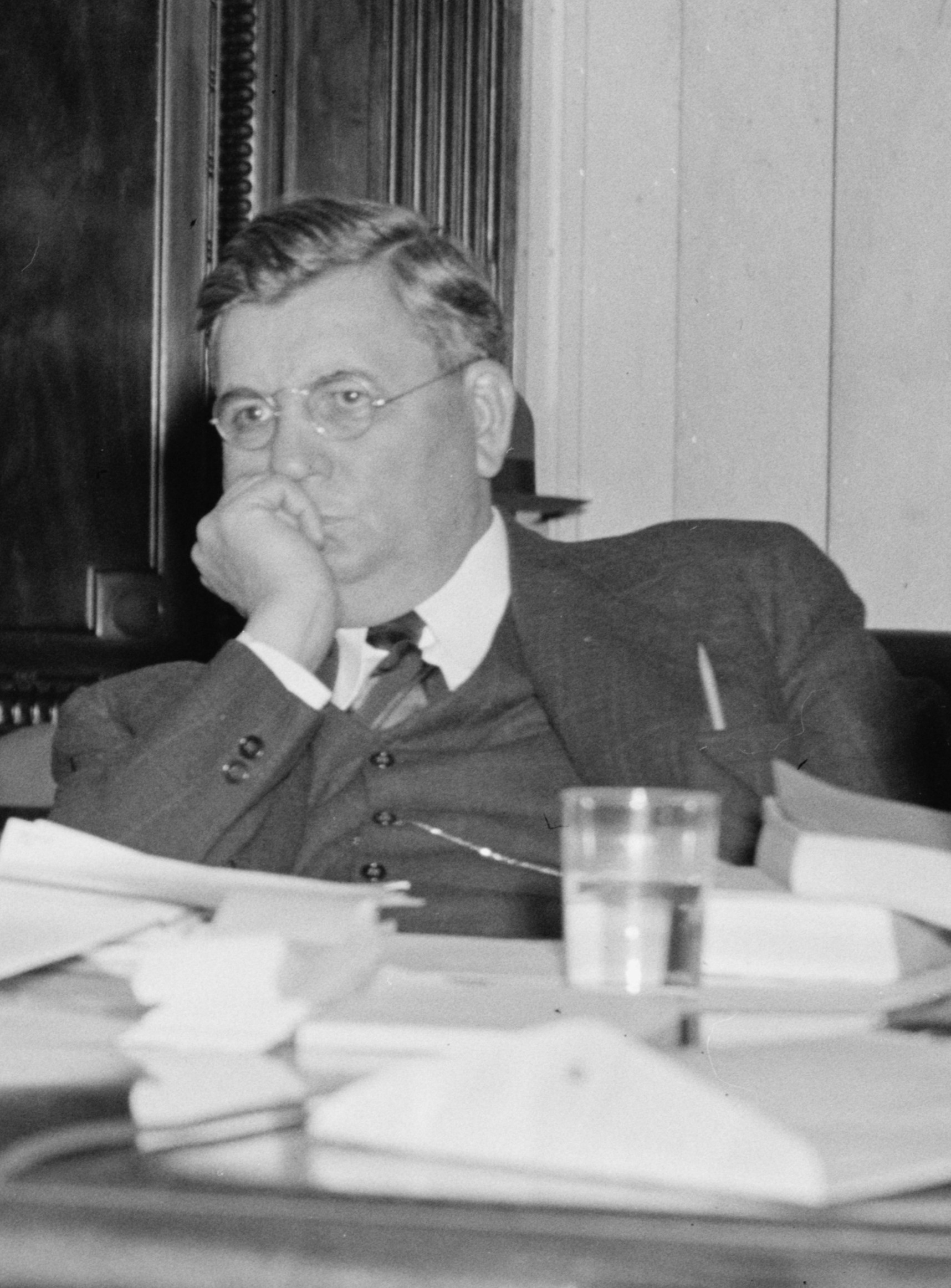
Historical · U.S. House · Ohio · District 10
Thomas Jenkins
Former U.S. Representative · Ohio District 10 · 1925–1959 · Republican
Thomas Jenkins represented Ohio's District 10 in the United States House of Representatives (1925–1959) for the Republican party. The page below collects sourced biographical facts, term history, committee roles, and provenance for Jenkins.
Bioguide ID: J000088
Key facts
- Full name
- Thomas Jenkins
- State
- Ohio
- District
- District 10
- Party
- Republican
- House service
- 1925–1959
- First House term
- 1925
- Status
- Left office
- Current term ends
- —
- Born
- 1880
- Bioguide ID
- J000088
- Committee assignments
- —
- Dataset version
- 1.20260605
Biographical narrative
853 words · sourced from the Wikipedia REST extract
Thomas Jenkins was a prominent American politician who served as a U.S. Representative for Ohio's 10th congressional district from 1925 until 1959. A member of the Republican Party, Jenkins was known for his long tenure in Congress, spanning over three decades, during which he participated in significant legislative debates and national discussions, particularly during World War II and the early civil rights movement. His career was marked by a blend of local legal practice, state politics, and extensive congressional service.
Early life and career
Thomas Albert Jenkins was born on October 28, 1880, in Oak Hill, a small community located in Jackson County, Ohio. He pursued his education at Providence College in Oak Hill, graduating in 1901. Jenkins continued his academic journey at Ohio State University in Columbus, where he earned a law degree in 1907. Following his graduation, he was admitted to the bar and began practicing law in Ironton, Ohio, establishing his legal career in the region.
Jenkins's involvement in public service began with his election as the prosecuting attorney for Lawrence County, Ohio, a position he held from 1916 to 1920. His legal background and commitment to public service led him to the Ohio Senate, where he served from 1923 to 1924. During this time, he was also active in the Republican Party, participating as a delegate to the Republican State Convention in both 1920 and 1924. His experiences in local and state politics laid the groundwork for his subsequent election to the U.S. House of Representatives.
House tenure
Jenkins was elected to the U.S. House of Representatives in 1925, beginning a lengthy and influential congressional career that would last until January 3, 1959. He was elected as a Republican and served in a total of 17 consecutive terms, reflecting a strong base of support within his district. Throughout his time in Congress, Jenkins was involved in numerous legislative initiatives and national debates, particularly during pivotal moments in American history.
His congressional career coincided with significant events, including the Great Depression and World War II. Jenkins was a delegate to the Republican National Convention in 1940 and 1944, further solidifying his role within the party at the national level. His political stance during the war was particularly noteworthy; he was an outspoken advocate for providing aid to Britain during the early years of World War II, arguing against isolationism. This position was highlighted during the Dunkirk evacuation and the Battle of Britain when he actively campaigned for increased support for the British war effort.
Despite his pro-British sentiments, Jenkins was notably opposed to the Lend-Lease bill, which aimed to provide military aid to Allied nations. His opposition was characterized by a controversial speech on the House floor in February 1941, where he raised questions about the motivations behind the bill and made claims that suggested conspiracy theories regarding its origins. This stance created a complex image of Jenkins as a politician who supported aid to Britain while simultaneously expressing skepticism about the broader implications of U.S. involvement in the war.
In addition to his wartime positions, Jenkins's legislative record included a vote in favor of the Civil Rights Act of 1957, indicating his engagement with the evolving social issues of the time. However, he chose not to seek renomination in 1958, concluding his lengthy service in Congress.
Legislative focus and committees
Throughout his tenure in the House of Representatives, Jenkins was involved in various legislative committees and initiatives, reflecting his interests and the priorities of his constituents. His early years in Congress were shaped by the economic challenges of the Great Depression, and he participated in discussions aimed at addressing these issues. His legal background likely informed his approach to legislative matters, particularly those related to law and justice.
Jenkins's reputation as a staunch advocate for certain causes was evident in his vocal support for military aid during World War II, as well as his opposition to isolationist policies. His participation in the Herter Committee in 1947 further demonstrated his engagement with foreign policy matters and his commitment to addressing the complexities of post-war international relations.
Despite the controversies surrounding his views, particularly regarding the Lend-Lease bill, Jenkins maintained a significant role in the political landscape of his time. His ability to navigate the shifting political environment, from the isolationist sentiments of the pre-war era to the civil rights movements of the 1950s, showcased his adaptability as a legislator.
Jenkins's legislative focus evolved over the years, reflecting the changing priorities of the nation and his constituents. His support for civil rights legislation in the late 1950s indicated a willingness to engage with the pressing social issues of the era, marking a transition in his political stance as the country grappled with issues of equality and justice.
After concluding his congressional career in 1959, Jenkins passed away on December 21 of the same year. He was interred at Woodland Cemetery in Ironton, Ohio, leaving behind a legacy shaped by decades of public service and political engagement. His long tenure in Congress and involvement in significant national debates underscore his role as a notable figure in Ohio's political history.
Notable legislation
Sponsored and co-sponsored legislation for Thomas Jenkins is pending operator curation. The biographical narrative above carries the same provenance trail until per-bill rows are written.
Sources
- [1]https://en.wikipedia.org/wiki/Thomas_A._JenkinsWikipedia · retrieved 2026-06-05
Notable quotes
Sourced quotes for Thomas Jenkins are pending operator curation. Narrative-scope provenance remains attached below.
Sources
- [1]https://en.wikipedia.org/wiki/Thomas_A._JenkinsWikipedia · retrieved 2026-06-05
Key positions
Curated policy positions for Thomas Jenkins are pending operator review. The biographical narrative above carries the same provenance trail until per-topic positions are written.
Sources
- [1]https://en.wikipedia.org/wiki/Thomas_A._JenkinsWikipedia · retrieved 2026-06-05
Terms served
- 1925–1927U.S. House · Term 1 · Republican
- 1927–1929U.S. House · Term 2 · Republican
- 1929–1931U.S. House · Term 3 · Republican
- 1931–1933U.S. House · Term 4 · Republican
- 1933–1935U.S. House · Term 5 · Republican
- 1935–1937U.S. House · Term 6 · Republican
- 1937–1939U.S. House · Term 7 · Republican
- 1939–1941U.S. House · Term 8 · Republican
- 1941–1943U.S. House · Term 9 · Republican
- 1943–1945U.S. House · Term 10 · Republican
- 1945–1947U.S. House · Term 11 · Republican
- 1947–1949U.S. House · Term 12 · Republican
- 1949–1951U.S. House · Term 13 · Republican
- 1951–1953U.S. House · Term 14 · Republican
- 1953–1955U.S. House · Term 15 · Republican
- 1955–1957U.S. House · Term 16 · Republican
- 1957–1959U.S. House · Term 17 · Republican
Sources & provenance
Every attributable claim above carries a per-section [N] marker that resolves to the corresponding URL below. Each entry records the upstream provider, the canonical URL, and the timestamp at which the source was retrieved by the ingest pipeline.
Key facts
- https://bioguide.congress.gov/search/bio/J000088bioguide · retrieved 2026-06-05
- https://www.govtrack.us/congress/members/405990govtrack · retrieved 2026-06-05
Biographical narrative
- https://en.wikipedia.org/wiki/Thomas_A._Jenkinswikipedia · retrieved 2026-06-05
Find your representative
Every U.S. state elects representatives by district. Browse Ohio’s delegation, the full former-representative roster, or explore the role and term length.
Related on The Candidate
- Preceded by Israel FosterEarlier holder of the Ohio District 10 House seat · Republican.Open
- Succeeded by Walter MoellerLater holder of the Ohio District 10 House seat · Democratic.Open
- Aaron PerryFormer U.S. Representative · Ohio District 1 · RepublicanOpen
- Alexander DuncanFormer U.S. Representative · Ohio District 1 · DemocraticOpen
- Bellamy StorerFormer U.S. Representative · Ohio District 1 · WhigOpen
- Bellamy StorerFormer U.S. Representative · Ohio District 1 · RepublicanOpen