
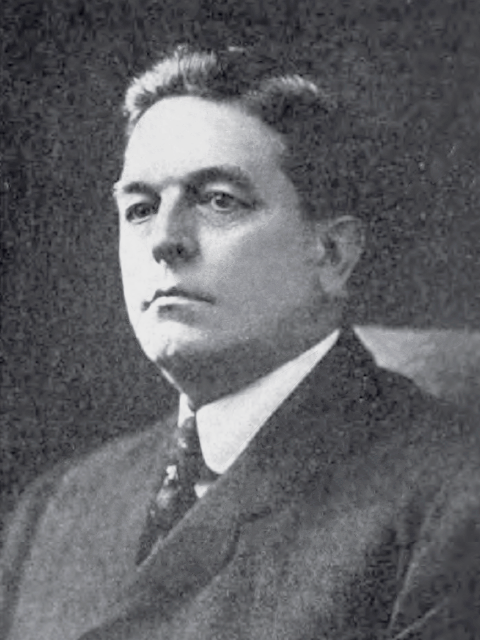
Historical · U.S. House · Ohio · District 11
Albert Douglas
Former U.S. Representative · Ohio District 11 · 1907–1911 · Republican
Albert Douglas represented Ohio's District 11 in the United States House of Representatives (1907–1911) for the Republican party. The page below collects sourced biographical facts, term history, committee roles, and provenance for Douglas.
Bioguide ID: D000449
Key facts
- Full name
- Albert Douglas
- State
- Ohio
- District
- District 11
- Party
- Republican
- House service
- 1907–1911
- First House term
- 1907
- Status
- Left office
- Current term ends
- —
- Born
- 1852
- Bioguide ID
- D000449
- Committee assignments
- —
- Dataset version
- 1.20260606
Biographical narrative
859 words · sourced from the Wikipedia REST extract
Albert Douglas was an American lawyer and politician who served as a U.S. Representative for Ohio's 11th congressional district from 1907 to 1911. A member of the Republican Party, Douglas had a legal career that preceded his time in Congress and continued after his legislative service. He was born in Chillicothe, Ohio, and his educational background included attendance at local public schools, a preparatory school, and prestigious institutions such as Kenyon College and Harvard Law School. After his congressional tenure, he continued to engage in public service and diplomacy until his passing in 1935.
Early life and career
Albert Douglas was born on April 25, 1852, in Chillicothe, Ohio. His early education took place in the public schools of his hometown, where he laid the foundation for his future academic pursuits. Following his primary education, he attended a preparatory school, which further prepared him for higher education. Douglas graduated from Kenyon College, located in Gambier, Ohio, in 1872. This institution is known for its rigorous academic standards and has produced many notable alumni.
After completing his undergraduate studies, Douglas pursued a legal education at Harvard Law School, one of the most prestigious law schools in the United States. He graduated from Harvard in 1874 and was subsequently admitted to the bar the same year. This marked the beginning of his legal career, which he commenced in Chillicothe. Douglas quickly established himself as a competent lawyer, and his legal expertise would later inform his work as a legislator.
In addition to his legal practice, Douglas took on significant public roles in his community. From 1877 to 1881, he served as the prosecuting attorney for Ross County, Ohio. This position involved overseeing legal proceedings and representing the county in criminal cases, which provided him with valuable experience in public service and the workings of the legal system. His involvement in local politics and law helped to build his reputation as a dedicated public servant.
Douglas's political career began to take shape when he participated in the 1896 presidential election as a presidential elector for the Republican ticket of William McKinley and Garret A. Hobart. This role allowed him to engage in the political process at a national level, further solidifying his commitment to the Republican Party and its values.
House tenure
Albert Douglas was elected to the United States House of Representatives as a Republican, beginning his first term on March 4, 1907. He represented Ohio's 11th congressional district during the Sixtieth and Sixty-first Congresses, serving until March 3, 1911. His election to Congress came at a time of significant political and social change in the United States, as the country was experiencing rapid industrialization and urbanization.
During his time in Congress, Douglas participated in various legislative activities and contributed to discussions on issues pertinent to his constituents and the nation as a whole. While specific details about the bills he sponsored or supported are not provided, members of Congress typically engage in debates, committee work, and constituent services that reflect their political priorities and the needs of their districts.
Despite his efforts and contributions, Douglas faced challenges in his political career. He was an unsuccessful candidate for reelection in 1910, which marked the end of his congressional tenure. Following his departure from Congress, he returned to his legal practice in Chillicothe, where he continued to serve his community through his work as an attorney.
Legislative focus and committees
While specific information regarding the legislative focus and committee assignments of Albert Douglas during his time in the House of Representatives is not detailed in the available records, it can be inferred that, like many of his contemporaries, he would have engaged with issues relevant to his constituents in Ohio. Members of Congress often align their legislative priorities with the interests and needs of their districts, particularly in areas such as economic development, infrastructure, and social issues.
Douglas's background as a lawyer likely influenced his approach to legislation and governance. Legal professionals in Congress often bring their expertise to bear on issues related to the judiciary, civil rights, and regulatory matters. His experience as a prosecuting attorney may have also informed his perspectives on law enforcement and public safety.
In addition to his legislative duties, Douglas's involvement in national politics continued beyond his congressional service. In 1921, he was appointed as Ambassador Extraordinary to represent the United States at the centennial celebration of Peru's independence. This role highlighted his continued engagement in public service and diplomacy, showcasing his commitment to fostering international relations.
After retiring from public life, Douglas resided in Washington, D.C., where he lived until his death on March 14, 1935. His final resting place is in Grandview Cemetery, located in Chillicothe, Ohio, where he is interred alongside other notable figures from the region.
Albert Douglas's life reflects a dedication to public service, law, and politics. His educational background, legal career, and time in Congress illustrate the trajectory of a man committed to the principles of governance and community engagement. Through his various roles, he contributed to the political landscape of early 20th-century America, leaving a legacy that is remembered in the context of Ohio's political history.
Notable legislation
Sponsored and co-sponsored legislation for Albert Douglas is pending operator curation. The biographical narrative above carries the same provenance trail until per-bill rows are written.
Sources
- [1]https://en.wikipedia.org/wiki/Albert_DouglasWikipedia · retrieved 2026-06-06
Notable quotes
Sourced quotes for Albert Douglas are pending operator curation. Narrative-scope provenance remains attached below.
Sources
- [1]https://en.wikipedia.org/wiki/Albert_DouglasWikipedia · retrieved 2026-06-06
Key positions
Curated policy positions for Albert Douglas are pending operator review. The biographical narrative above carries the same provenance trail until per-topic positions are written.
Sources
- [1]https://en.wikipedia.org/wiki/Albert_DouglasWikipedia · retrieved 2026-06-06
Terms served
- 1907–1909U.S. House · Term 1 · Republican
- 1909–1911U.S. House · Term 2 · Republican
Sources & provenance
Every attributable claim above carries a per-section [N] marker that resolves to the corresponding URL below. Each entry records the upstream provider, the canonical URL, and the timestamp at which the source was retrieved by the ingest pipeline.
Key facts
- https://bioguide.congress.gov/search/bio/D000449bioguide · retrieved 2026-06-06
- https://www.govtrack.us/congress/members/403559govtrack · retrieved 2026-06-06
Biographical narrative
- https://en.wikipedia.org/wiki/Albert_Douglaswikipedia · retrieved 2026-06-06
Find your representative
Every U.S. state elects representatives by district. Browse Ohio’s delegation, the full former-representative roster, or explore the role and term length.
Related on The Candidate
- Preceded by Charles GrosvenorEarlier holder of the Ohio District 11 House seat · Republican.Open
- Succeeded by Horatio ClaypoolLater holder of the Ohio District 11 House seat · Democratic.Open
- Aaron PerryFormer U.S. Representative · Ohio District 1 · RepublicanOpen
- Alexander DuncanFormer U.S. Representative · Ohio District 1 · DemocraticOpen
- Bellamy StorerFormer U.S. Representative · Ohio District 1 · WhigOpen
- Bellamy StorerFormer U.S. Representative · Ohio District 1 · RepublicanOpen