
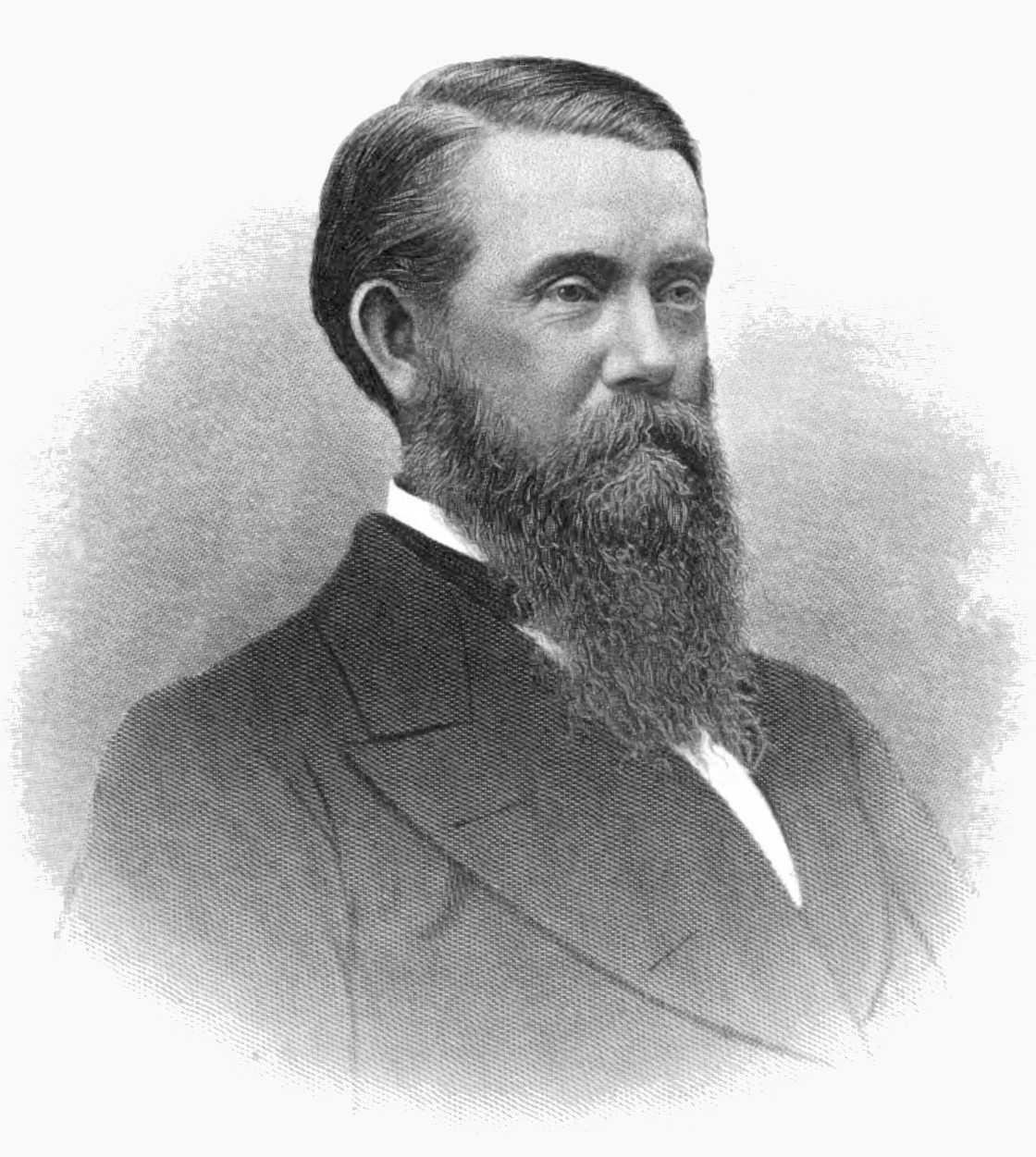
Historical · U.S. House · Ohio · District 11
Charles Grosvenor
Former U.S. Representative · Ohio District 11 · 1885–1907 · Republican
Charles Grosvenor represented Ohio's District 11 in the United States House of Representatives (1885–1907) for the Republican party. The page below collects sourced biographical facts, term history, committee roles, and provenance for Grosvenor.
Bioguide ID: G000497
Key facts
- Full name
- Charles Grosvenor
- State
- Ohio
- District
- District 11
- Party
- Republican
- House service
- 1885–1907
- First House term
- 1885
- Status
- Left office
- Current term ends
- —
- Born
- 1833
- Bioguide ID
- G000497
- Committee assignments
- —
- Dataset version
- 1.20260606
Biographical narrative
875 words · sourced from the Wikipedia REST extract
Charles Grosvenor was an American lawyer, educator, and politician who served as a U.S. Representative from Ohio's 11th congressional district. A member of the Republican Party, Grosvenor had a notable political career spanning over two decades, during which he was elected to ten terms in the House of Representatives. His service in Congress was preceded by a distinguished military career as a brigade commander in the Union Army during the American Civil War. Grosvenor's contributions extended beyond his legislative duties, as he was also involved in various civic and educational initiatives throughout his life.
Early life and career
Charles Grosvenor was born on September 20, 1833, in Pomfret, Connecticut. In 1838, his family relocated to southeastern Ohio, where Grosvenor received his early education in Athens County. After completing his schooling, he took on the role of a teacher before pursuing a career in law. He studied diligently and was admitted to the bar in 1857, subsequently establishing a legal practice in Athens, Ohio.
Grosvenor's early career was marked by his involvement in local governance and education. He held various township and village offices, which provided him with valuable experience in public service. His political career began to take shape when he was elected to the Ohio House of Representatives, where he served from 1874 to 1878. During his time in the state legislature, he was elected Speaker of the House for two years, further solidifying his reputation as a capable leader.
In addition to his legislative work, Grosvenor was involved in several civic organizations. He served on the board of trustees for the Ohio Soldiers' and Sailors' Orphans' Home in Xenia from April 1880 until 1888, including a five-year term as president of the board. His commitment to public service was also evident in his role as a presidential elector for the Republican candidates Ulysses S. Grant and James A. Garfield in the elections of 1872 and 1880, respectively. Grosvenor's political engagement continued as he participated as a delegate in the Republican National Conventions of 1896 and 1900.
House tenure
Grosvenor's congressional career began when he was elected as a Republican to the Forty-ninth Congress, serving from March 4, 1885, to March 3, 1891. He was re-elected for the Fiftieth and Fifty-first Congresses during this initial period. However, his bid for renomination in 1890 was unsuccessful, leading to a temporary hiatus from Congress.
He returned to the House after winning election to the Fifty-third Congress, serving from March 4, 1893, until March 3, 1907. Throughout his time in Congress, Grosvenor was known for his active participation in various legislative matters. He was involved in multiple successive terms, demonstrating a sustained commitment to representing his constituents in Ohio.
During his tenure, Grosvenor held significant leadership positions within congressional committees. He served as chairman of the Committee on Expenditures in the Department of the Treasury during the Fifty-fourth Congress. He was also the chairman of the Committee on Mines and Mining in the Fifty-fifth Congress and held the same position for the subsequent Fifty-sixth through Fifty-ninth Congresses. His leadership roles in these committees allowed him to influence legislation related to fiscal management and resource development.
Despite his extensive service, Grosvenor faced challenges in his political career. He was ultimately unsuccessful in his bid for renomination in 1906, marking the end of his time in Congress. His legislative contributions, however, left a lasting impact on the policies and governance of his time.
Legislative focus and committees
Throughout his congressional career, Grosvenor's legislative focus encompassed various areas, reflecting both his personal interests and the needs of his constituents. His work on the Committee on Expenditures in the Department of the Treasury involved oversight of federal spending, an essential aspect of maintaining fiscal responsibility within the government. This role allowed him to engage with issues related to budgetary allocations and financial management.
In his capacity as chairman of the Committee on Mines and Mining, Grosvenor was involved in addressing the challenges and opportunities associated with the mining industry. This committee's work was crucial during a period when the United States was experiencing significant industrial growth, and the regulation of natural resources was becoming increasingly important. His leadership in this area indicated a commitment to promoting responsible mining practices while also considering the economic implications for his constituents.
Additionally, Grosvenor's long tenure on the Committee on Merchant Marine and Fisheries further demonstrated his engagement with issues related to commerce and trade. This committee played a vital role in shaping policies that affected the shipping industry and the management of the nation’s fisheries, both of which were critical to Ohio's economy and the broader national interest.
After leaving Congress, Grosvenor returned to his legal practice in Athens, where he continued to contribute to his community. He was appointed as chairman of the Chickamauga and Chattanooga National Park Commission, a position he held from 1910 until his death. Grosvenor passed away on October 30, 1917, in Athens, Ohio, and was interred in Union Street Cemetery.
Grosvenor's legacy is marked by his extensive service in both military and political arenas, reflecting a lifelong commitment to public service and civic engagement. His contributions to Ohio and the nation during a transformative period in American history remain a notable aspect of his biography.
Notable legislation
Sponsored and co-sponsored legislation for Charles Grosvenor is pending operator curation. The biographical narrative above carries the same provenance trail until per-bill rows are written.
Sources
- [1]https://en.wikipedia.org/wiki/Charles_H._GrosvenorWikipedia · retrieved 2026-06-06
Notable quotes
Sourced quotes for Charles Grosvenor are pending operator curation. Narrative-scope provenance remains attached below.
Sources
- [1]https://en.wikipedia.org/wiki/Charles_H._GrosvenorWikipedia · retrieved 2026-06-06
Key positions
Curated policy positions for Charles Grosvenor are pending operator review. The biographical narrative above carries the same provenance trail until per-topic positions are written.
Sources
- [1]https://en.wikipedia.org/wiki/Charles_H._GrosvenorWikipedia · retrieved 2026-06-06
Terms served
- 1885–1887U.S. House · Term 1 · Republican
- 1887–1889U.S. House · Term 2 · Republican
- 1889–1891U.S. House · Term 3 · Republican
- 1893–1895U.S. House · Term 4 · Republican
- 1895–1897U.S. House · Term 5 · Republican
- 1897–1899U.S. House · Term 6 · Republican
- 1899–1901U.S. House · Term 7 · Republican
- 1901–1903U.S. House · Term 8 · Republican
- 1903–1905U.S. House · Term 9 · Republican
- 1905–1907U.S. House · Term 10 · Republican
Sources & provenance
Every attributable claim above carries a per-section [N] marker that resolves to the corresponding URL below. Each entry records the upstream provider, the canonical URL, and the timestamp at which the source was retrieved by the ingest pipeline.
Key facts
- https://bioguide.congress.gov/search/bio/G000497bioguide · retrieved 2026-06-06
- https://www.govtrack.us/congress/members/404842govtrack · retrieved 2026-06-06
Biographical narrative
- https://en.wikipedia.org/wiki/Charles_H._Grosvenorwikipedia · retrieved 2026-06-06
Find your representative
Every U.S. state elects representatives by district. Browse Ohio’s delegation, the full former-representative roster, or explore the role and term length.
Related on The Candidate
- Preceded by John McCormickEarlier holder of the Ohio District 11 House seat · Republican.Open
- Succeeded by Albert DouglasLater holder of the Ohio District 11 House seat · Republican.Open
- Aaron PerryFormer U.S. Representative · Ohio District 1 · RepublicanOpen
- Alexander DuncanFormer U.S. Representative · Ohio District 1 · DemocraticOpen
- Bellamy StorerFormer U.S. Representative · Ohio District 1 · WhigOpen
- Bellamy StorerFormer U.S. Representative · Ohio District 1 · RepublicanOpen