
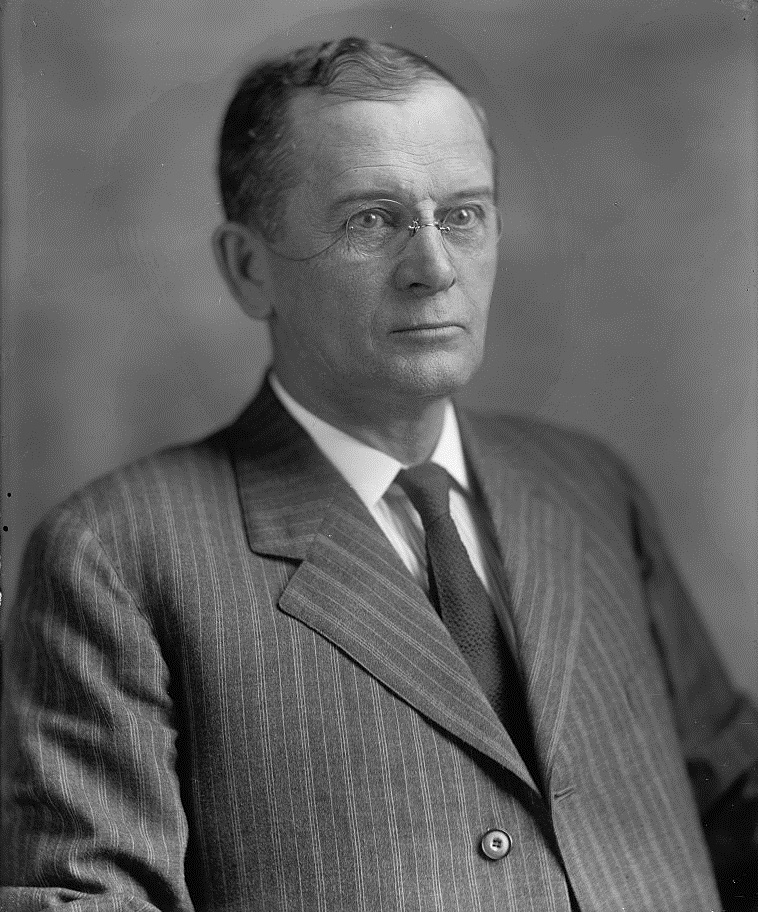
Historical · U.S. House · Ohio · District 11
Edwin Ricketts
Former U.S. Representative · Ohio District 11 · 1915–1923 · Republican
Edwin Ricketts represented Ohio's District 11 in the United States House of Representatives (1915–1923) for the Republican party. The page below collects sourced biographical facts, term history, committee roles, and provenance for Ricketts.
Bioguide ID: R000236
Key facts
- Full name
- Edwin Ricketts
- State
- Ohio
- District
- District 11
- Party
- Republican
- House service
- 1915–1923
- First House term
- 1915
- Status
- Left office
- Current term ends
- —
- Born
- 1867
- Bioguide ID
- R000236
- Committee assignments
- —
- Dataset version
- 1.20260606
Biographical narrative
875 words · sourced from the Wikipedia REST extract
Edwin Ricketts was an American lawyer and politician who served as a U.S. Representative from Ohio's 11th congressional district during the early 20th century. A member of the Republican Party, Ricketts held office for three terms in the United States House of Representatives from 1915 to 1923. His career in public service was preceded by a significant tenure in education, where he worked as a teacher and school superintendent. After his time in Congress, Ricketts returned to the legal profession and remained active in political circles until his death in 1937.
Early life and career
Edwin Darlington Ricketts was born on August 3, 1867, near Maxville, Ohio. Growing up in a rural area, he received his early education in the public school system. His commitment to education led him to pursue a career in teaching, where he dedicated twelve years to the profession. During this time, he not only taught but also took on administrative responsibilities, serving as a superintendent of schools. This experience in education likely shaped his understanding of the needs and challenges faced by communities, as well as the importance of public service.
After his lengthy career in education, Ricketts decided to transition into law. He studied diligently and was admitted to the bar in 1899, marking the beginning of his legal career in Logan, Ohio. His legal practice would later complement his political ambitions, as the skills he developed in law would be instrumental in his legislative work. Ricketts's background in education and law provided him with a unique perspective on the issues facing his constituents, particularly in areas related to education policy and legal reform.
House tenure
Ricketts's political career began when he was elected as a Republican to the Sixty-fourth Congress, which convened on March 4, 1915. His election to the House of Representatives marked a significant milestone in his career, as he transitioned from local education and law to national politics. During his first term, he engaged with various legislative issues that were pertinent to his district and the nation at large.
However, Ricketts faced challenges in his political journey. He was not successful in his bid for reelection in 1916, which meant that he served only one term in the Sixty-fourth Congress. Despite this setback, he remained active in political circles and continued to build his reputation within the Republican Party. His persistence paid off when he was elected again to the Sixty-sixth Congress, which began on March 4, 1919. Ricketts served in this capacity until March 3, 1923, completing two additional terms in the House.
Throughout his tenure, Ricketts was involved in various legislative activities, representing the interests of his constituents in Ohio. His experience as a lawyer likely informed his legislative priorities and approach to governance. While specific details regarding the legislation he supported or opposed are not documented, his roles in Congress would have involved participation in debates, committee work, and constituent services, all of which are essential functions of a U.S. Representative.
Despite his contributions, Ricketts's political career faced another challenge when he was unsuccessful in his attempt to secure a seat in the Sixty-eighth Congress in 1922. This defeat marked the end of his time in the House of Representatives, concluding a total of three terms in office. Following his departure from Congress, Ricketts returned to his legal practice, where he continued to apply his skills and experience in law.
Legislative focus and committees
While specific details about Ricketts's legislative focus and committee assignments during his time in Congress are not provided, it can be inferred that his background in education and law would have influenced his areas of interest. As a former teacher and superintendent, Ricketts may have been particularly attuned to issues related to education policy, funding for schools, and the welfare of students and educators. Additionally, his legal training would have equipped him with a strong understanding of the legislative process and the intricacies of lawmaking.
During the early 20th century, the United States faced numerous challenges, including economic changes, social reforms, and the aftermath of World War I. As a member of the Republican Party, Ricketts would have engaged with the prevailing political discourse of the time, which included discussions on economic policy, veterans' affairs, and infrastructure development. His contributions to these discussions, while not explicitly documented, would have been shaped by his experiences and the needs of his constituents in Ohio.
After leaving Congress, Ricketts remained involved in the political landscape. He served as a delegate to the Republican National Convention in 1928, indicating his continued commitment to the party and its platform. This involvement in national politics suggests that he maintained a network of connections and influence within the Republican Party, even after his congressional tenure had ended.
Edwin Ricketts passed away on July 3, 1937, in Logan, Ohio. His legacy as a public servant is marked by his dedication to education, law, and politics. He was interred in Oak Grove Cemetery, where he rests alongside the community he served. Ricketts's journey from educator to lawyer to U.S. Representative reflects a life committed to public service and the betterment of his community and country. His contributions during a transformative period in American history continue to be recognized as part of Ohio's political heritage.
Notable legislation
Sponsored and co-sponsored legislation for Edwin Ricketts is pending operator curation. The biographical narrative above carries the same provenance trail until per-bill rows are written.
Sources
- [1]https://en.wikipedia.org/wiki/Edwin_D._RickettsWikipedia · retrieved 2026-06-06
Notable quotes
Sourced quotes for Edwin Ricketts are pending operator curation. Narrative-scope provenance remains attached below.
Sources
- [1]https://en.wikipedia.org/wiki/Edwin_D._RickettsWikipedia · retrieved 2026-06-06
Key positions
Curated policy positions for Edwin Ricketts are pending operator review. The biographical narrative above carries the same provenance trail until per-topic positions are written.
Sources
- [1]https://en.wikipedia.org/wiki/Edwin_D._RickettsWikipedia · retrieved 2026-06-06
Terms served
- 1915–1917U.S. House · Term 1 · Republican
- 1919–1921U.S. House · Term 2 · Republican
- 1921–1923U.S. House · Term 3 · Republican
Sources & provenance
Every attributable claim above carries a per-section [N] marker that resolves to the corresponding URL below. Each entry records the upstream provider, the canonical URL, and the timestamp at which the source was retrieved by the ingest pipeline.
Key facts
- https://bioguide.congress.gov/search/bio/R000236bioguide · retrieved 2026-06-06
- https://www.govtrack.us/congress/members/409212govtrack · retrieved 2026-06-06
Biographical narrative
- https://en.wikipedia.org/wiki/Edwin_D._Rickettswikipedia · retrieved 2026-06-06
Find your representative
Every U.S. state elects representatives by district. Browse Ohio’s delegation, the full former-representative roster, or explore the role and term length.
Related on The Candidate
- Preceded by Albert DouglasEarlier holder of the Ohio District 11 House seat · Republican.Open
- Succeeded by Mell UnderwoodLater holder of the Ohio District 11 House seat · Democratic.Open
- Aaron PerryFormer U.S. Representative · Ohio District 1 · RepublicanOpen
- Alexander DuncanFormer U.S. Representative · Ohio District 1 · DemocraticOpen
- Bellamy StorerFormer U.S. Representative · Ohio District 1 · WhigOpen
- Bellamy StorerFormer U.S. Representative · Ohio District 1 · RepublicanOpen