
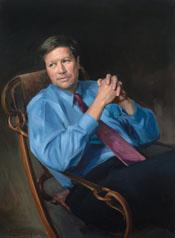
Historical · U.S. House · Ohio · District 12
John Kasich
Former U.S. Representative · Ohio District 12 · 1983–2001 · Republican
John Kasich represented Ohio's District 12 in the United States House of Representatives (1983–2001) for the Republican party. The page below collects sourced biographical facts, term history, committee roles, and provenance for Kasich.
Bioguide ID: K000016
Key facts
- Full name
- John Kasich
- State
- Ohio
- District
- District 12
- Party
- Republican
- House service
- 1983–2001
- First House term
- 1983
- Status
- Left office
- Current term ends
- —
- Born
- 1952
- Bioguide ID
- K000016
- Committee assignments
- —
- Dataset version
- 1.20260605
Biographical narrative
958 words · sourced from the Wikipedia REST extract
John R. Kasich is a former U.S. Representative who served Ohio's 12th congressional district from 1983 until 2001. A member of the Republican Party, he is recognized for his fiscal conservatism and significant contributions to defense policy during his tenure in Congress. After leaving the House, Kasich transitioned into various roles, including serving as the 69th governor of Ohio from 2011 to 2019 and running for the Republican presidential nomination in 2000 and 2016. His political career has been marked by a focus on budgetary issues, military reform, and a willingness to cross party lines on certain issues.
Early life and career
John Richard Kasich Jr. was born on May 13, 1952, in McKees Rocks, Pennsylvania, a suburb of Pittsburgh. He was raised in a family with a strong immigrant background; his father, John Richard Kasich, was of Czech descent, while his mother, Anne Vukovich, had Croatian roots. Both of his parents were children of immigrants and were practicing Roman Catholics, which influenced Kasich's upbringing. He has identified himself as both Croatian and Czech, reflecting the diverse heritage of his family.
Kasich attended public schools in McKees Rocks before moving to Columbus, Ohio, in 1970 to pursue higher education at Ohio State University. There, he joined the Alpha Sigma Phi fraternity and became involved in campus activities. Notably, as a freshman, he wrote a letter to President Richard Nixon expressing his concerns about the nation, which led to a brief meeting with the President in December 1970, facilitated by the university's president.
He graduated from Ohio State in 1974 with a Bachelor of Arts degree in political science. Following his graduation, Kasich began his political career as a researcher for the Ohio Legislative Service Commission. He then served as an administrative assistant to state Senator Buz Lukens from 1975 to 1978. In 1978, at the age of 26, he ran for the Ohio Senate against incumbent Democrat Robert O'Shaughnessy and won, marking the beginning of his political career in the state legislature. During his time in the Ohio Senate, Kasich was noted for his independent stance, including his refusal to accept a pay raise and his opposition to certain budget proposals that he believed would increase taxes.
House tenure
Kasich's congressional career began in 1983 when he was elected to represent Ohio's 12th congressional district, which encompasses parts of Columbus and several suburbs. He won the Republican primary with a significant majority and subsequently defeated the incumbent Democratic Congressman Bob Shamansky in the general election. His initial victory was closely contested, but he would go on to secure re-election eight more times, consistently winning at least 64 percent of the vote in subsequent elections.
During his nearly two decades in the House of Representatives, Kasich developed a reputation as a fiscal conservative. He was known for his willingness to challenge both Republican and Democratic initiatives, particularly those he viewed as fiscally irresponsible. His approach often included seeking to reduce corporate tax loopholes, which he pursued in collaboration with consumer advocate Ralph Nader.
Kasich's tenure on the House Armed Services Committee spanned 18 years, during which he cultivated a reputation as a "fairly hawkish" member while also advocating for the elimination of wasteful defense spending. He was instrumental in the passage of several key pieces of legislation, including the Goldwater–Nichols Act of 1986, which reorganized the U.S. Department of Defense to improve military efficiency. He also played a significant role in establishing the Base Realignment and Closure Commission in 1988, which aimed to close outdated military bases across the country.
Throughout his congressional career, Kasich was involved in various defense-related initiatives, including opposing the expansion of the Pentagon building after the Cold War and advocating for tighter controls on materials that could be used for biological warfare. He supported U.S. military involvement in the first Persian Gulf War and the subsequent invasion of Afghanistan in 2001, though he expressed reservations about military engagement in other conflicts, such as in Lebanon.
Kasich chose not to seek re-election in 2000, instead opting to run for the presidency. Although he withdrew from the race before the Republican primaries, his decision marked a significant shift in his political trajectory.
Legislative focus and committees
Throughout his nine terms in the U.S. House of Representatives, Kasich's legislative focus was characterized by a commitment to fiscal responsibility and military reform. He was particularly active on the House Armed Services Committee, where he utilized his position to advocate for both national security and budgetary prudence. His efforts included scrutinizing defense spending and promoting legislation aimed at improving military effectiveness while eliminating unnecessary expenditures.
Kasich's role as chair of the House Budget Committee further underscored his commitment to fiscal conservatism. In this capacity, he was involved in shaping budgetary policies that emphasized deficit reduction and responsible government spending. His leadership on the committee allowed him to influence significant budgetary legislation, including the Balanced Budget Act of 1997, which aimed to eliminate the federal budget deficit.
In addition to his work on defense and budgetary issues, Kasich was known for his collaborative approach to governance. He often sought bipartisan support for his initiatives, reflecting a willingness to engage with members of both parties. This approach was evident in his partnerships with colleagues across the aisle, which facilitated the passage of various pieces of legislation.
Kasich's legislative legacy is marked by his focus on reforming government spending and enhancing military effectiveness. His tenure in the House of Representatives laid the groundwork for his later political endeavors, including his successful bid for the governorship of Ohio and his subsequent runs for the presidency. After leaving Congress, he continued to engage in public discourse on political issues, contributing to various media outlets and maintaining a presence in national politics.
Notable legislation
Sponsored and co-sponsored legislation for John Kasich is pending operator curation. The biographical narrative above carries the same provenance trail until per-bill rows are written.
Sources
- [1]https://en.wikipedia.org/wiki/John_KasichWikipedia · retrieved 2026-06-05
Notable quotes
Sourced quotes for John Kasich are pending operator curation. Narrative-scope provenance remains attached below.
Sources
- [1]https://en.wikipedia.org/wiki/John_KasichWikipedia · retrieved 2026-06-05
Key positions
Curated policy positions for John Kasich are pending operator review. The biographical narrative above carries the same provenance trail until per-topic positions are written.
Sources
- [1]https://en.wikipedia.org/wiki/John_KasichWikipedia · retrieved 2026-06-05
Terms served
- 1983–1985U.S. House · Term 1 · Republican
- 1985–1987U.S. House · Term 2 · Republican
- 1987–1989U.S. House · Term 3 · Republican
- 1989–1991U.S. House · Term 4 · Republican
- 1991–1993U.S. House · Term 5 · Republican
- 1993–1995U.S. House · Term 6 · Republican
- 1995–1997U.S. House · Term 7 · Republican
- 1997–1999U.S. House · Term 8 · Republican
- 1999–2001U.S. House · Term 9 · Republican
Sources & provenance
Every attributable claim above carries a per-section [N] marker that resolves to the corresponding URL below. Each entry records the upstream provider, the canonical URL, and the timestamp at which the source was retrieved by the ingest pipeline.
Key facts
- https://bioguide.congress.gov/search/bio/K000016bioguide · retrieved 2026-06-05
- https://www.govtrack.us/congress/members/400590govtrack · retrieved 2026-06-05
Biographical narrative
- https://en.wikipedia.org/wiki/John_Kasichwikipedia · retrieved 2026-06-05
Find your representative
Every U.S. state elects representatives by district. Browse Ohio’s delegation, the full former-representative roster, or explore the role and term length.
Related on The Candidate
- Preceded by Robert ShamanskyEarlier holder of the Ohio District 12 House seat · Democratic.Open
- Succeeded by Pat TiberiLater holder of the Ohio District 12 House seat · Republican.Open
- Aaron PerryFormer U.S. Representative · Ohio District 1 · RepublicanOpen
- Alexander DuncanFormer U.S. Representative · Ohio District 1 · DemocraticOpen
- Bellamy StorerFormer U.S. Representative · Ohio District 1 · WhigOpen
- Bellamy StorerFormer U.S. Representative · Ohio District 1 · RepublicanOpen