
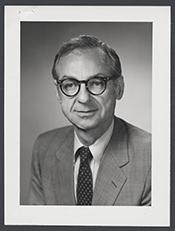
Historical · U.S. House · Ohio · District 12
Robert Shamansky
Former U.S. Representative · Ohio District 12 · 1981–1983 · Democratic
Robert Shamansky represented Ohio's District 12 in the United States House of Representatives (1981–1983) for the Democratic party. The page below collects sourced biographical facts, term history, committee roles, and provenance for Shamansky.
Bioguide ID: S000282
Key facts
- Full name
- Robert Shamansky
- State
- Ohio
- District
- District 12
- Party
- Democratic
- House service
- 1981–1983
- First House term
- 1981
- Status
- Left office
- Current term ends
- —
- Born
- 1927
- Bioguide ID
- S000282
- Committee assignments
- —
- Dataset version
- 1.20260605
Biographical narrative
865 words · sourced from the Wikipedia REST extract
Robert Norton Shamansky was an American politician and attorney who served as a Democratic member of the U.S. House of Representatives for Ohio's 12th congressional district from 1981 to 1983. He is noted for being the first Democrat to represent the district since 1939 and for his efforts to engage in various legislative matters during his brief tenure in Congress. Shamansky's political career was marked by both challenges and achievements, reflecting the complexities of American political life during the late 20th century.
Early life and career
Bob Shamansky was born on April 18, 1927, in Columbus, Ohio, to parents Sarah Greenberg and Harry Solomon Shamansky. He grew up in an environment that emphasized education and community involvement. He attended Bexley High School, where he likely developed an early interest in civic engagement. Following high school, Shamansky pursued higher education at Ohio State University, graduating in 1947. He then continued his studies at Harvard Law School, where he earned his law degree in 1950. After completing his education, he was admitted to the bar the same year.
In addition to his academic pursuits, Shamansky served in the United States Army from 1950 to 1952 as a Special Agent in the Counter Intelligence Corps. His military service began as a private, and he was initially stationed in Georgia before being assigned to Fort George G. Meade in Maryland. This experience may have contributed to his understanding of national security and foreign affairs, which would later influence his legislative priorities.
Shamansky's initial foray into politics occurred in 1966 when he ran for a seat in the U.S. House of Representatives. However, he was defeated by the Republican incumbent Samuel L. Devine. This early setback did not deter him from pursuing a political career, and he remained active in the Democratic Party and local community affairs in the years that followed.
House tenure
After a 14-year hiatus from electoral politics, Shamansky made a significant comeback in 1980 when he challenged Devine again for the congressional seat. This time, he was successful, unseating the long-time incumbent and marking a notable shift in the political landscape of Ohio's 12th district. His victory was particularly significant as he became the first Democrat to represent the district since 1939 and the first to represent a substantial portion of Columbus since 1967. This achievement underscored a changing demographic and political climate in the region.
Shamansky's term in the U.S. House of Representatives began in January 1981, and he served during the 97th Congress. Throughout his time in office, he was a member of the House Foreign Affairs Committee and the Science and Technology Committee. His involvement in these committees allowed him to engage with critical issues related to international relations and scientific advancement, reflecting his interests and expertise.
Despite his initial success, Shamansky faced challenges in the subsequent election cycle. In 1982, following a process of congressional reapportionment, his district was redrawn to include a larger portion of the more Republican-leaning 17th District. This change significantly altered the political dynamics of the area and ultimately contributed to his defeat in the 1982 election. He lost his bid for re-election to John Kasich, who would later become the Governor of Ohio.
Legislative focus and committees
During his time in Congress, Shamansky focused on various legislative issues that aligned with his interests and the needs of his constituents. As a member of the House Foreign Affairs Committee, he was involved in discussions and decisions related to U.S. foreign policy, international relations, and global security matters. His legal background and military experience likely informed his contributions to debates on these topics.
Additionally, his role on the Science and Technology Committee allowed him to address issues related to scientific research, technological innovation, and their implications for society. This committee work was particularly relevant during a time when advancements in technology were rapidly changing various sectors, including healthcare, education, and industry.
Although Shamansky's congressional career was relatively brief, his election marked a significant moment for the Democratic Party in Ohio, particularly in a district that had been dominated by Republican representation for decades. His efforts to engage with pressing legislative matters demonstrated a commitment to public service and a desire to represent the interests of his constituents.
After leaving Congress, Shamansky remained engaged in political activities. In 2006, he attempted to reclaim his old congressional seat but faced a challenging political landscape. The district had undergone significant changes since his previous tenure, and he lost to Pat Tiberi, the successor of John Kasich, by a notable margin.
Shamansky's life came to a tragic end on August 11, 2011, when he died from a self-inflicted gunshot wound at his home in Columbus. Prior to his death, he had been receiving treatment for depression at a psychiatric hospital. His passing highlighted the importance of mental health awareness and the challenges that individuals may face, even those who have experienced public success.
In summary, Bob Shamansky's life and career reflect the complexities of American political life, marked by both achievements and struggles. His tenure in the U.S. House of Representatives, while brief, was significant in the context of Ohio's political history and the Democratic Party's presence in the state.
Notable legislation
Sponsored and co-sponsored legislation for Robert Shamansky is pending operator curation. The biographical narrative above carries the same provenance trail until per-bill rows are written.
Sources
- [1]https://en.wikipedia.org/wiki/Bob_ShamanskyWikipedia · retrieved 2026-06-05
Notable quotes
Sourced quotes for Robert Shamansky are pending operator curation. Narrative-scope provenance remains attached below.
Sources
- [1]https://en.wikipedia.org/wiki/Bob_ShamanskyWikipedia · retrieved 2026-06-05
Key positions
Curated policy positions for Robert Shamansky are pending operator review. The biographical narrative above carries the same provenance trail until per-topic positions are written.
Sources
- [1]https://en.wikipedia.org/wiki/Bob_ShamanskyWikipedia · retrieved 2026-06-05
Terms served
- 1981–1983U.S. House · Term 1 · Democratic
Sources & provenance
Every attributable claim above carries a per-section [N] marker that resolves to the corresponding URL below. Each entry records the upstream provider, the canonical URL, and the timestamp at which the source was retrieved by the ingest pipeline.
Key facts
- https://bioguide.congress.gov/search/bio/S000282bioguide · retrieved 2026-06-05
- https://www.govtrack.us/congress/members/409781govtrack · retrieved 2026-06-05
Biographical narrative
- https://en.wikipedia.org/wiki/Bob_Shamanskywikipedia · retrieved 2026-06-05
Find your representative
Every U.S. state elects representatives by district. Browse Ohio’s delegation, the full former-representative roster, or explore the role and term length.
Related on The Candidate
- Preceded by Samuel DevineEarlier holder of the Ohio District 12 House seat · Republican.Open
- Succeeded by John KasichLater holder of the Ohio District 12 House seat · Republican.Open
- Aaron PerryFormer U.S. Representative · Ohio District 1 · RepublicanOpen
- Alexander DuncanFormer U.S. Representative · Ohio District 1 · DemocraticOpen
- Bellamy StorerFormer U.S. Representative · Ohio District 1 · WhigOpen
- Bellamy StorerFormer U.S. Representative · Ohio District 1 · RepublicanOpen