
Historical · U.S. House · Ohio · District 13
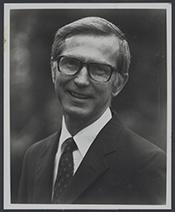
Donald Pease
Former U.S. Representative · Ohio District 13 · 1977–1993 · Democratic
Donald Pease represented Ohio's District 13 in the United States House of Representatives (1977–1993) for the Democratic party. The page below collects sourced biographical facts, term history, committee roles, and provenance for Pease.
Bioguide ID: P000170
Key facts
- Full name
- Donald Pease
- State
- Ohio
- District
- District 13
- Party
- Democratic
- House service
- 1977–1993
- First House term
- 1977
- Status
- Left office
- Current term ends
- —
- Born
- 1931
- Bioguide ID
- P000170
- Committee assignments
- —
- Dataset version
- 1.20260605
Biographical narrative
954 words · sourced from the Wikipedia REST extract
Donald J. Pease was an American politician who served as a Democratic member of the United States House of Representatives for Ohio's 13th congressional district. His tenure spanned eight terms from 1977 until 1993, during which he became known for his commitment to human rights, labor issues, and progressive tax reform. Pease's legislative efforts included significant contributions to international trade policy and tax legislation, establishing him as a prominent figure in Ohio politics and a respected voice in Congress.
Early life and career
Donald James Pease was born on September 26, 1931, in Toledo, Ohio. He pursued higher education at Ohio University in Athens, where he earned a bachelor's degree in journalism in 1953. While attending college, Pease supported himself by working at a Toledo oil refinery during the summer months. His involvement in campus activities included serving as president of the student body, editing the student newspaper, The Post, and working as a student reporter for the Athens Messenger. He was also a member of the Delta Tau Delta fraternity.
After completing his undergraduate studies, Pease continued his education at Ohio University, obtaining a master's degree in government in 1955. He furthered his academic pursuits as a Fulbright Scholar at King's College, Durham University. Following his education, Pease served two years in the U.S. Army from 1955 to 1957. Upon his return, he relocated to Oberlin, Ohio, where he became the editor and co-publisher of the Oberlin News-Tribune. His editorial work earned him recognition, including the Golden Quill Award for editorial writing from the International Society of Weekly Newspaper Editors (ISWNE), where he later served as president in 1965.
Pease's political career began in 1961 with his election to the Oberlin City Council. He subsequently served in the Ohio Senate from 1965 to 1967 and was elected to the Ohio House of Representatives in 1968, where he served until 1975. In 1974, he returned to the Ohio Senate, serving until 1977. Throughout his early political career, Pease was known for his integrity and commitment to public service, earning respect from colleagues across the political spectrum.
House tenure
In 1976, Pease was elected to the U.S. House of Representatives, representing Ohio's 13th congressional district. He began his first term in Congress in January 1977 and was re-elected for a total of eight consecutive terms, successfully navigating the electoral landscape of a Democratic-leaning district. His long-time Chief of Staff and Legislative Director was Bill Goold, who had been hired shortly after Pease graduated from Oberlin College.
During his time in the House, Pease quickly established himself as a skilled legislator and an advocate for human rights. One of his notable early achievements was sponsoring legislation to cut off U.S. trade with Uganda, which was under the oppressive regime of dictator Idi Amin. This legislation passed despite opposition from the Carter Administration and is often cited as a significant example of effective economic sanctions in U.S. foreign policy. The trade ban had a substantial impact on Uganda's economy, depriving Amin of critical revenue that had been used to fund his regime.
Pease's legislative focus extended beyond foreign policy. He was a strong proponent of linking respect for internationally recognized workers' rights to U.S. trade, investment, and aid agreements. Throughout the early 1980s, he championed this movement, successfully authoring multiple laws aimed at prohibiting exploitative labor practices, including child labor in export production.
In addition to his work on human rights and labor issues, Pease was involved in tax legislation. He authored provisions within the Internal Revenue Code that partially disallowed itemized deductions for taxpayers with adjusted gross incomes above certain thresholds, commonly referred to as the "Pease Limitations." This legislation was part of broader discussions on tax reform and fiscal responsibility.
Pease chose not to seek re-election in 1992, concluding his congressional career on January 3, 1993. His tenure in the House was marked by a commitment to progressive values and a focus on issues that resonated with his constituents.
Legislative focus and committees
Throughout his time in Congress, Pease served on various committees that aligned with his legislative interests and expertise. His work on human rights and labor issues was particularly prominent, as he sought to ensure that U.S. trade policies reflected ethical standards regarding workers' rights. This focus was part of a larger movement within Congress during the 1980s, as lawmakers increasingly recognized the importance of incorporating labor standards into international agreements.
Pease's advocacy for human rights extended beyond domestic concerns; he was also involved in international issues, particularly those affecting marginalized populations. His efforts to cut off trade with Uganda in response to human rights abuses exemplified his commitment to using legislative tools to address global injustices.
In addition to his work on human rights and labor, Pease's involvement in tax policy reflected his broader commitment to fiscal responsibility and progressive taxation. His contributions to the Internal Revenue Code, particularly the Pease Limitations, demonstrated his focus on ensuring that tax policy was equitable and addressed the needs of various income groups.
After leaving Congress, Pease continued to engage in public service and education. He served as a Visiting Distinguished Professor of Politics at Oberlin College, where he shared his knowledge and experience with students. Additionally, he was appointed by President Bill Clinton to the Amtrak Board of Directors, serving for five years.
Pease's personal life included his marriage to Jeanne Camille Wendt in 1953, with whom he had one daughter. He passed away on July 28, 2002, in Oberlin, Ohio, leaving behind a legacy of public service and advocacy for human rights and social justice. His contributions to American politics, particularly in the areas of labor rights and international trade, continue to be recognized as significant aspects of his career.
Notable legislation
Sponsored and co-sponsored legislation for Donald Pease is pending operator curation. The biographical narrative above carries the same provenance trail until per-bill rows are written.
Sources
- [1]https://en.wikipedia.org/wiki/Don_PeaseWikipedia · retrieved 2026-06-05
Notable quotes
Sourced quotes for Donald Pease are pending operator curation. Narrative-scope provenance remains attached below.
Sources
- [1]https://en.wikipedia.org/wiki/Don_PeaseWikipedia · retrieved 2026-06-05
Key positions
Curated policy positions for Donald Pease are pending operator review. The biographical narrative above carries the same provenance trail until per-topic positions are written.
Sources
- [1]https://en.wikipedia.org/wiki/Don_PeaseWikipedia · retrieved 2026-06-05
Terms served
- 1977–1979U.S. House · Term 1 · Democratic
- 1979–1981U.S. House · Term 2 · Democratic
- 1981–1983U.S. House · Term 3 · Democratic
- 1983–1985U.S. House · Term 4 · Democratic
- 1985–1987U.S. House · Term 5 · Democratic
- 1987–1989U.S. House · Term 6 · Democratic
- 1989–1991U.S. House · Term 7 · Democratic
- 1991–1993U.S. House · Term 8 · Democratic
Sources & provenance
Every attributable claim above carries a per-section [N] marker that resolves to the corresponding URL below. Each entry records the upstream provider, the canonical URL, and the timestamp at which the source was retrieved by the ingest pipeline.
Key facts
- https://bioguide.congress.gov/search/bio/P000170bioguide · retrieved 2026-06-05
- https://www.govtrack.us/congress/members/408575govtrack · retrieved 2026-06-05
Biographical narrative
- https://en.wikipedia.org/wiki/Don_Peasewikipedia · retrieved 2026-06-05
Find your representative
Every U.S. state elects representatives by district. Browse Ohio’s delegation, the full former-representative roster, or explore the role and term length.
Related on The Candidate
- Preceded by Charles MosherEarlier holder of the Ohio District 13 House seat · Republican.Open
- Succeeded by Tim RyanLater holder of the Ohio District 13 House seat · Democratic.Open
- Aaron PerryFormer U.S. Representative · Ohio District 1 · RepublicanOpen
- Alexander DuncanFormer U.S. Representative · Ohio District 1 · DemocraticOpen
- Bellamy StorerFormer U.S. Representative · Ohio District 1 · WhigOpen
- Bellamy StorerFormer U.S. Representative · Ohio District 1 · RepublicanOpen