
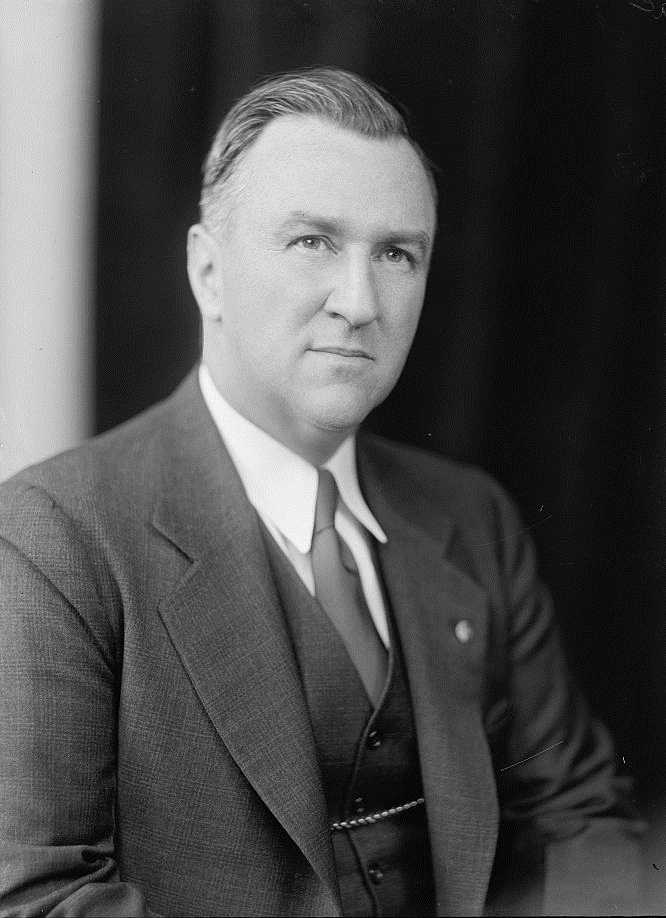
Historical · U.S. House · Ohio · District 16
John McSweeney
Former U.S. Representative · Ohio District 16 · 1923–1951 · Democratic
John McSweeney represented Ohio's District 16 in the United States House of Representatives (1923–1951) for the Democratic party. The page below collects sourced biographical facts, term history, committee roles, and provenance for McSweeney.
Bioguide ID: M000606
Key facts
- Full name
- John McSweeney
- State
- Ohio
- District
- District 16
- Party
- Democratic
- House service
- 1923–1951
- First House term
- 1923
- Status
- Left office
- Current term ends
- —
- Born
- 1890
- Bioguide ID
- M000606
- Committee assignments
- —
- Dataset version
- 1.20260605
Biographical narrative
1,062 words · sourced from the Wikipedia REST extract
John McSweeney was an American lawyer and politician who served as a U.S. Representative from Ohio during the early to mid-20th century. A member of the Democratic Party, McSweeney represented Ohio's 16th congressional district across five non-consecutive terms in the House of Representatives. His political career spanned several decades, during which he engaged in various roles, including military service during World War I and local governance in Wooster, Ohio. McSweeney's legislative efforts and public service were marked by his commitment to his constituents and his involvement in various civic duties.
Early life and career
John McSweeney was born on December 19, 1890, in Wooster, Ohio. He grew up in a community that valued education, which influenced his academic pursuits. McSweeney attended public schools in Wooster and later graduated from Wooster University in 1912. Following his graduation, he began his professional career in the engineering corps of the Pennsylvania Railroad Company, where he worked from 1912 to 1913. This early employment provided him with practical experience and insights into the workings of infrastructure and public service.
In 1913, McSweeney transitioned to education, taking a position as a teacher at Wooster High School. He remained in this role until 1917, demonstrating his commitment to the educational development of young people in his community. His career in education was interrupted by World War I, during which he served in the military. McSweeney enlisted in the U.S. Army on May 10, 1917, and was deployed overseas. He served with distinction and was promoted to the rank of captain, eventually becoming an aide-de-camp to General Farnsworth. His military service lasted until August 11, 1919, and he was recognized for his bravery with the Purple Heart Medal and the Croix de Guerre, honors that underscored his contributions during the conflict.
After returning to the United States in 1919, McSweeney resumed his teaching career. His experiences in the military and education likely shaped his perspectives on leadership and public service. He entered local politics by serving on the Wooster City Council from 1919 to 1921, during which he also held the position of president. His involvement in local governance provided him with valuable insights into the needs and concerns of his community.
In 1920, McSweeney sought to advance his political career by running for a seat in the Sixty-seventh Congress. However, he was unsuccessful in this bid. Undeterred, he continued to pursue his legal education and was admitted to the bar in 1925, commencing his law practice in Wooster. His legal career would later complement his political endeavors, allowing him to navigate the complexities of legislation and governance.
House tenure
John McSweeney's congressional career began when he was elected as a Democrat to the Sixty-eighth Congress, serving from March 4, 1923, to March 3, 1929. His initial election marked the beginning of a significant period in his life, as he represented Ohio's 16th congressional district. During his first three terms in the House, which included the Sixty-eighth, Sixty-ninth, and Seventieth Congresses, McSweeney focused on various issues pertinent to his constituents and the nation.
Despite his early success, McSweeney faced challenges in his political career. He was unsuccessful in his bid for reelection in 1928 to the Seventy-first Congress, which led him to return to his law practice in Wooster. However, he remained active in public service and was appointed as the state director of public welfare from 1931 to 1935. This role allowed him to contribute to social welfare initiatives during a challenging period in American history, as the country was grappling with the effects of the Great Depression.
McSweeney returned to Congress when he was elected to the Seventy-fifth Congress, serving from January 3, 1937, to January 3, 1939. His tenure during this period was marked by the ongoing challenges of the Great Depression and the early stages of World War II. However, he was unable to secure reelection in 1938 for the Seventy-sixth Congress, which led him to once again return to his legal practice.
In addition to his congressional duties, McSweeney continued to engage in military service during World War II. He served as a lieutenant colonel with the Military Government in Italy from 1943 to 1946, further demonstrating his commitment to public service and leadership. After the war, he returned to his legal career and remained involved in various civic activities.
McSweeney's final term in Congress came when he was elected to the Eighty-first Congress, serving from January 3, 1949, to January 3, 1951. Despite his efforts, he was unsuccessful in his attempts to secure reelection in 1950 for the Eighty-second Congress, as well as in subsequent bids for Congress in 1952 and 1956. His political career, while marked by periods of both success and defeat, reflected his dedication to serving the people of Ohio.
Legislative focus and committees
Throughout his time in Congress, John McSweeney was involved in various legislative initiatives and committees that addressed the needs of his constituents and the broader American public. While specific details regarding the bills he sponsored or supported during his tenure are not provided, it is known that he focused on issues relevant to his district and the nation during a time of significant change.
As a member of the Democratic Party, McSweeney aligned with the party's platform, which during his time in office included support for social welfare programs, labor rights, and economic recovery efforts in response to the Great Depression. His background in law and public welfare likely informed his legislative priorities, as he sought to advocate for policies that would benefit his constituents and address pressing social issues.
McSweeney's involvement in the House Un-American Activities Committee is noted, indicating his engagement with issues related to national security and internal affairs during a time when the United States was increasingly concerned about communism and other perceived threats. His participation in this committee reflects the broader political climate of the era and the challenges faced by lawmakers in addressing complex issues.
After his congressional career, McSweeney continued to reside in Wooster, Ohio, where he remained active in the community until his death on December 13, 1969. He was interred in Wooster Cemetery, leaving behind a legacy of public service that spanned military, educational, and political realms. His life and career exemplify the multifaceted nature of civic engagement and the various ways individuals can contribute to their communities and the nation as a whole.
Notable legislation
Sponsored and co-sponsored legislation for John McSweeney is pending operator curation. The biographical narrative above carries the same provenance trail until per-bill rows are written.
Sources
- [1]https://en.wikipedia.org/wiki/John_McSweeney_(Ohio_politician)Wikipedia · retrieved 2026-06-05
Notable quotes
Sourced quotes for John McSweeney are pending operator curation. Narrative-scope provenance remains attached below.
Sources
- [1]https://en.wikipedia.org/wiki/John_McSweeney_(Ohio_politician)Wikipedia · retrieved 2026-06-05
Key positions
Curated policy positions for John McSweeney are pending operator review. The biographical narrative above carries the same provenance trail until per-topic positions are written.
Sources
- [1]https://en.wikipedia.org/wiki/John_McSweeney_(Ohio_politician)Wikipedia · retrieved 2026-06-05
Terms served
- 1923–1925U.S. House · Term 1 · Democratic
- 1925–1927U.S. House · Term 2 · Democratic
- 1927–1929U.S. House · Term 3 · Democratic
- 1937–1939U.S. House · Term 4 · Democratic
- 1949–1951U.S. House · Term 5 · Democratic
Sources & provenance
Every attributable claim above carries a per-section [N] marker that resolves to the corresponding URL below. Each entry records the upstream provider, the canonical URL, and the timestamp at which the source was retrieved by the ingest pipeline.
Key facts
- https://bioguide.congress.gov/search/bio/M000606bioguide · retrieved 2026-06-05
- https://www.govtrack.us/congress/members/407595govtrack · retrieved 2026-06-05
Biographical narrative
- https://en.wikipedia.org/wiki/John_McSweeney_(Ohio_politician)wikipedia · retrieved 2026-06-05
Find your representative
Every U.S. state elects representatives by district. Browse Ohio’s delegation, the full former-representative roster, or explore the role and term length.
Related on The Candidate
- Preceded by Joseph HimesEarlier holder of the Ohio District 16 House seat · Republican.Open
- Succeeded by Frank BowLater holder of the Ohio District 16 House seat · Republican.Open
- Aaron PerryFormer U.S. Representative · Ohio District 1 · RepublicanOpen
- Alexander DuncanFormer U.S. Representative · Ohio District 1 · DemocraticOpen
- Bellamy StorerFormer U.S. Representative · Ohio District 1 · WhigOpen
- Bellamy StorerFormer U.S. Representative · Ohio District 1 · RepublicanOpen