
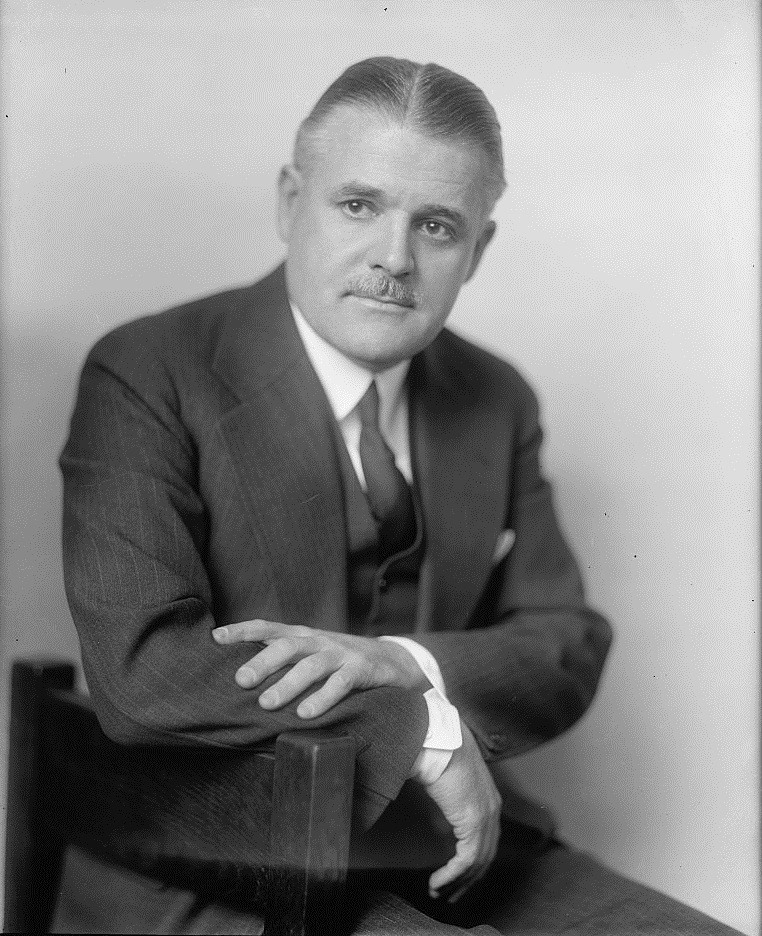
Historical · U.S. House · Ohio · District 16
Joseph Himes
Former U.S. Representative · Ohio District 16 · 1921–1923 · Republican
Joseph Himes represented Ohio's District 16 in the United States House of Representatives (1921–1923) for the Republican party. The page below collects sourced biographical facts, term history, committee roles, and provenance for Himes.
Bioguide ID: H000626
Key facts
- Full name
- Joseph Himes
- State
- Ohio
- District
- District 16
- Party
- Republican
- House service
- 1921–1923
- First House term
- 1921
- Status
- Left office
- Current term ends
- —
- Born
- 1885
- Bioguide ID
- H000626
- Committee assignments
- —
- Dataset version
- 1.20260606
Biographical narrative
913 words · sourced from the Wikipedia REST extract
Joseph H. Himes was an American politician who served as a U.S. Representative from Ohio's 16th congressional district. A member of the Republican Party, Himes held office for a single term from 1921 to 1923. His career in public service was preceded by a diverse professional background that included work in the steel industry and banking. After his congressional tenure, he relocated to Maryland, where he continued to engage in various business ventures and became known for his hospitality, hosting notable figures, including U.S. Presidents. Himes passed away in 1960, leaving behind a legacy tied to both his political service and his contributions to the business community.
Early life and career
Joseph H. Himes was born on August 15, 1885, in New Oxford, Pennsylvania. He received his education in the local public schools, which laid the foundation for his future endeavors. Himes furthered his academic pursuits at Gettysburg College and Pennsylvania State College. These educational experiences provided him with a broad knowledge base and skills that would later serve him in various professional capacities.
Following his education, Himes entered the workforce, initially finding employment in the steel industry. This sector was a significant part of the American economy during the early 20th century, and his experience there likely contributed to his understanding of industrial and economic issues. After his time in steel, Himes transitioned to the banking industry, where he continued to build his professional profile. His work in banking not only enhanced his financial acumen but also expanded his network, which would prove beneficial in his later political career.
Himes's early career experiences in both the steel and banking industries provided him with insights into the economic challenges and opportunities facing his constituents. These insights would inform his legislative priorities during his time in Congress. His professional background also positioned him as a candidate who could relate to the concerns of working-class individuals and business owners alike, making him a viable representative for Ohio's 16th district.
House tenure
Himes's political career began when he was elected as a Republican to the Sixty-seventh Congress, which convened on March 4, 1921. His election marked the beginning of his term as a U.S. Representative, and he served until March 3, 1923. During this time, Himes was involved in the legislative process, contributing to discussions and decisions that shaped national policy. His tenure coincided with a period of significant change in the United States, as the nation was adjusting to the aftermath of World War I and addressing various domestic issues.
Despite his efforts during his time in office, Himes faced challenges in securing re-election. In 1922, he ran for a second term in the Sixty-eighth Congress but was unsuccessful. This defeat marked the end of his formal political career in the House of Representatives. However, his brief tenure was characterized by a commitment to public service and an engagement with the pressing issues of his time.
Following his departure from Congress, Himes relocated to Frederick, Maryland, in 1925. In Frederick, he acquired a historic mansion known as Prospect Hall, where he lived with his family for several decades. This residence became a notable location for social gatherings, where Himes hosted various dignitaries and prominent figures, including U.S. Presidents. His ability to entertain and connect with influential individuals underscored his continued involvement in public life, even after his congressional career had concluded.
Legislative focus and committees
During his time in the House of Representatives, Himes's legislative focus was likely influenced by his background in industry and finance. While specific details regarding the committees he served on or the bills he sponsored are not provided, it can be inferred that his experiences in the steel and banking sectors informed his perspectives on economic policies, labor issues, and fiscal responsibility. Representatives often draw from their professional experiences to shape their legislative priorities, and Himes would have been no exception.
As a member of the Republican Party, Himes would have aligned with the party's platform, which during the early 1920s often emphasized business interests, economic growth, and a limited role for government in the economy. His background in banking and industry may have positioned him to advocate for policies that supported business development and economic stability in his district and beyond.
Although Himes's time in Congress was relatively brief, the impact of his service can be seen in the context of the broader political landscape of the era. The early 1920s were marked by a shift towards more conservative economic policies following the progressive reforms of the previous decade. Himes's alignment with Republican ideals would have placed him in a position to contribute to this shift, advocating for policies that resonated with his constituents' interests.
In addition to his legislative work, Himes's post-congressional career included significant business endeavors. He became the founder, president, and chairman of the board of directors of Group Hospitalization, Inc., based in Washington, D.C. This organization played a role in the development of health insurance and hospital services, reflecting Himes's continued engagement with important issues affecting the American public.
Joseph H. Himes passed away on September 9, 1960, in Washington, D.C. His contributions to both the political and business arenas left a lasting impact on the communities he served. He was interred at Fort Lincoln Cemetery, where his legacy as a public servant and businessman is remembered. Himes's life and career exemplify the diverse pathways individuals can take in public service and the importance of professional experience in shaping effective political representation.
Notable legislation
Sponsored and co-sponsored legislation for Joseph Himes is pending operator curation. The biographical narrative above carries the same provenance trail until per-bill rows are written.
Sources
- [1]https://en.wikipedia.org/wiki/Joseph_H._HimesWikipedia · retrieved 2026-06-06
Notable quotes
Sourced quotes for Joseph Himes are pending operator curation. Narrative-scope provenance remains attached below.
Sources
- [1]https://en.wikipedia.org/wiki/Joseph_H._HimesWikipedia · retrieved 2026-06-06
Key positions
Curated policy positions for Joseph Himes are pending operator review. The biographical narrative above carries the same provenance trail until per-topic positions are written.
Sources
- [1]https://en.wikipedia.org/wiki/Joseph_H._HimesWikipedia · retrieved 2026-06-06
Terms served
- 1921–1923U.S. House · Term 1 · Republican
Sources & provenance
Every attributable claim above carries a per-section [N] marker that resolves to the corresponding URL below. Each entry records the upstream provider, the canonical URL, and the timestamp at which the source was retrieved by the ingest pipeline.
Key facts
- https://bioguide.congress.gov/search/bio/H000626bioguide · retrieved 2026-06-06
- https://www.govtrack.us/congress/members/405484govtrack · retrieved 2026-06-06
Biographical narrative
- https://en.wikipedia.org/wiki/Joseph_H._Himeswikipedia · retrieved 2026-06-06
Find your representative
Every U.S. state elects representatives by district. Browse Ohio’s delegation, the full former-representative roster, or explore the role and term length.
Related on The Candidate
- Preceded by William FrancisEarlier holder of the Ohio District 16 House seat · Democratic.Open
- Succeeded by John McSweeneyLater holder of the Ohio District 16 House seat · Democratic.Open
- Aaron PerryFormer U.S. Representative · Ohio District 1 · RepublicanOpen
- Alexander DuncanFormer U.S. Representative · Ohio District 1 · DemocraticOpen
- Bellamy StorerFormer U.S. Representative · Ohio District 1 · WhigOpen
- Bellamy StorerFormer U.S. Representative · Ohio District 1 · RepublicanOpen