
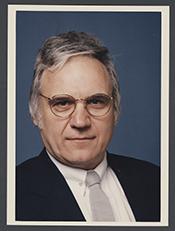
Historical · U.S. House · Ohio · District 17
James Traficant Jr.
Former U.S. Representative · Ohio District 17 · 1985–2002 · Democratic
James Traficant Jr. represented Ohio's District 17 in the United States House of Representatives (1985–2002) for the Democratic party. The page below collects sourced biographical facts, term history, committee roles, and provenance for Jr..
Bioguide ID: T000350
Key facts
- Full name
- James Traficant Jr.
- State
- Ohio
- District
- District 17
- Party
- Democratic
- House service
- 1985–2002
- First House term
- 1985
- Status
- Left office
- Current term ends
- —
- Born
- 1941
- Bioguide ID
- T000350
- Committee assignments
- —
- Dataset version
- 1.20260605
Biographical narrative
1,021 words · sourced from the Wikipedia REST extract
James A. Traficant Jr. was an American politician who served as a Democratic member of the United States House of Representatives, representing Ohio's 17th congressional district from 1985 until his expulsion in 2002. Known for his flamboyant personality and distinctive style, Traficant was a vocal advocate for economic populism and gained notoriety for his unconventional approach to politics. His tenure was marked by a series of legal troubles that culminated in his expulsion from Congress following a conviction on multiple felony charges.
Early life and career
James Anthony Traficant Jr. was born on May 8, 1941, in Youngstown, Ohio, into a working-class Catholic family. He was the son of Agnes and James Anthony Traficant and had a diverse heritage that included Italian and Hungarian ancestry. Traficant completed his secondary education at Cardinal Mooney High School, graduating in 1959. He then pursued higher education at the University of Pittsburgh, where he earned a Bachelor of Science degree in education in 1963. During his time at the university, he was a member of the football team, playing the position of quarterback alongside notable teammates, including Mike Ditka.
After completing his undergraduate studies, Traficant was drafted by the Pittsburgh Steelers in the 1963 NFL Draft, although he did not play professionally. He continued his education, obtaining a Master of Science degree in educational administration from the University of Pittsburgh in 1973, followed by a second Master’s degree in counseling from Youngstown State University in 1976.
Traficant began his professional career as the consumer finance director for the Youngstown Community Action Program. He also taught courses related to drug and alcohol dependency and recovery at both Youngstown State University and Kent State University. His work extended beyond academia, as he lectured on substance abuse for various colleges and government agencies. From 1971 to 1981, he served as the executive director of the Mahoning County Drug Program, and he was elected Sheriff of Mahoning County from 1981 to 1985. During his tenure as sheriff, Traficant gained local fame for his refusal to execute foreclosure orders against unemployed homeowners, a stance that resonated with the community facing economic hardships due to the decline of the steel industry.
In 1983, Traficant faced legal challenges when he was charged with racketeering for allegedly accepting bribes. He represented himself in court and successfully argued his case, becoming the only individual to win a Racketeer Influenced and Corrupt Organizations Act (RICO) case while acting as his own attorney.
House tenure
Traficant's legal troubles brought him increased visibility in the community, which he leveraged to launch a political career. In 1984, he was elected to the U.S. House of Representatives as a Democrat, defeating Lyle Williams, a three-term Republican incumbent. Traficant's unique style and outspoken nature helped him secure reelection eight times, often without significant opposition.
During his time in Congress, Traficant became known for his unconventional and often theatrical speeches on the House floor. He frequently addressed issues such as opposition to free trade and criticism of the Internal Revenue Service (IRS). His speeches were characterized by a casual and sometimes crude delivery, often concluding with the phrase "beam me up," a nod to the popular television series "Star Trek." His distinctive fashion choices, which included cowboy boots and colorful polyester suits, further contributed to his public persona.
Traficant's legislative record included a focus on issues relevant to his constituents, particularly those related to economic populism. He was a proponent of "Buy American" provisions in federal spending bills and advocated for measures aimed at reducing immigration. Notably, he achieved some success in curbing IRS enforcement actions against delinquent taxpayers, which he framed as a defense of the working class.
As the political landscape shifted in the mid-1990s, Traficant's voting patterns began to align more closely with Republican positions, particularly on issues such as abortion, where he voted in line with the National Right to Life Committee a significant percentage of the time. His decision to support Republican Dennis Hastert for Speaker of the House in 2001 led to repercussions from his own party, resulting in the loss of his seniority and committee assignments. This situation left Traficant without any committee assignments, a rare occurrence for a member of Congress.
Traficant's congressional career was also marked by his involvement in various investigations, including a request to the FBI to look into the missing persons case of Philip Taylor Kramer, a case he had a personal connection to. While the FBI opened a case, it did not lead to a new criminal investigation.
Legislative focus and committees
Throughout his time in the House, Traficant maintained a focus on issues that resonated with his constituents in the Mahoning Valley, a region heavily impacted by the decline of the steel industry. His advocacy for economic populism was evident in his legislative priorities, which often included measures aimed at protecting American jobs and supporting local industries.
Traficant's approach to legislation was characterized by a populist rhetoric that appealed to working-class voters. He frequently criticized free trade agreements, arguing that they undermined American manufacturing and contributed to job losses in his district. His commitment to "Buy American" provisions reflected his desire to promote domestic production and protect local jobs.
Despite his often contentious relationship with party leadership, Traficant's ability to connect with his constituents allowed him to maintain a loyal following. His unique style and willingness to challenge the status quo made him a memorable figure in Congress, even as his legal troubles began to overshadow his political career.
In 2002, Traficant's tenure came to an abrupt end when he was expelled from the House following a conviction on multiple felony charges, including bribery and racketeering. His expulsion marked a significant moment in congressional history, as he became one of the few members to be removed from office in this manner. Following his release from prison in 2009, Traficant remained a controversial figure until his death on September 27, 2014, resulting from a tractor accident at his farm in Green Township, Ohio. His life and career continue to be the subject of interest and discussion, reflecting the complexities of his legacy in American politics.
Notable legislation
Sponsored and co-sponsored legislation for James Traficant Jr. is pending operator curation. The biographical narrative above carries the same provenance trail until per-bill rows are written.
Sources
- [1]https://en.wikipedia.org/wiki/James_TraficantWikipedia · retrieved 2026-06-05
Notable quotes
Sourced quotes for James Traficant Jr. are pending operator curation. Narrative-scope provenance remains attached below.
Sources
- [1]https://en.wikipedia.org/wiki/James_TraficantWikipedia · retrieved 2026-06-05
Key positions
Curated policy positions for James Traficant Jr. are pending operator review. The biographical narrative above carries the same provenance trail until per-topic positions are written.
Sources
- [1]https://en.wikipedia.org/wiki/James_TraficantWikipedia · retrieved 2026-06-05
Terms served
- 1985–1987U.S. House · Term 1 · Democratic
- 1987–1989U.S. House · Term 2 · Democratic
- 1989–1991U.S. House · Term 3 · Democratic
- 1991–1993U.S. House · Term 4 · Democratic
- 1993–1995U.S. House · Term 5 · Democratic
- 1995–1997U.S. House · Term 6 · Democratic
- 1997–1999U.S. House · Term 7 · Democratic
- 1999–2001U.S. House · Term 8 · Democratic
- 2001–2002U.S. House · Term 9 · Democratic
Sources & provenance
Every attributable claim above carries a per-section [N] marker that resolves to the corresponding URL below. Each entry records the upstream provider, the canonical URL, and the timestamp at which the source was retrieved by the ingest pipeline.
Key facts
- https://bioguide.congress.gov/search/bio/T000350bioguide · retrieved 2026-06-05
- https://www.govtrack.us/congress/members/400611govtrack · retrieved 2026-06-05
Biographical narrative
- https://en.wikipedia.org/wiki/James_Traficantwikipedia · retrieved 2026-06-05
Find your representative
Every U.S. state elects representatives by district. Browse Ohio’s delegation, the full former-representative roster, or explore the role and term length.
Related on The Candidate
- Preceded by Lyle WilliamsEarlier holder of the Ohio District 17 House seat · Republican.Open
- Aaron PerryFormer U.S. Representative · Ohio District 1 · RepublicanOpen
- Alexander DuncanFormer U.S. Representative · Ohio District 1 · DemocraticOpen
- Bellamy StorerFormer U.S. Representative · Ohio District 1 · WhigOpen
- Bellamy StorerFormer U.S. Representative · Ohio District 1 · RepublicanOpen
- Democratic PartyFederal candidates and office holders on the Democratic line.Open