
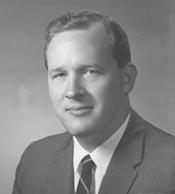
Historical · U.S. House · Ohio · District 17
John Ashbrook
Former U.S. Representative · Ohio District 17 · 1961–1983 · Republican
John Ashbrook represented Ohio's District 17 in the United States House of Representatives (1961–1983) for the Republican party. The page below collects sourced biographical facts, term history, committee roles, and provenance for Ashbrook.
Bioguide ID: A000221
Key facts
- Full name
- John Ashbrook
- State
- Ohio
- District
- District 17
- Party
- Republican
- House service
- 1961–1983
- First House term
- 1961
- Status
- Left office
- Current term ends
- —
- Born
- 1928
- Bioguide ID
- A000221
- Committee assignments
- —
- Dataset version
- 1.20260605
Biographical narrative
869 words · sourced from the Wikipedia REST extract
John M. Ashbrook was an American politician and newspaper publisher who served as a U.S. Representative from Ohio's 17th congressional district from 1961 until his death in 1982. A member of the Republican Party, Ashbrook was known for his conservative views and was associated with the New Right movement. He gained national attention during his political career, notably for his challenge to President Richard Nixon in the 1972 Republican primaries, where he positioned himself as a conservative alternative. Ashbrook's tenure in Congress was marked by his involvement in significant legislative issues and his commitment to conservative principles.
Early life and career
John Milan Ashbrook was born on September 21, 1928, in Johnstown, Ohio. He was the son of William A. Ashbrook, a U.S. Congressman and newspaper editor, and Marie Swank. Ashbrook's early exposure to politics and journalism likely influenced his future career path. He pursued higher education at Harvard University, graduating in 1952, and continued his studies at Ohio State University, where he earned a law degree in 1955.
In 1953, Ashbrook took over as the publisher of the Johnstown Independent, the newspaper founded by his father. His involvement in journalism provided him with a platform to engage with the community and discuss political issues. In 1956, Ashbrook entered public service by winning a seat in the Ohio House of Representatives, where he served two terms. His political career advanced in 1960 when he successfully ran for the U.S. House of Representatives, filling the seat previously held by his father.
Ashbrook's personal life included a marriage to Joan Needels in 1948, with whom he had three children before their divorce in 1971. He later married Jean Spencer in 1974. His family background and personal experiences shaped his perspectives on various issues throughout his political career.
House tenure
John Ashbrook's congressional career began in 1961, and he served a total of 11 terms in the U.S. House of Representatives until his death in 1982. During his time in office, Ashbrook was known for his conservative stance on numerous issues. He voted against the Civil Rights Act of 1964, reflecting the sentiments of some conservatives at the time, but he later supported the Civil Rights Act of 1968, as well as the Voting Rights Act of 1965 and the 24th Amendment to the U.S. Constitution.
In the 1964 presidential election, Ashbrook was involved in the formation of the Draft Goldwater Committee, which aimed to support Barry Goldwater's candidacy. His political activities during this period aligned him with the emerging conservative movement, which sought to challenge the prevailing liberal policies of the era. By 1966, Ashbrook had gained recognition for his right-wing activities, receiving the "Statesman of the Republic" award from Liberty Lobby, an organization that promoted conservative causes.
Despite initially supporting Richard Nixon in the 1968 presidential election, Ashbrook became critical of Nixon's policies during his presidency. This shift culminated in his decision to run against Nixon in the 1972 Republican primaries, where he sought to appeal to conservatives who felt that Nixon had strayed from traditional Republican values. Although Ashbrook did not win any statewide contests during the primaries, he garnered attention for his campaign and the principles he championed.
Legislative focus and committees
Throughout his tenure in the House, Ashbrook focused on a range of legislative issues that aligned with his conservative ideology. He was particularly vocal on matters related to government spending, taxation, and civil rights, often advocating for policies that reflected his belief in limited government and individual liberties. His voting record indicated a consistent commitment to conservative principles, which resonated with his constituents and the broader Republican base.
Ashbrook's involvement in the Republican Party extended beyond his congressional duties. He was an active participant in party politics and engaged with various conservative organizations. His campaign against Nixon in 1972, although ultimately unsuccessful, positioned him as a prominent figure within the conservative movement, and he received support from influential conservative leaders.
In the latter part of his career, Ashbrook continued to address pressing political issues, including the Watergate scandal, during which he became the first House Republican to call for Nixon's resignation. This action underscored his commitment to accountability and integrity in government, even when it meant opposing a sitting president from his own party.
As Ashbrook's political career progressed, he sought higher office and ran for the U.S. Senate in 1982, challenging incumbent Democratic Senator Howard Metzenbaum. At the time of his candidacy, he was viewed as a frontrunner in the Republican primary. However, Ashbrook's campaign was cut short when he passed away on April 24, 1982, due to a gastric hemorrhage. His death marked the end of a significant political career that had a lasting impact on Ohio and the Republican Party.
Following his passing, Ashbrook's legacy continued through various initiatives, including the establishment of the Ashbrook Center for Public Affairs at Ashland University, which was named in his honor. The center serves as a platform for promoting conservative ideas and values, reflecting Ashbrook's commitment to public service and conservative principles throughout his life. His widow, Jean Spencer Ashbrook, was elected in a special election to complete his congressional term, ensuring that his political legacy would continue to resonate in Ohio politics.
Notable legislation
Sponsored and co-sponsored legislation for John Ashbrook is pending operator curation. The biographical narrative above carries the same provenance trail until per-bill rows are written.
Sources
- [1]https://en.wikipedia.org/wiki/John_M._AshbrookWikipedia · retrieved 2026-06-05
Notable quotes
Sourced quotes for John Ashbrook are pending operator curation. Narrative-scope provenance remains attached below.
Sources
- [1]https://en.wikipedia.org/wiki/John_M._AshbrookWikipedia · retrieved 2026-06-05
Key positions
Curated policy positions for John Ashbrook are pending operator review. The biographical narrative above carries the same provenance trail until per-topic positions are written.
Sources
- [1]https://en.wikipedia.org/wiki/John_M._AshbrookWikipedia · retrieved 2026-06-05
Terms served
- 1961–1963U.S. House · Term 1 · Republican
- 1963–1965U.S. House · Term 2 · Republican
- 1965–1967U.S. House · Term 3 · Republican
- 1967–1969U.S. House · Term 4 · Republican
- 1969–1971U.S. House · Term 5 · Republican
- 1971–1973U.S. House · Term 6 · Republican
- 1973–1975U.S. House · Term 7 · Republican
- 1975–1977U.S. House · Term 8 · Republican
- 1977–1979U.S. House · Term 9 · Republican
- 1979–1981U.S. House · Term 10 · Republican
- 1981–1983U.S. House · Term 11 · Republican
Sources & provenance
Every attributable claim above carries a per-section [N] marker that resolves to the corresponding URL below. Each entry records the upstream provider, the canonical URL, and the timestamp at which the source was retrieved by the ingest pipeline.
Key facts
- https://bioguide.congress.gov/search/bio/A000221bioguide · retrieved 2026-06-05
- https://www.govtrack.us/congress/members/400949govtrack · retrieved 2026-06-05
Biographical narrative
- https://en.wikipedia.org/wiki/John_M._Ashbrookwikipedia · retrieved 2026-06-05
Find your representative
Every U.S. state elects representatives by district. Browse Ohio’s delegation, the full former-representative roster, or explore the role and term length.
Related on The Candidate
- Preceded by Robert LeveringEarlier holder of the Ohio District 17 House seat · Democratic.Open
- Succeeded by James Traficant Jr.Later holder of the Ohio District 17 House seat · Democratic.Open
- Aaron PerryFormer U.S. Representative · Ohio District 1 · RepublicanOpen
- Alexander DuncanFormer U.S. Representative · Ohio District 1 · DemocraticOpen
- Bellamy StorerFormer U.S. Representative · Ohio District 1 · WhigOpen
- Bellamy StorerFormer U.S. Representative · Ohio District 1 · RepublicanOpen