
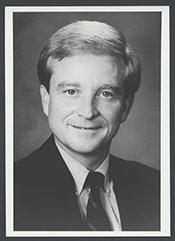
Historical · U.S. House · Ohio · District 18
Bob Ney
Former U.S. Representative · Ohio District 18 · 1995–2006 · Republican
Bob Ney represented Ohio's District 18 in the United States House of Representatives (1995–2006) for the Republican party. The page below collects sourced biographical facts, term history, committee roles, and provenance for Ney.
Bioguide ID: N000081
Key facts
- Full name
- Bob Ney
- State
- Ohio
- District
- District 18
- Party
- Republican
- House service
- 1995–2006
- First House term
- 1995
- Status
- Left office
- Current term ends
- —
- Born
- 1954
- Bioguide ID
- N000081
- Committee assignments
- —
- Dataset version
- 1.20260605
Biographical narrative
969 words · sourced from the Wikipedia REST extract
Robert W. Ney is a former American politician who served as a U.S. Representative for Ohio's 18th congressional district from 1995 until his resignation in November 2006. A member of the Republican Party, Ney's congressional career was marked by his involvement in election reform initiatives and his leadership role as Chairman of the House Administration Committee. His tenure ended amid legal troubles related to the Jack Abramoff lobbying scandal, which ultimately led to his guilty plea for conspiracy and making false statements.
Early life and career
Robert William Ney was born on July 5, 1954, in Wheeling, West Virginia. He spent his formative years in Bellaire, Ohio, a small industrial town located across the Ohio River from Wheeling. Ney graduated from St. John's High School in Bellaire in 1972. Following high school, he pursued higher education at Ohio University Eastern Campus in Belmont County before transferring to Ohio State University in Columbus, where he earned a Bachelor of Science degree in 1976.
After completing his education, Ney embarked on a diverse career path. He initially worked at the Bureau of Motor Vehicles in Ohio and later took on a teaching position in Iran, where he taught English. Upon returning to the United States, he served as the safety director for Bellaire and worked as the health and education program manager for the Ohio Office of Appalachia. Ney's early career experiences provided him with a foundation in public service and community engagement.
Ney's foray into politics began in the early 1980s. In 1980, at the age of 26, he successfully ran for a seat in the Ohio House of Representatives, defeating the incumbent Wayne Hays, a former U.S. representative who had resigned due to a scandal. Ney served in the Ohio House from 1981 until 1983 but lost his re-election bid in November 1982. Following his defeat, he managed a home security company in Saudi Arabia before returning to Ohio politics. In 1984, he was appointed to the Ohio Senate to fill the vacancy left by former state senator Sam Speck, who had resigned. Ney won the subsequent election for the 20th District seat in November 1984 and was re-elected in 1988 and 1992.
House tenure
Ney's journey to the U.S. House of Representatives began in 1994 when he decided to run for Ohio's 18th congressional district after the retirement of nine-term incumbent Democrat Douglas Applegate. Ney emerged victorious in the Republican primary, securing 69% of the vote in a competitive six-candidate field. Despite the district's Democratic lean, Ney achieved a notable upset in the general election, defeating Democratic State Representative Greg DiDonato with 54% of the vote.
Following his initial victory, Ney was re-elected to a second term in 1996, defeating Democratic State Senator Rob Burch with 50% of the vote. His subsequent electoral campaigns from 1998 to 2004 were characterized by significant victories, often winning by substantial margins. In 1998, he garnered 60% of the vote, followed by 64% in 2000, and ran unopposed in 2002. In 2004, he secured 66% of the vote, demonstrating his strong support within the district.
In January 2006, Ney announced his candidacy for a seventh term. However, his campaign was overshadowed by legal issues stemming from his involvement in the Jack Abramoff lobbying scandal. Ney had been identified in the guilty pleas of several individuals connected to the scandal, which involved allegations of receiving gifts in exchange for political favors. Despite these challenges, he won the Republican primary against challenger James Brodbelt Harris, receiving 68% of the vote. However, Ney's legal troubles and the perception of a "culture of corruption" among Republican officials became focal points in the 2006 election cycle.
In August 2006, Ney withdrew his candidacy for re-election, with state senator Joy Padgett announcing that he would step aside in favor of her candidacy. Ney confirmed his decision to serve out the remainder of his term until January 2007, indicating that he had options in the private sector following his departure from Congress. His resignation marked the end of a six-term congressional career that began in 1995.
Legislative focus and committees
During his time in the U.S. House of Representatives, Ney was involved in various legislative efforts, with a notable focus on election reform. His work in this area was particularly significant in the aftermath of the controversial 2000 presidential election, which highlighted deficiencies in the electoral process. Ney's contributions to election reform were part of broader efforts to enhance the integrity and efficiency of voting systems across the country.
From 2001 to 2006, Ney served as Chairman of the House Administration Committee. In this role, he was responsible for overseeing the operations of the Capitol complex and managing various administrative functions related to the House of Representatives. His leadership in this committee earned him the informal title of the "Mayor of Capitol Hill," reflecting his influence and responsibilities within the legislative body.
In addition to his work on election reform, Ney was a prominent supporter of the "Stand Up For Steel" initiative, which aimed to protect the steel industry and promote policies favorable to steelworkers. His advocacy for this cause was part of a broader commitment to addressing the economic challenges faced by specific industries and communities in Ohio.
Throughout his congressional tenure, Ney's legislative focus encompassed a range of issues, including economic development, public safety, and education. His background in local government and community service informed his approach to policymaking, as he sought to address the needs and concerns of his constituents in Ohio's 18th district.
In summary, Robert W. Ney's career in public service spanned various roles, from local government to the U.S. Congress. His tenure as a U.S. Representative was marked by significant legislative efforts, particularly in election reform and administrative oversight, but ultimately concluded amid legal challenges that led to his resignation.
Notable legislation
Sponsored and co-sponsored legislation for Bob Ney is pending operator curation. The biographical narrative above carries the same provenance trail until per-bill rows are written.
Sources
- [1]https://en.wikipedia.org/wiki/Bob_NeyWikipedia · retrieved 2026-06-05
Notable quotes
Sourced quotes for Bob Ney are pending operator curation. Narrative-scope provenance remains attached below.
Sources
- [1]https://en.wikipedia.org/wiki/Bob_NeyWikipedia · retrieved 2026-06-05
Key positions
Curated policy positions for Bob Ney are pending operator review. The biographical narrative above carries the same provenance trail until per-topic positions are written.
Sources
- [1]https://en.wikipedia.org/wiki/Bob_NeyWikipedia · retrieved 2026-06-05
Terms served
- 1995–1997U.S. House · Term 1 · Republican
- 1997–1999U.S. House · Term 2 · Republican
- 1999–2001U.S. House · Term 3 · Republican
- 2001–2003U.S. House · Term 4 · Republican
- 2003–2005U.S. House · Term 5 · Republican
- 2005–2006U.S. House · Term 6 · Republican
Sources & provenance
Every attributable claim above carries a per-section [N] marker that resolves to the corresponding URL below. Each entry records the upstream provider, the canonical URL, and the timestamp at which the source was retrieved by the ingest pipeline.
Key facts
- https://bioguide.congress.gov/search/bio/N000081bioguide · retrieved 2026-06-05
- http://www.house.gov/neyhouse.gov · retrieved 2026-06-05
Biographical narrative
- https://en.wikipedia.org/wiki/Bob_Neywikipedia · retrieved 2026-06-05
Find your representative
Every U.S. state elects representatives by district. Browse Ohio’s delegation, the full former-representative roster, or explore the role and term length.
Related on The Candidate
- Preceded by Douglas ApplegateEarlier holder of the Ohio District 18 House seat · Democratic.Open
- Succeeded by Zack SpaceLater holder of the Ohio District 18 House seat · Democratic.Open
- Aaron PerryFormer U.S. Representative · Ohio District 1 · RepublicanOpen
- Alexander DuncanFormer U.S. Representative · Ohio District 1 · DemocraticOpen
- Bellamy StorerFormer U.S. Representative · Ohio District 1 · WhigOpen
- Bellamy StorerFormer U.S. Representative · Ohio District 1 · RepublicanOpen