
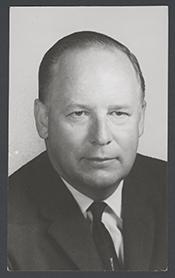
Historical · U.S. House · Ohio · District 18
Wayne Hays
Former U.S. Representative · Ohio District 18 · 1949–1977 · Democratic
Wayne Hays represented Ohio's District 18 in the United States House of Representatives (1949–1977) for the Democratic party. The page below collects sourced biographical facts, term history, committee roles, and provenance for Hays.
Bioguide ID: H000408
Key facts
- Full name
- Wayne Hays
- State
- Ohio
- District
- District 18
- Party
- Democratic
- House service
- 1949–1977
- First House term
- 1949
- Status
- Left office
- Current term ends
- —
- Born
- 1911
- Bioguide ID
- H000408
- Committee assignments
- —
- Dataset version
- 1.20260605
Biographical narrative
928 words · sourced from the Wikipedia REST extract
Wayne L. Hays was an American politician and World War II veteran who served as a U.S. Representative for Ohio's 18th congressional district from 1949 until his resignation in 1976. A member of the Democratic Party, Hays was known for his long tenure in Congress, spanning 14 terms, during which he held significant influence, particularly as the chairman of the House Administration Committee. His career, however, was marred by a scandal that ultimately led to his resignation from Congress.
Early life and career
Wayne Levere Hays was born on May 13, 1911, in Bannock, Ohio, to Bertha Taylor and Walter L. Hays. He grew up in a region that would later become a significant part of his political base. Hays pursued higher education at Ohio State University, where he graduated in 1933. His early career in public service began at the local level when he was elected mayor of Flushing, Ohio, serving from 1939 to 1945. During this time, he also took on the role of a state senator in Ohio for two years, from 1941 to 1942, showcasing his early commitment to public service and governance.
In addition to his political roles, Hays served as the Commissioner of Belmont County from 1945 to 1949. His military service began in the Army Officers' Reserve Corps in 1933, and he was called to active duty shortly after the attack on Pearl Harbor on December 8, 1941. Hays served as a second lieutenant during World War II but was medically discharged in August 1942. His military experience likely contributed to his leadership style and understanding of discipline, which would later characterize his congressional career.
Hays's political ascent continued as he transitioned from local and state politics to the national stage. He was first elected to the U.S. House of Representatives in 1948, representing Ohio's 18th congressional district. His election marked the beginning of a lengthy congressional career that would span nearly three decades.
House tenure
Hays was elected as a Democrat to the 81st Congress and subsequently won re-election to thirteen consecutive Congresses, demonstrating his strong support among constituents in Ohio. Throughout his tenure, he became a prominent figure in the House, particularly noted for his role as chairman of the Committee on House Administration. This position placed him in a powerful role, overseeing various administrative functions of the House and influencing the legislative process.
As a member of Congress, Hays was recognized for his strong leadership and assertive management style. His colleagues often debated whether he was the second or third most powerful member of Congress, reflecting the significant influence he wielded. Hays's tenure was marked by a reputation for being a formidable presence in the House, with some describing him as a strict and uncompromising leader. His control over the House Administration Committee extended to even minor details, creating an atmosphere where many lawmakers were cautious about crossing him, fearing repercussions such as the loss of air conditioning in their offices.
In addition to his committee work, Hays was involved in various aspects of national politics. He received votes for the presidency at the 1972 Democratic National Convention without actively campaigning for the office. In 1976, he ran as a favorite son candidate for the Democratic presidential nomination in the Ohio primary, further illustrating his political ambitions and standing within the party.
Legislative focus and committees
During his time in Congress, Hays was primarily focused on issues related to administration and governance, given his leadership role on the Committee on House Administration. This committee is responsible for overseeing the operations of the House, including matters related to the management of congressional offices, the conduct of elections, and the overall administration of the legislative body. Hays's influence in this area allowed him to shape policies and procedures that affected not only his constituents but also the broader legislative framework of the House.
Despite his significant contributions to the legislative process, Hays's career was overshadowed by a scandal that emerged in the mid-1970s. In May 1976, a story broke in the Washington Post involving allegations made by Elizabeth Ray, a former secretary of Hays. She claimed that she had been hired to serve as his mistress while also receiving a federal salary. This revelation came shortly after Hays had divorced his wife of 38 years and married another former secretary. The scandal attracted considerable media attention, leading to public scrutiny of Hays's personal and professional conduct.
Hays admitted to some of the allegations on the House floor, although he denied that Ray's salary was solely for sexual services. The fallout from the scandal was significant, leading to his resignation as chairman of the Committee on House Administration on June 18, 1976, and ultimately his resignation from Congress on September 1, 1976. This marked a dramatic end to a long and influential career in public service.
Following his departure from Congress, Hays returned to his property in Belmont, Ohio, where he engaged in farming, specifically breeding Angus cattle and Tennessee Walking Horses. He remained active in politics, serving a term in the Ohio House of Representatives from 1979 to 1981, where he continued to influence state-level politics. In the 1978 Democratic primary, he defeated a future federal judge but was ultimately unsuccessful in his bid for re-election against future Congressman Bob Ney.
Hays passed away on February 10, 1989, at the age of 77, after suffering a heart attack at his home. His life and career reflect a complex narrative of public service, political influence, and personal controversy, marking him as a notable figure in Ohio's political history.
Notable legislation
Sponsored and co-sponsored legislation for Wayne Hays is pending operator curation. The biographical narrative above carries the same provenance trail until per-bill rows are written.
Sources
- [1]https://en.wikipedia.org/wiki/Wayne_HaysWikipedia · retrieved 2026-06-05
Notable quotes
Sourced quotes for Wayne Hays are pending operator curation. Narrative-scope provenance remains attached below.
Sources
- [1]https://en.wikipedia.org/wiki/Wayne_HaysWikipedia · retrieved 2026-06-05
Key positions
Curated policy positions for Wayne Hays are pending operator review. The biographical narrative above carries the same provenance trail until per-topic positions are written.
Sources
- [1]https://en.wikipedia.org/wiki/Wayne_HaysWikipedia · retrieved 2026-06-05
Terms served
- 1949–1951U.S. House · Term 1 · Democratic
- 1951–1953U.S. House · Term 2 · Democratic
- 1953–1955U.S. House · Term 3 · Democratic
- 1955–1957U.S. House · Term 4 · Democratic
- 1957–1959U.S. House · Term 5 · Democratic
- 1959–1961U.S. House · Term 6 · Democratic
- 1961–1963U.S. House · Term 7 · Democratic
- 1963–1965U.S. House · Term 8 · Democratic
- 1965–1967U.S. House · Term 9 · Democratic
- 1967–1969U.S. House · Term 10 · Democratic
- 1969–1971U.S. House · Term 11 · Democratic
- 1971–1973U.S. House · Term 12 · Democratic
- 1973–1975U.S. House · Term 13 · Democratic
- 1975–1977U.S. House · Term 14 · Democratic
Sources & provenance
Every attributable claim above carries a per-section [N] marker that resolves to the corresponding URL below. Each entry records the upstream provider, the canonical URL, and the timestamp at which the source was retrieved by the ingest pipeline.
Key facts
- https://bioguide.congress.gov/search/bio/H000408bioguide · retrieved 2026-06-05
- https://www.govtrack.us/congress/members/405275govtrack · retrieved 2026-06-05
Biographical narrative
- https://en.wikipedia.org/wiki/Wayne_Hayswikipedia · retrieved 2026-06-05
Find your representative
Every U.S. state elects representatives by district. Browse Ohio’s delegation, the full former-representative roster, or explore the role and term length.
Related on The Candidate
- Preceded by Earl LewisEarlier holder of the Ohio District 18 House seat · Republican.Open
- Succeeded by Douglas ApplegateLater holder of the Ohio District 18 House seat · Democratic.Open
- Aaron PerryFormer U.S. Representative · Ohio District 1 · RepublicanOpen
- Alexander DuncanFormer U.S. Representative · Ohio District 1 · DemocraticOpen
- Bellamy StorerFormer U.S. Representative · Ohio District 1 · WhigOpen
- Bellamy StorerFormer U.S. Representative · Ohio District 1 · RepublicanOpen