
Historical · U.S. House · Ohio · District 19
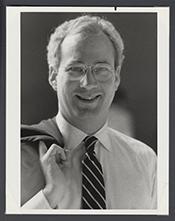
Edward Feighan
Former U.S. Representative · Ohio District 19 · 1983–1993 · Democratic
Edward Feighan represented Ohio's District 19 in the United States House of Representatives (1983–1993) for the Democratic party. The page below collects sourced biographical facts, term history, committee roles, and provenance for Feighan.
Bioguide ID: F000059
Key facts
- Full name
- Edward Feighan
- State
- Ohio
- District
- District 19
- Party
- Democratic
- House service
- 1983–1993
- First House term
- 1983
- Status
- Left office
- Current term ends
- —
- Born
- 1947
- Bioguide ID
- F000059
- Committee assignments
- —
- Dataset version
- 1.20260605
Biographical narrative
932 words · sourced from the Wikipedia REST extract
Edward F. Feighan is a former American politician who served as a Democratic U.S. Representative for Ohio's 19th congressional district from 1983 until 1993. His political career began at the state level, where he held various positions, including a member of the Ohio House of Representatives and a Cuyahoga County Commissioner. Feighan's tenure in Congress was marked by significant political developments and challenges, including redistricting and controversies that ultimately influenced his decision not to seek re-election. After leaving Congress, he transitioned into the private sector, taking on leadership roles in several companies, including ProCentury Corporation and Covius.
Early life and career
Edward F. Feighan was born on October 22, 1947, in Lakewood, Ohio. He attended St. Edward High School, an all-boys Catholic institution located on the west side of Cleveland, where he graduated in 1965. Following high school, Feighan pursued higher education at Loyola University in New Orleans, Louisiana, where he earned a Bachelor of Arts degree in 1969. His academic journey continued at Cleveland State University College of Law, where he attended while simultaneously serving in the Ohio legislature. He completed his legal education and received his Juris Doctor degree in 1978.
Feighan's political career began in 1972 when he was elected to the Ohio House of Representatives, representing the city of Cleveland. His initial foray into politics marked the beginning of a six-year tenure in the Ohio Legislature, during which he focused on various legislative issues pertinent to his constituents. In 1979, he transitioned from the state legislature to local government when he was elected as a Cuyahoga County Commissioner. This role allowed him to engage more directly with local governance and community issues until he left the position in 1983 to pursue a seat in the U.S. House of Representatives.
In 1977, Feighan made a bid for the mayoralty of Cleveland. However, he lost a closely contested race to Dennis Kucinich, who would later also serve in Congress. This experience in local politics and his involvement in the community helped shape his political identity and prepared him for his future role at the national level.
House tenure
Feighan's congressional career began when he was elected to the U.S. House of Representatives in 1982, representing Ohio's 19th congressional district. He was sworn into office in 1983 and served a total of five terms until his departure from Congress in January 1993. During his time in the House, Feighan was involved in various legislative initiatives and contributed to discussions on a range of issues affecting his constituents and the nation.
Throughout his tenure, Feighan participated in the broader political landscape of the 1980s and early 1990s, a period characterized by significant political shifts and legislative challenges. His service coincided with the Reagan administration, which influenced many policy discussions and legislative priorities during that era. Feighan's role as a Democratic representative placed him in opposition to many of the administration's policies, and he often advocated for issues aligned with the Democratic Party's platform.
Feighan's time in Congress was not without controversy. He faced challenges related to the House banking scandal, which involved allegations of improper banking practices among members of Congress. This scandal had far-reaching implications for many lawmakers, including Feighan, and it contributed to a climate of scrutiny surrounding congressional operations. Additionally, redistricting efforts during this period created a complex political landscape, leading to potential primary challenges and shifts in voter demographics. Ultimately, these factors influenced Feighan's decision not to seek renomination for the 103rd Congress in 1992.
Legislative focus and committees
During his time in the House of Representatives, Feighan was involved in various legislative committees and initiatives. His work encompassed a range of issues, reflecting the diverse needs of his constituents in Ohio's 19th congressional district. While specific details about the bills he sponsored or the committees he served on are not provided, it is common for members of Congress to engage in discussions and legislation related to local economic development, education, healthcare, and infrastructure.
Feighan's background in law and local government likely informed his legislative priorities and approach to governance. His experience as a state representative and county commissioner provided him with insights into the challenges faced by local communities, which he could advocate for at the federal level. This dual perspective of local and national governance often allows representatives to address the unique needs of their districts while also contributing to broader national policy discussions.
After concluding his congressional career in 1993, Feighan transitioned into the private sector, where he took on various leadership roles in different companies. He served as a director of ProCentury Corporation, a specialty insurance company, from 1993 to 1996. Following this, he held the position of Senior Vice President at Century Business Services, a provider of outsourced business services, from late 1997 until mid-1998. His career continued to evolve as he became the president of Avalon National Corporation, a holding company for a workers' compensation insurance agency, and later a Managing Partner at a merchant banking firm.
In 2000, Feighan returned to ProCentury, where he had previously served as a director. He eventually became the chairman, president, and CEO of the company in 2003, leading it until its sale in 2008. Since February 2014, he has held the position of CEO at Covius, a company specializing in commercial and residential real estate advisory services.
Feighan's career reflects a trajectory that spans both public service and the private sector, showcasing his adaptability and diverse skill set. His experiences in various roles have contributed to his understanding of the intersection between government and business, allowing him to navigate complex environments effectively.
Notable legislation
Sponsored and co-sponsored legislation for Edward Feighan is pending operator curation. The biographical narrative above carries the same provenance trail until per-bill rows are written.
Sources
- [1]https://en.wikipedia.org/wiki/Ed_FeighanWikipedia · retrieved 2026-06-05
Notable quotes
Sourced quotes for Edward Feighan are pending operator curation. Narrative-scope provenance remains attached below.
Sources
- [1]https://en.wikipedia.org/wiki/Ed_FeighanWikipedia · retrieved 2026-06-05
Key positions
Curated policy positions for Edward Feighan are pending operator review. The biographical narrative above carries the same provenance trail until per-topic positions are written.
Sources
- [1]https://en.wikipedia.org/wiki/Ed_FeighanWikipedia · retrieved 2026-06-05
Terms served
- 1983–1985U.S. House · Term 1 · Democratic
- 1985–1987U.S. House · Term 2 · Democratic
- 1987–1989U.S. House · Term 3 · Democratic
- 1989–1991U.S. House · Term 4 · Democratic
- 1991–1993U.S. House · Term 5 · Democratic
Sources & provenance
Every attributable claim above carries a per-section [N] marker that resolves to the corresponding URL below. Each entry records the upstream provider, the canonical URL, and the timestamp at which the source was retrieved by the ingest pipeline.
Key facts
- https://bioguide.congress.gov/search/bio/F000059bioguide · retrieved 2026-06-05
- https://www.govtrack.us/congress/members/404019govtrack · retrieved 2026-06-05
Biographical narrative
- https://en.wikipedia.org/wiki/Ed_Feighanwikipedia · retrieved 2026-06-05
Find your representative
Every U.S. state elects representatives by district. Browse Ohio’s delegation, the full former-representative roster, or explore the role and term length.
Related on The Candidate
- Preceded by Charles CarneyEarlier holder of the Ohio District 19 House seat · Democratic.Open
- Succeeded by Eric FingerhutLater holder of the Ohio District 19 House seat · Democratic.Open
- Aaron PerryFormer U.S. Representative · Ohio District 1 · RepublicanOpen
- Alexander DuncanFormer U.S. Representative · Ohio District 1 · DemocraticOpen
- Bellamy StorerFormer U.S. Representative · Ohio District 1 · WhigOpen
- Bellamy StorerFormer U.S. Representative · Ohio District 1 · RepublicanOpen