
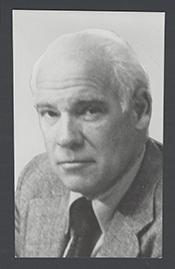
Historical · U.S. House · Ohio · District 3
Charles Whalen Jr.
Former U.S. Representative · Ohio District 3 · 1967–1979 · Republican
Charles Whalen Jr. represented Ohio's District 3 in the United States House of Representatives (1967–1979) for the Republican party. The page below collects sourced biographical facts, term history, committee roles, and provenance for Jr..
Bioguide ID: W000317
Key facts
- Full name
- Charles Whalen Jr.
- State
- Ohio
- District
- District 3
- Party
- Republican
- House service
- 1967–1979
- First House term
- 1967
- Status
- Left office
- Current term ends
- —
- Born
- 1920
- Bioguide ID
- W000317
- Committee assignments
- —
- Dataset version
- 1.20260605
Biographical narrative
1,010 words · sourced from the Wikipedia REST extract
Charles W. Whalen Jr. was an American politician from Ohio who served as a U.S. Representative for the state's third congressional district. A member of the Republican Party, Whalen held office in the U.S. House of Representatives for six terms from 1967 until 1979. He was known for his liberal stance within the Republican Party, particularly his opposition to U.S. involvement in the Vietnam War and his advocacy for an all-volunteer military. His political career also included service in the Ohio House of Representatives and the Ohio State Senate.
Early life and career
Charles William Whalen Jr. was born on July 31, 1920, in Dayton, Ohio. He completed his secondary education at Oakwood High School before pursuing higher education. Whalen graduated from the University of Dayton in 1942 with a degree in business administration. Following his undergraduate studies, he attended Harvard University Graduate School of Business, where he furthered his education and earned a degree in 1946.
After completing his education, Whalen enlisted in the United States Army during World War II. He served with distinction and was discharged as a first lieutenant in 1946. Upon returning to civilian life, he took on a leadership role in his family's business, the Dayton Dress Company, where he served as vice president from 1946 until 1952. His professional journey continued in academia, as he became a professor of economics and the chairman of the economics department at the University of Dayton from 1962 to 1966.
Whalen's political career began in 1954 when he was elected to the Ohio House of Representatives. He served three terms in this role, gaining valuable experience in state politics. In 1960, he transitioned to the Ohio State Senate, where he served another three terms. During his time in the Senate, he was an advocate for a Fair Housing Law in Ohio, demonstrating his commitment to social issues.
In 1962, Whalen sought the Republican nomination for Lieutenant Governor of Ohio. He faced a competitive primary and finished second, garnering a significant portion of the vote but ultimately losing to a more established opponent. His experiences in state government laid the groundwork for his future endeavors in Congress.
House tenure
Whalen's congressional career began when he ran for the U.S. House of Representatives in 1966. He campaigned actively, walking 880 miles throughout his district to engage with voters. His efforts paid off when he defeated the incumbent, Rodney Love, in the general election, securing 53.8% of the vote. Over the course of his six terms in the House, Whalen faced little serious opposition in subsequent elections. His electoral success included winning 78% of the vote in 1968, 76% in 1970, and 74% in 1972. Notably, in 1974, amid the political fallout from the Watergate scandal, he was the only Republican candidate without challengers in either the primary or general election.
Throughout his tenure in Congress, Whalen developed a reputation for his liberal voting record, particularly in contrast to many of his Republican colleagues. He was a vocal opponent of the Vietnam War and advocated for significant changes in military policy. In 1967, he co-authored a position paper advocating for an all-volunteer army, arguing against the draft. He also supported legislation aimed at reducing military spending and establishing a timeline for the withdrawal of U.S. forces from Vietnam.
In 1971, he introduced the Nedzi-Whalen Amendment, which sought to restrict military funding for operations in Southeast Asia after a specified date. His opposition to military expenditures extended into his final term, where he supported efforts to eliminate the B-1 bomber program. Whalen's positions often put him at odds with the majority of his party, as evidenced by a Congressional Quarterly estimate indicating that he voted against the majority of his party members 72% of the time in 1974.
Whalen's political alignment began to shift over time, leading him to consider a change in party affiliation. In 1977, he acknowledged discussions with Democratic Party leadership about potentially switching parties. Although state law would have complicated this transition, he also contemplated running as an independent candidate in 1978. Ultimately, he chose not to seek re-election that year, concluding his congressional career on January 3, 1979. He was succeeded by Democrat Tony P. Hall.
Legislative focus and committees
During his time in the U.S. House, Whalen was involved in various legislative initiatives and committees that reflected his interests and priorities. His focus on military and foreign policy was a defining aspect of his congressional career. He was particularly concerned with issues related to the Vietnam War, advocating for a reduction in military spending and a shift toward an all-volunteer military.
In addition to his military-related initiatives, Whalen was committed to civil rights and social justice issues. He authored a book titled "Your Right to Know: How the Free Flow of News Depends on the Journalist's Right to Protect His Sources," published in 1973. This work highlighted the importance of journalistic freedom and the protection of sources in a democratic society.
Whalen's voting record and legislative efforts increasingly diverged from those of his party, leading to tensions within the Republican Party. His willingness to challenge the party line on key issues, including tax policy and military funding, underscored his independent approach to governance. He was one of only three House Republicans to oppose a significant tax cut bill during his tenure.
After leaving Congress, Whalen continued to engage in writing and scholarship. He co-authored two books with his wife, Barbara, who was a columnist and known for her voice work. Their first book, "The Longest Debate: A Legislative History of the 1964 Civil Rights Act," examined the legislative process behind this landmark legislation. The second book, "The Fighting McCooks – America's Famous Fighting Family," explored the military history of a notable local family.
Charles W. Whalen Jr. passed away on June 27, 2011, in Bethesda, Maryland, at the age of 90. His legacy as a politician reflects a commitment to liberal principles within the Republican Party and a focus on social justice and military reform during a turbulent period in American history.
Notable legislation
Sponsored and co-sponsored legislation for Charles Whalen Jr. is pending operator curation. The biographical narrative above carries the same provenance trail until per-bill rows are written.
Sources
- [1]https://en.wikipedia.org/wiki/Charles_W._Whalen_Jr.Wikipedia · retrieved 2026-06-05
Notable quotes
Sourced quotes for Charles Whalen Jr. are pending operator curation. Narrative-scope provenance remains attached below.
Sources
- [1]https://en.wikipedia.org/wiki/Charles_W._Whalen_Jr.Wikipedia · retrieved 2026-06-05
Key positions
Curated policy positions for Charles Whalen Jr. are pending operator review. The biographical narrative above carries the same provenance trail until per-topic positions are written.
Sources
- [1]https://en.wikipedia.org/wiki/Charles_W._Whalen_Jr.Wikipedia · retrieved 2026-06-05
Terms served
- 1967–1969U.S. House · Term 1 · Republican
- 1969–1971U.S. House · Term 2 · Republican
- 1971–1973U.S. House · Term 3 · Republican
- 1973–1975U.S. House · Term 4 · Republican
- 1975–1977U.S. House · Term 5 · Republican
- 1977–1979U.S. House · Term 6 · Republican
Sources & provenance
Every attributable claim above carries a per-section [N] marker that resolves to the corresponding URL below. Each entry records the upstream provider, the canonical URL, and the timestamp at which the source was retrieved by the ingest pipeline.
Key facts
- https://bioguide.congress.gov/search/bio/W000317bioguide · retrieved 2026-06-05
- https://www.govtrack.us/congress/members/411479govtrack · retrieved 2026-06-05
Biographical narrative
- https://en.wikipedia.org/wiki/Charles_W._Whalen_Jr.wikipedia · retrieved 2026-06-05
Find your representative
Every U.S. state elects representatives by district. Browse Ohio’s delegation, the full former-representative roster, or explore the role and term length.
Related on The Candidate
- Preceded by Rodney LoveEarlier holder of the Ohio District 3 House seat · Democratic.Open
- Succeeded by Tony HallLater holder of the Ohio District 3 House seat · Democratic.Open
- Aaron PerryFormer U.S. Representative · Ohio District 1 · RepublicanOpen
- Alexander DuncanFormer U.S. Representative · Ohio District 1 · DemocraticOpen
- Bellamy StorerFormer U.S. Representative · Ohio District 1 · WhigOpen
- Bellamy StorerFormer U.S. Representative · Ohio District 1 · RepublicanOpen