
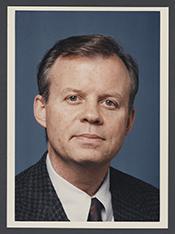
Historical · U.S. House · Ohio · District 3
Tony Hall
Former U.S. Representative · Ohio District 3 · 1979–2002 · Democratic
Tony Hall represented Ohio's District 3 in the United States House of Representatives (1979–2002) for the Democratic party. The page below collects sourced biographical facts, term history, committee roles, and provenance for Hall.
Bioguide ID: H000074
Key facts
- Full name
- Tony Hall
- State
- Ohio
- District
- District 3
- Party
- Democratic
- House service
- 1979–2002
- First House term
- 1979
- Status
- Left office
- Current term ends
- —
- Born
- 1942
- Bioguide ID
- H000074
- Committee assignments
- —
- Dataset version
- 1.20260605
Biographical narrative
1,024 words · sourced from the Wikipedia REST extract
Tony P. Hall is a former American politician, businessman, and diplomat who served as a U.S. Representative for Ohio's 3rd congressional district from 1979 until 2002. A member of the Democratic Party, Hall is known for his extensive legislative work focused on alleviating world hunger and his subsequent role as the United States Ambassador to the United Nations Agencies for Food and Agriculture. His career in public service spans several decades, including significant positions in both state and federal government, as well as notable contributions to humanitarian efforts.
Early life and career
Tony Patrick Hall was born on January 16, 1942, in Dayton, Ohio. He grew up in a politically active family; his father, Dave Hall, was a Republican mayor of Dayton. This background likely influenced Hall's early interest in public service and civic engagement. He completed his secondary education at Fairmont High School in Kettering, Ohio, graduating in 1960. Hall then pursued higher education at Denison University, where he earned a bachelor's degree in 1964. While at Denison, he distinguished himself in athletics, being named a Little All-American football tailback and recognized as the Ohio Conference's Most Valuable Player in 1963.
After completing his education, Hall joined the Peace Corps, serving as a volunteer in Thailand from 1966 to 1967. This experience was pivotal in shaping his commitment to addressing global issues, particularly world hunger. Following his time in the Peace Corps, Hall entered the real estate business, which provided him with insights into economic and community development.
Hall's political career began in earnest when he became active in the Democratic Party, a shift from his father's Republican affiliation. He was elected to the Ohio House of Representatives, where he served from 1969 to 1973. He then transitioned to the Ohio Senate, representing his district from 1973 until 1979. During this period, Hall gained valuable legislative experience and developed a reputation for his advocacy on various issues. In 1974, he ran for the position of Ohio Secretary of State but was defeated by the Republican incumbent, Ted W. Brown.
House tenure
Tony Hall was first elected to the U.S. House of Representatives in 1978, succeeding Charles W. Whalen Jr., a moderate Republican who had served for twelve years. Hall's initial election was marked by a competitive race, where he garnered 54 percent of the vote. However, his subsequent elections demonstrated a significant increase in his popularity; he was reelected eleven more times, consistently achieving over 57 percent of the vote. Notably, he faced no opposition in several elections, including in 1984 and 1990, underscoring his strong support within his district.
During his time in Congress, Hall's political views evolved, particularly regarding social issues. In the 1980s, he became an evangelical Christian, which led to a notable shift in his stance on abortion, moving from supporting abortion rights to adopting an anti-abortion position. Despite this change, Hall maintained a generally liberal voting record on other issues.
Hall's congressional career was characterized by a strong focus on addressing world hunger. He undertook numerous trips to over 100 countries, including regions severely affected by famine such as Sierra Leone, Ethiopia, Sudan, and North Korea. His commitment to this cause was evident in his leadership role as chairman of the Select Committee on Hunger from 1989 to 1993. When the committee was disbanded, Hall protested by fasting for 22 days, highlighting his dedication to the issue.
In addition to his work on hunger, Hall was instrumental in founding the Congressional Friends of Human Rights Monitors and the Congressional Hunger Center. He served on several committees, including the Foreign Affairs Committee and the Small Business Committee, before being appointed to the House Rules Committee in 1981. Throughout his tenure, Hall introduced legislation aimed at addressing historical injustices, including two separate bills that sought to apologize for slavery in the United States.
In 2000, Hall served as an Ohio delegate to the Democratic National Convention, further solidifying his role as a prominent figure in the Democratic Party.
Legislative focus and committees
Throughout his time in the U.S. House of Representatives, Tony Hall's legislative focus was primarily on humanitarian issues, particularly the fight against global hunger. His extensive travel and firsthand observations of hunger crises informed his policy initiatives and advocacy efforts. Hall's leadership of the Select Committee on Hunger allowed him to bring national attention to the plight of those suffering from food insecurity, and he worked to develop comprehensive strategies to address these challenges.
Hall's commitment to humanitarian causes extended beyond his congressional duties. After leaving Congress in 2002, he was appointed by President George W. Bush to serve as the United States Ambassador to the United Nations Agencies for Food and Agriculture. In this role, Hall led the U.S. Mission to the UN Agencies in Rome, which includes the Food and Agriculture Organization (FAO), the World Food Programme, and the International Fund for Agricultural Development. His tenure as ambassador lasted until 2006, during which he continued to advocate for policies aimed at reducing hunger and improving food security on a global scale.
In the years following his ambassadorship, Hall remained active in various humanitarian efforts. He co-authored a book focused on hunger and poverty, and he initiated a Middle East peace initiative in collaboration with the Center for the Study of the Presidency. Hall's work in this area included efforts to engage religious leaders from different faiths to foster dialogue and cooperation.
Hall's ongoing commitment to combating hunger is evident in his work with local organizations in Dayton, Ohio. He founded the Hall Hunger Initiative, a nonprofit organization dedicated to creating a just and equitable food system in the region. Additionally, he played a key role in establishing the Gem City Market, a cooperative grocery store aimed at addressing food deserts in the community.
Tony Hall's legacy is marked by his unwavering dedication to humanitarian causes, particularly the fight against hunger, and his efforts to promote social justice and equity through legislative action and community engagement. His career reflects a deep commitment to public service and a belief in the importance of addressing the needs of the most vulnerable populations both domestically and internationally.
Notable legislation
Sponsored and co-sponsored legislation for Tony Hall is pending operator curation. The biographical narrative above carries the same provenance trail until per-bill rows are written.
Sources
- [1]https://en.wikipedia.org/wiki/Tony_P._HallWikipedia · retrieved 2026-06-05
Notable quotes
Sourced quotes for Tony Hall are pending operator curation. Narrative-scope provenance remains attached below.
Sources
- [1]https://en.wikipedia.org/wiki/Tony_P._HallWikipedia · retrieved 2026-06-05
Key positions
Curated policy positions for Tony Hall are pending operator review. The biographical narrative above carries the same provenance trail until per-topic positions are written.
Sources
- [1]https://en.wikipedia.org/wiki/Tony_P._HallWikipedia · retrieved 2026-06-05
Terms served
- 1979–1981U.S. House · Term 1 · Democratic
- 1981–1983U.S. House · Term 2 · Democratic
- 1983–1985U.S. House · Term 3 · Democratic
- 1985–1987U.S. House · Term 4 · Democratic
- 1987–1989U.S. House · Term 5 · Democratic
- 1989–1991U.S. House · Term 6 · Democratic
- 1991–1993U.S. House · Term 7 · Democratic
- 1993–1995U.S. House · Term 8 · Democratic
- 1995–1997U.S. House · Term 9 · Democratic
- 1997–1999U.S. House · Term 10 · Democratic
- 1999–2001U.S. House · Term 11 · Democratic
- 2001–2002U.S. House · Term 12 · Democratic
Sources & provenance
Every attributable claim above carries a per-section [N] marker that resolves to the corresponding URL below. Each entry records the upstream provider, the canonical URL, and the timestamp at which the source was retrieved by the ingest pipeline.
Key facts
- https://bioguide.congress.gov/search/bio/H000074bioguide · retrieved 2026-06-05
- https://www.govtrack.us/congress/members/400538govtrack · retrieved 2026-06-05
Biographical narrative
- https://en.wikipedia.org/wiki/Tony_P._Hallwikipedia · retrieved 2026-06-05
Find your representative
Every U.S. state elects representatives by district. Browse Ohio’s delegation, the full former-representative roster, or explore the role and term length.
Related on The Candidate
- Preceded by Charles Whalen Jr.Earlier holder of the Ohio District 3 House seat · Republican.Open
- Aaron PerryFormer U.S. Representative · Ohio District 1 · RepublicanOpen
- Alexander DuncanFormer U.S. Representative · Ohio District 1 · DemocraticOpen
- Bellamy StorerFormer U.S. Representative · Ohio District 1 · WhigOpen
- Bellamy StorerFormer U.S. Representative · Ohio District 1 · RepublicanOpen
- Democratic PartyFederal candidates and office holders on the Democratic line.Open