
Historical · U.S. House · Ohio · District 3
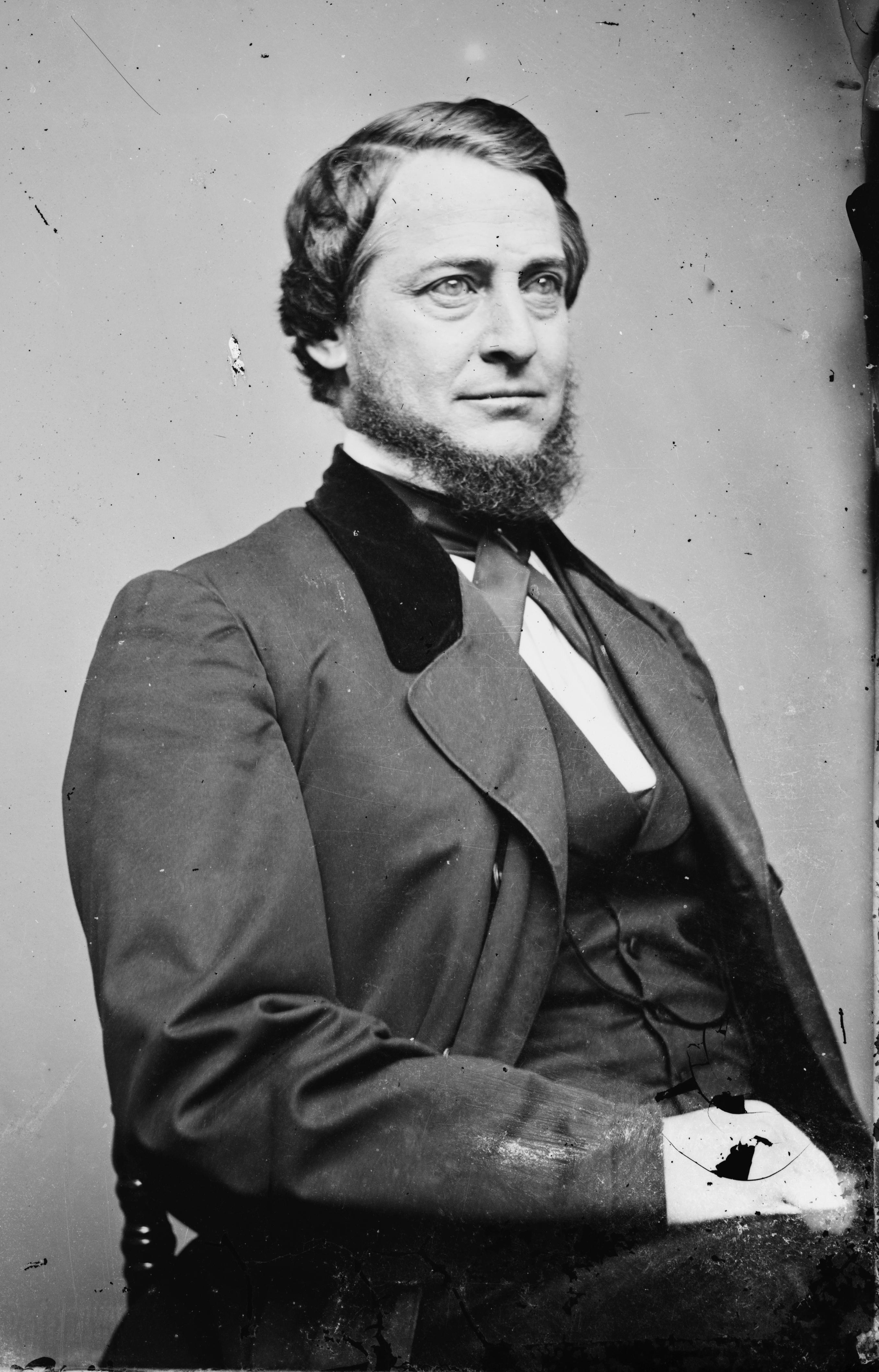
Clement Vallandigham
Former U.S. Representative · Ohio District 3 · 1857–1863 · Democratic
Clement Vallandigham represented Ohio's District 3 in the United States House of Representatives (1857–1863) for the Democratic party. The page below collects sourced biographical facts, term history, committee roles, and provenance for Vallandigham.
Bioguide ID: V000008
Key facts
- Full name
- Clement Vallandigham
- State
- Ohio
- District
- District 3
- Party
- Democratic
- House service
- 1857–1863
- First House term
- 1857
- Status
- Left office
- Current term ends
- —
- Born
- 1820
- Bioguide ID
- V000008
- Committee assignments
- —
- Dataset version
- 1.20260606
Biographical narrative
1,010 words · sourced from the Wikipedia REST extract
Clement Laird Vallandigham was a prominent American lawyer and politician known for his leadership within the Copperhead faction of anti-war Democrats during the American Civil War. Serving as a U.S. Representative for Ohio's 3rd congressional district, Vallandigham's political career was marked by his staunch opposition to the war and his advocacy for states' rights. His tenure in the House of Representatives spanned from 1857 until 1863, during which he became a significant voice against the prevailing sentiments of his time, particularly regarding the Union's military actions and the issue of slavery.
Early life and career
Clement Vallandigham was born on July 29, 1820, in New Lisbon, Ohio, to Clement and Rebecca Laird Vallandigham. His father, a Presbyterian minister, provided his early education at home, fostering a strong intellectual foundation. Vallandigham's formal education continued at Jefferson College in Canonsburg, Pennsylvania, where he enrolled in 1838. However, he encountered a dispute with the college president, resulting in his honorable dismissal without obtaining a degree.
After leaving college, Vallandigham pursued a career in law, supported by a loan from Edwin M. Stanton, who would later become the Secretary of War under President Abraham Lincoln. Vallandigham's political views were shaped by his Democratic affiliation, although they diverged significantly from Stanton's abolitionist stance. Vallandigham was known for his anti-abolitionist beliefs, which would later influence his political actions and rhetoric.
Vallandigham entered politics shortly after establishing his law practice in Dayton, Ohio. He was elected to the Ohio legislature in 1845 and 1846, where he served as a representative of the Democratic Party. During this period, he also took on the role of editor for the Dayton Empire, a weekly newspaper, from 1847 to 1849. His legislative career was marked by his opposition to the repeal of the "Black Laws," which restricted the civil rights of African Americans. Vallandigham advocated for a referendum on the issue, reflecting his belief in direct democracy, although his views on civil rights were controversial.
In 1851, Vallandigham sought the Democratic nomination for Ohio's lieutenant governor but was not selected. Despite this setback, he continued to build his political profile, which would eventually lead him to a national platform.
House tenure
Vallandigham's congressional career began when he ran for a seat in the U.S. House of Representatives in 1856. Although he initially faced defeat, he contested the election results, alleging that illegal votes had been cast against him. The House of Representatives ultimately sided with Vallandigham, allowing him to take his seat on the penultimate day of the congressional term. His political fortunes improved in the subsequent election, where he was re-elected in 1858 by a narrow margin.
His time in Congress coincided with significant national events, including the raid on Harper's Ferry by abolitionist John Brown in 1859. Vallandigham was present during the aftermath of the raid and participated in the interrogation of Brown, who expressed intentions to incite a slave rebellion. Vallandigham's comments on the incident reflected his belief that the abolitionist movement was inciting violence and unrest, which he viewed as a threat to the Union.
In the 1860 election, Vallandigham supported Stephen A. Douglas for president, despite disagreeing with some of Douglas's positions. He was re-elected to the House that same year, where he continued to advocate for his views on the Union and the Civil War. Vallandigham delivered a notable speech on February 20, 1861, titled "The Great American Revolution," in which he criticized the Republican Party for its aggressive stance and called for a peaceful resolution to the sectional crisis. He proposed a series of constitutional amendments aimed at preventing conflict, including provisions for the division of the United States into four regions, each with the power to veto legislation.
As the Civil War progressed, Vallandigham became increasingly critical of the military actions taken by the Union. He opposed military bills and was vocal in his belief that the Union had no constitutional right to wage war against the Confederacy. His opposition to the war and his advocacy for states' rights positioned him as a leader among the Copperheads, a faction of Northern Democrats who opposed the war and sought to negotiate peace with the Confederacy.
In 1863, Vallandigham's outspoken criticism of the war led to his conviction by a military court for expressing anti-war sentiments. He was subsequently exiled to the Confederate States of America, where he continued to engage in political activities, including a campaign for the governorship of Ohio from Canada. However, his bid for office was unsuccessful.
Legislative focus and committees
During his time in the House of Representatives, Vallandigham's legislative focus was heavily influenced by his opposition to the Civil War and his advocacy for states' rights. He was a prominent figure in the Democratic Party, particularly among those who identified with the Copperhead movement. Vallandigham's stance on various issues often placed him at odds with the prevailing sentiments of his party and the nation, especially regarding the war and the issue of slavery.
Vallandigham's opposition to military funding and actions was a defining characteristic of his legislative career. He argued that the Union's military efforts were unconstitutional and detrimental to the principles of democracy. His belief in the right of states to secede was a cornerstone of his political philosophy, and he frequently articulated this view in his speeches and writings.
Throughout his congressional tenure, Vallandigham served on various committees, although specific committee assignments are not detailed in the available records. His legislative contributions were marked by his efforts to propose amendments to the Constitution that would address the issues of secession and the balance of power among the states.
Vallandigham's political career came to an end with the conclusion of his last term in the House on March 3, 1863. Following his exile and subsequent return to Ohio, he remained active in political discourse until his death on June 17, 1871, in Lebanon, Ohio. His legacy is characterized by his controversial positions during a tumultuous period in American history, reflecting the complexities of political thought and the challenges of governance during the Civil War era.
Notable legislation
Sponsored and co-sponsored legislation for Clement Vallandigham is pending operator curation. The biographical narrative above carries the same provenance trail until per-bill rows are written.
Sources
- [1]https://en.wikipedia.org/wiki/Clement_VallandighamWikipedia · retrieved 2026-06-06
Notable quotes
Sourced quotes for Clement Vallandigham are pending operator curation. Narrative-scope provenance remains attached below.
Sources
- [1]https://en.wikipedia.org/wiki/Clement_VallandighamWikipedia · retrieved 2026-06-06
Key positions
Curated policy positions for Clement Vallandigham are pending operator review. The biographical narrative above carries the same provenance trail until per-topic positions are written.
Sources
- [1]https://en.wikipedia.org/wiki/Clement_VallandighamWikipedia · retrieved 2026-06-06
Terms served
- 1857–1859U.S. House · Term 1 · Democratic
- 1859–1861U.S. House · Term 2 · Democratic
- 1861–1863U.S. House · Term 3 · Democratic
Sources & provenance
Every attributable claim above carries a per-section [N] marker that resolves to the corresponding URL below. Each entry records the upstream provider, the canonical URL, and the timestamp at which the source was retrieved by the ingest pipeline.
Key facts
- https://bioguide.congress.gov/search/bio/V000008bioguide · retrieved 2026-06-06
- https://www.govtrack.us/congress/members/411067govtrack · retrieved 2026-06-06
Biographical narrative
- https://en.wikipedia.org/wiki/Clement_Vallandighamwikipedia · retrieved 2026-06-06
Find your representative
Every U.S. state elects representatives by district. Browse Ohio’s delegation, the full former-representative roster, or explore the role and term length.
Related on The Candidate
- Preceded by Hiram BellEarlier holder of the Ohio District 3 House seat · Whig.Open
- Succeeded by John SmithLater holder of the Ohio District 3 House seat · Republican.Open
- Aaron PerryFormer U.S. Representative · Ohio District 1 · RepublicanOpen
- Alexander DuncanFormer U.S. Representative · Ohio District 1 · DemocraticOpen
- Bellamy StorerFormer U.S. Representative · Ohio District 1 · WhigOpen
- Bellamy StorerFormer U.S. Representative · Ohio District 1 · RepublicanOpen