
Historical · U.S. House · Ohio · District 5
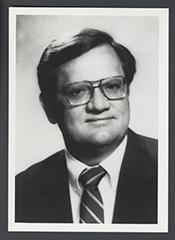
Paul Gillmor
Former U.S. Representative · Ohio District 5 · 1989–2007 · Republican
Paul Gillmor represented Ohio's District 5 in the United States House of Representatives (1989–2007) for the Republican party. The page below collects sourced biographical facts, term history, committee roles, and provenance for Gillmor.
Bioguide ID: G000210
Key facts
- Full name
- Paul Gillmor
- State
- Ohio
- District
- District 5
- Party
- Republican
- House service
- 1989–2007
- First House term
- 1989
- Status
- Left office
- Current term ends
- —
- Born
- 1939
- Bioguide ID
- G000210
- Committee assignments
- —
- Dataset version
- 1.20260605
Biographical narrative
910 words · sourced from the Wikipedia REST extract
Paul E. Gillmor was a Republican politician who served as a U.S. Representative for Ohio's 5th congressional district from 1989 until his death in 2007. His political career spanned nearly two decades in Congress, following a significant tenure in the Ohio State Senate. Known for his involvement in various legislative committees and his focus on financial services and consumer credit, Gillmor's career was marked by a commitment to his constituents in a predominantly Republican district.
Early life and career
Paul Eugene Gillmor was born on February 1, 1939, in Tiffin, Ohio. He grew up in the nearby community of Old Fort, where his father operated a trucking business. Gillmor's early education took place at Old Fort High School, from which he graduated in 1957. He pursued higher education at Ohio Wesleyan University, earning a Bachelor of Arts degree in 1961. Following this, he attended the University of Michigan, where he obtained his law degree in 1964.
After completing his education, Gillmor served on active duty in the U.S. Air Force from 1965 to 1966 as a Judge Advocate, achieving the rank of captain. Upon leaving the military, he entered the legal profession and began practicing law. His personal life included significant events; he married Brenda Lee Luckey, with whom he had two daughters, Linda and Julie. Tragically, Brenda died in a car accident in 1972, an event that profoundly affected Gillmor and his family. In 1983, he remarried Karen Lako, who also had a political career as a member of the Ohio Senate. Together, they had three sons: Paul Michael and twins Adam and Connor.
Gillmor's political career began in the Ohio State Senate, where he was elected in 1967. He served in this capacity until 1988, during which time he became a prominent figure in the Republican Party. Over the last decade of his tenure, he held leadership positions, including serving as president of the state senate for three General Assemblies. He also ran for governor in the 1986 Republican primary but was unsuccessful, losing to former governor James A. Rhodes.
House tenure
In 1988, Gillmor entered the political arena at the federal level by running for the U.S. House of Representatives in Ohio's 5th congressional district. This seat became available after the retirement of long-serving incumbent Del Latta. Gillmor faced a competitive Republican primary, notably contending with Latta's son, Bob, whom the former congressman endorsed. Gillmor won the primary by a narrow margin of 27 votes, a testament to the competitive nature of the race. Following his primary victory, he was elected to Congress in November and subsequently reelected nine times, reflecting his strong support in a district that leaned heavily Republican. Notably, he ran unopposed in the 1992 election.
Throughout his congressional career, Gillmor was involved in various legislative initiatives and maintained a focus on issues pertinent to his constituents. His tenure in the House concluded with his death on September 5, 2007. Following his passing, a special election was held in December to fill the vacancy, resulting in Bob Latta winning the seat, thus completing a notable political cycle.
Legislative focus and committees
During his time in Congress, Gillmor was active on several key committees, which shaped his legislative priorities and areas of influence. He served as the ranking Republican on the Financial Institutions and Consumer Credit Subcommittee of the Financial Services Committee. His role on this committee allowed him to engage with issues related to banking, consumer protection, and financial regulation.
Additionally, Gillmor was a member of the Energy and Commerce Committee, where he chaired the Environment and Hazardous Materials Subcommittee until the Republicans lost control of Congress after the 2006 elections. His involvement in these committees underscored his commitment to addressing economic and environmental issues, reflecting the interests of his constituents.
Gillmor's legislative record indicated a conservative approach to governance. His voting record was rated 82 points out of 100 by the American Conservative Union, while the liberal Americans for Democratic Action gave him a score of 0, highlighting the ideological divide in his legislative priorities. He was also a member of the moderate Republican Main Street Partnership, which aimed to promote centrist policies within the party.
One notable piece of legislation that Gillmor co-sponsored was the Industrial Bank Holding Company Act of 2006, which sought to prevent large retailers from operating banks to handle their credit card transactions. This initiative illustrated his focus on regulating financial institutions and protecting consumer interests.
In addition to his legislative work, Gillmor had personal interests in banking. After the death of his father, he became a partial owner of Old Fort Bank in Seneca County, Ohio. In 2007, he received approval to serve as an initial director and investor in a new Florida bank, Panther Community Bank, reflecting his ongoing engagement with the financial sector.
Gillmor's life came to an unexpected end in September 2007 when he was found deceased in his Arlington County, Virginia, townhouse. His death was initially thought to be due to a heart attack; however, it was later determined to be the result of blunt head and neck trauma consistent with a fall. The circumstances surrounding his death were ruled accidental, and no foul play was suspected.
Paul E. Gillmor's legacy is marked by his long-standing service in both the Ohio State Senate and the U.S. House of Representatives, where he focused on financial services and consumer issues, leaving an impact on the legislative landscape of Ohio and the nation.
Notable legislation
Sponsored and co-sponsored legislation for Paul Gillmor is pending operator curation. The biographical narrative above carries the same provenance trail until per-bill rows are written.
Sources
- [1]https://en.wikipedia.org/wiki/Paul_GillmorWikipedia · retrieved 2026-06-05
Notable quotes
Sourced quotes for Paul Gillmor are pending operator curation. Narrative-scope provenance remains attached below.
Sources
- [1]https://en.wikipedia.org/wiki/Paul_GillmorWikipedia · retrieved 2026-06-05
Key positions
Curated policy positions for Paul Gillmor are pending operator review. The biographical narrative above carries the same provenance trail until per-topic positions are written.
Sources
- [1]https://en.wikipedia.org/wiki/Paul_GillmorWikipedia · retrieved 2026-06-05
Terms served
- 1989–1991U.S. House · Term 1 · Republican
- 1991–1993U.S. House · Term 2 · Republican
- 1993–1995U.S. House · Term 3 · Republican
- 1995–1997U.S. House · Term 4 · Republican
- 1997–1999U.S. House · Term 5 · Republican
- 1999–2001U.S. House · Term 6 · Republican
- 2001–2003U.S. House · Term 7 · Republican
- 2003–2005U.S. House · Term 8 · Republican
- 2005–2007U.S. House · Term 9 · Republican
- 2007–2007U.S. House · Term 10 · Republican
Sources & provenance
Every attributable claim above carries a per-section [N] marker that resolves to the corresponding URL below. Each entry records the upstream provider, the canonical URL, and the timestamp at which the source was retrieved by the ingest pipeline.
Key facts
- https://bioguide.congress.gov/search/bio/G000210bioguide · retrieved 2026-06-05
- http://gillmor.house.govhouse.gov · retrieved 2026-06-05
Biographical narrative
- https://en.wikipedia.org/wiki/Paul_Gillmorwikipedia · retrieved 2026-06-05
Find your representative
Every U.S. state elects representatives by district. Browse Ohio’s delegation, the full former-representative roster, or explore the role and term length.
Related on The Candidate
- Preceded by Delbert LattaEarlier holder of the Ohio District 5 House seat · Republican.Open
- Aaron PerryFormer U.S. Representative · Ohio District 1 · RepublicanOpen
- Alexander DuncanFormer U.S. Representative · Ohio District 1 · DemocraticOpen
- Bellamy StorerFormer U.S. Representative · Ohio District 1 · WhigOpen
- Bellamy StorerFormer U.S. Representative · Ohio District 1 · RepublicanOpen
- Republican PartyFederal candidates and office holders on the Republican line.Open