
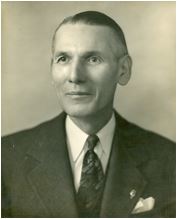
Historical · U.S. House · Oklahoma · District 2
William Stigler
Former U.S. Representative · Oklahoma District 2 · 1943–1953 · Democratic
William Stigler represented Oklahoma's District 2 in the United States House of Representatives (1943–1953) for the Democratic party. The page below collects sourced biographical facts, term history, committee roles, and provenance for Stigler.
Bioguide ID: S000923
Key facts
- Full name
- William Stigler
- State
- Oklahoma
- District
- District 2
- Party
- Democratic
- House service
- 1943–1953
- First House term
- 1943
- Status
- Left office
- Current term ends
- —
- Born
- 1891
- Bioguide ID
- S000923
- Committee assignments
- —
- Dataset version
- 1.20260605
Biographical narrative
853 words · sourced from the Wikipedia REST extract
William Stigler was an American lawyer and politician who served as a U.S. Representative for Oklahoma's 2nd congressional district from 1944 until his death in 1952. A member of the Democratic Party, Stigler was notable for being the only Choctaw elected to the U.S. Congress until the election of Josh Brecheen in 2022. His career spanned various roles, including military service during World War I, law practice, and a tenure in the Oklahoma State Senate. Stigler's legislative contributions and commitment to public service were significant aspects of his life, reflecting his dedication to his constituents and the broader community.
Early life and career
William Grady Stigler was born on July 7, 1891, in Stigler, Haskell County, Indian Territory, which is now part of Oklahoma. He was the son of Joseph S. and Mary Jane Folsom Stigler and was a member of the Choctaw Nation, being listed as three-eighths Choctaw on the Dawes Rolls. Stigler received his early education in public schools before graduating from Northeastern State College in Tahlequah, Oklahoma, in 1912. He later pursued legal studies at the University of Oklahoma in Norman, where he laid the foundation for his future career in law and politics.
Stigler's professional journey began in earnest when he was admitted to the Oklahoma Bar Association in 1920. He commenced his legal practice in Stigler, Oklahoma, where he quickly became involved in local governance. From 1920 to 1924, he served as the city attorney for Stigler, gaining valuable experience in public service and legal affairs. His political career advanced when he was elected to the Oklahoma State Senate, serving from 1924 to 1932. During his time in the Senate, he held the position of president pro tempore in 1931, showcasing his leadership abilities and influence within the legislative body.
In addition to his legal and political endeavors, Stigler also had a notable military career. He served as a Second Lieutenant in the 357th Infantry Regiment of the 90th Division during World War I, with overseas service in 1918 and 1919. His military experience included attending the University of Grenoble in France after the war, further broadening his horizons and understanding of international affairs.
Stigler's personal life included his marriage to Ona Beller on June 7, 1925. The couple had two daughters, Denyse and Elaine, who were part of his family life in Stigler, Oklahoma.
House tenure
William Stigler's congressional career began when he was elected as a Democrat to the Seventy-eighth Congress to fill a vacancy created by the resignation of Jack Nichols. His election marked the beginning of a significant period of service in the U.S. House of Representatives. Stigler was officially seated on March 28, 1944, and he was subsequently re-elected to the Seventy-ninth Congress and the three succeeding Congresses, serving until his death in 1952.
During his time in Congress, Stigler represented Oklahoma's 2nd congressional district, which encompasses a diverse constituency. His tenure was marked by a commitment to addressing the needs and concerns of his constituents, particularly those related to the challenges faced by Native American communities. Stigler's election was historically significant as he was the first Choctaw to serve in the U.S. Congress, a distinction that underscored the importance of representation for Indigenous peoples in American politics.
Stigler's legislative work included participation in various committees and initiatives that aimed to improve the welfare of his constituents and the broader community. His efforts in Congress reflected a dedication to public service and an understanding of the complexities of governance during a transformative period in American history.
Legislative focus and committees
Throughout his congressional tenure, William Stigler focused on a range of issues pertinent to his constituents and the nation. His legislative priorities were influenced by his background as a lawyer and his experiences as a veteran. Stigler's work in Congress often centered on matters related to civil rights, economic development, and the welfare of Native American communities. He sought to advocate for policies that would enhance the quality of life for those he represented.
Stigler's involvement in committees allowed him to play a significant role in shaping legislation. While specific committee assignments are not detailed in the available information, it is common for members of Congress to serve on committees that align with their interests and the needs of their districts. These committees are crucial for reviewing legislation, conducting hearings, and making recommendations to the full House.
His commitment to public service extended beyond legislative duties, as he worked to build relationships with constituents and engage with community issues. Stigler's background as a member of the Choctaw Nation likely informed his perspective on policies affecting Native Americans, and he was known for his efforts to represent their interests in Congress.
William Stigler's life and career came to an end on August 21, 1952, when he passed away in Stigler, Oklahoma. He was interred at Stigler Cemetery, leaving behind a legacy as a dedicated public servant and a trailblazer for Indigenous representation in American politics. His contributions to the U.S. House of Representatives and his commitment to his community continue to be recognized as an important part of Oklahoma's political history.
Notable legislation
Sponsored and co-sponsored legislation for William Stigler is pending operator curation. The biographical narrative above carries the same provenance trail until per-bill rows are written.
Sources
- [1]https://en.wikipedia.org/wiki/William_G._StiglerWikipedia · retrieved 2026-06-05
Notable quotes
Sourced quotes for William Stigler are pending operator curation. Narrative-scope provenance remains attached below.
Sources
- [1]https://en.wikipedia.org/wiki/William_G._StiglerWikipedia · retrieved 2026-06-05
Key positions
Curated policy positions for William Stigler are pending operator review. The biographical narrative above carries the same provenance trail until per-topic positions are written.
Sources
- [1]https://en.wikipedia.org/wiki/William_G._StiglerWikipedia · retrieved 2026-06-05
Terms served
- 1943–1945U.S. House · Term 1 · Democratic
- 1945–1947U.S. House · Term 2 · Democratic
- 1947–1949U.S. House · Term 3 · Democratic
- 1949–1951U.S. House · Term 4 · Democratic
- 1951–1953U.S. House · Term 5 · Democratic
Sources & provenance
Every attributable claim above carries a per-section [N] marker that resolves to the corresponding URL below. Each entry records the upstream provider, the canonical URL, and the timestamp at which the source was retrieved by the ingest pipeline.
Key facts
- https://bioguide.congress.gov/search/bio/S000923bioguide · retrieved 2026-06-05
- https://www.govtrack.us/congress/members/410383govtrack · retrieved 2026-06-05
Biographical narrative
- https://en.wikipedia.org/wiki/William_G._Stiglerwikipedia · retrieved 2026-06-05
Find your representative
Every U.S. state elects representatives by district. Browse Oklahoma’s delegation, the full former-representative roster, or explore the role and term length.
Related on The Candidate
- Preceded by William HastingsEarlier holder of the Oklahoma District 2 House seat · Democratic.Open
- Succeeded by Edmond EdmondsonLater holder of the Oklahoma District 2 House seat · Democratic.Open
- Bird McGuireFormer U.S. Representative · Oklahoma District 1 · RepublicanOpen
- Charles O’ConnorFormer U.S. Representative · Oklahoma District 1 · RepublicanOpen
- Dixie GilmerFormer U.S. Representative · Oklahoma District 1 · DemocraticOpen
- Everette HowardFormer U.S. Representative · Oklahoma District 1 · DemocraticOpen