
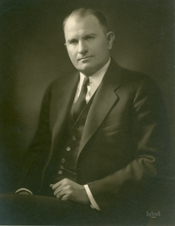
Historical · U.S. House · Oklahoma · District 3
Wilburn Cartwright
Former U.S. Representative · Oklahoma District 3 · 1927–1943 · Democratic
Wilburn Cartwright represented Oklahoma's District 3 in the United States House of Representatives (1927–1943) for the Democratic party. The page below collects sourced biographical facts, term history, committee roles, and provenance for Cartwright.
Bioguide ID: C000207
Key facts
- Full name
- Wilburn Cartwright
- State
- Oklahoma
- District
- District 3
- Party
- Democratic
- House service
- 1927–1943
- First House term
- 1927
- Status
- Left office
- Current term ends
- —
- Born
- 1892
- Bioguide ID
- C000207
- Committee assignments
- —
- Dataset version
- 1.20260605
Biographical narrative
920 words · sourced from the Wikipedia REST extract
Wilburn Cartwright was an American lawyer, educator, politician, and military officer who served as a U.S. Representative for Oklahoma's 3rd congressional district from 1927 until 1943. A member of the Democratic Party, Cartwright was known for his extensive political career, which included roles in both state and federal government. He was also recognized for his contributions to education and public service in Oklahoma. His legacy includes the town of Cartwright, Oklahoma, named in his honor, reflecting his influence in the region.
Early life and career
Wilburn Cartwright was born on January 12, 1892, on a farm near Georgetown, Tennessee. In 1903, his family relocated to the Chickasaw Nation in Indian Territory, which later became part of Oklahoma. Cartwright received his early education in public schools located in Wapanucka and Ada, Oklahoma. He furthered his studies at the State Teachers College in Durant, Oklahoma, where he laid the groundwork for his future career in education.
Cartwright began his professional journey as an educator, teaching in various schools across Coal, Atoka, Bryan, and Pittsburg Counties in Oklahoma from 1914 to 1926. His commitment to education was evident during this period, as he worked to improve the learning experiences of his students. In addition to his teaching career, Cartwright served in the military during World War I, enlisting as a private in the Student Army Training Corps in 1917 and 1918.
Following his military service, Cartwright pursued a legal education, graduating from the law department of the University of Oklahoma at Norman in 1920. He was admitted to the bar in 1917 and subsequently established a law practice in McAlester, Oklahoma. His academic pursuits continued with postgraduate studies at the University of Chicago, further enhancing his qualifications.
Cartwright's political career began in earnest when he was elected to the Oklahoma House of Representatives, serving from 1914 to 1918. He then transitioned to the Oklahoma State Senate, where he served from 1918 until 1922. During this time, he also worked as a vocational adviser for disabled veterans in McAlester, Oklahoma, from 1921 to 1922. Despite his early political ambitions, he faced challenges in securing a congressional seat, losing the Democratic nomination in both 1922 and 1924. Cartwright also held the position of Superintendent of schools at Krebs, Oklahoma, from 1922 to 1926, further demonstrating his commitment to education and public service.
House tenure
Wilburn Cartwright's tenure in the U.S. House of Representatives began in 1927 when he was elected as a Democrat to the Seventieth Congress. He successfully secured re-election to seven subsequent Congresses, serving a total of eight terms in the House. Throughout his time in Congress, Cartwright was actively involved in various legislative initiatives and was known for his leadership role as chairman of the Committee on Roads during the Seventy-third through Seventy-seventh Congresses.
His legislative focus included support for New Deal public works projects, which aimed to stimulate economic recovery during the Great Depression. Cartwright's advocacy for infrastructure development was significant, as it aligned with the broader goals of the New Deal to provide jobs and improve public facilities. His efforts were particularly relevant to his constituents in Oklahoma, where infrastructure improvements were essential for economic growth and community development.
Despite his long tenure and contributions to Congress, Cartwright faced challenges in the political landscape. In 1942, he was an unsuccessful candidate for renomination, marking the end of his congressional career. His departure from the House concluded a significant chapter in his life, during which he had established himself as a prominent figure in Oklahoma politics.
Legislative focus and committees
During his time in the U.S. House of Representatives, Wilburn Cartwright was known for his involvement in various legislative matters, particularly those related to infrastructure and public works. As chairman of the Committee on Roads, he played a crucial role in shaping policies that impacted transportation and infrastructure development across the nation. His leadership in this committee allowed him to advocate for necessary improvements that were vital for both local and national interests.
Cartwright's support for New Deal initiatives reflected his commitment to addressing the economic challenges faced by his constituents during the Great Depression. He recognized the importance of government intervention in stimulating economic growth and improving public welfare. His advocacy for public works projects was aimed at creating jobs and enhancing the quality of life for residents in his district.
In addition to his work on the Committee on Roads, Cartwright's legislative activities encompassed a range of issues pertinent to his constituents. His background in education and law informed his perspectives on various policies, and he sought to represent the interests of Oklahoma residents effectively. Throughout his congressional career, he maintained a focus on the needs of his district, striving to ensure that their voices were heard in the legislative process.
After leaving Congress, Cartwright continued to serve the public in various capacities. He was elected Secretary of State of Oklahoma in 1946, followed by a term as State Auditor in 1950. In 1954, he became a State Corporation Commissioner, a role he held for six years, with subsequent re-elections in 1960 and 1966. His extensive public service career reflected his ongoing commitment to the state of Oklahoma and its residents.
Wilburn Cartwright passed away on March 14, 1979, in Oklahoma City, Oklahoma. He was interred in I.O.O.F. Cemetery in Norman, Oklahoma. His legacy continues through the various roles he held throughout his life, as well as the community he served. His contributions to education, law, and public service remain a significant part of Oklahoma's history.
Notable legislation
Sponsored and co-sponsored legislation for Wilburn Cartwright is pending operator curation. The biographical narrative above carries the same provenance trail until per-bill rows are written.
Sources
- [1]https://en.wikipedia.org/wiki/Wilburn_CartwrightWikipedia · retrieved 2026-06-05
Notable quotes
Sourced quotes for Wilburn Cartwright are pending operator curation. Narrative-scope provenance remains attached below.
Sources
- [1]https://en.wikipedia.org/wiki/Wilburn_CartwrightWikipedia · retrieved 2026-06-05
Key positions
Curated policy positions for Wilburn Cartwright are pending operator review. The biographical narrative above carries the same provenance trail until per-topic positions are written.
Sources
- [1]https://en.wikipedia.org/wiki/Wilburn_CartwrightWikipedia · retrieved 2026-06-05
Terms served
- 1927–1929U.S. House · Term 1 · Democratic
- 1929–1931U.S. House · Term 2 · Democratic
- 1931–1933U.S. House · Term 3 · Democratic
- 1933–1935U.S. House · Term 4 · Democratic
- 1935–1937U.S. House · Term 5 · Democratic
- 1937–1939U.S. House · Term 6 · Democratic
- 1939–1941U.S. House · Term 7 · Democratic
- 1941–1943U.S. House · Term 8 · Democratic
Sources & provenance
Every attributable claim above carries a per-section [N] marker that resolves to the corresponding URL below. Each entry records the upstream provider, the canonical URL, and the timestamp at which the source was retrieved by the ingest pipeline.
Key facts
- https://bioguide.congress.gov/search/bio/C000207bioguide · retrieved 2026-06-05
- https://www.govtrack.us/congress/members/402353govtrack · retrieved 2026-06-05
Biographical narrative
- https://en.wikipedia.org/wiki/Wilburn_Cartwrightwikipedia · retrieved 2026-06-05
Find your representative
Every U.S. state elects representatives by district. Browse Oklahoma’s delegation, the full former-representative roster, or explore the role and term length.
Related on The Candidate
- Preceded by Charles CarterEarlier holder of the Oklahoma District 3 House seat · Democratic.Open
- Succeeded by Paul StewartLater holder of the Oklahoma District 3 House seat · Democratic.Open
- Bird McGuireFormer U.S. Representative · Oklahoma District 1 · RepublicanOpen
- Charles O’ConnorFormer U.S. Representative · Oklahoma District 1 · RepublicanOpen
- Dixie GilmerFormer U.S. Representative · Oklahoma District 1 · DemocraticOpen
- Everette HowardFormer U.S. Representative · Oklahoma District 1 · DemocraticOpen