
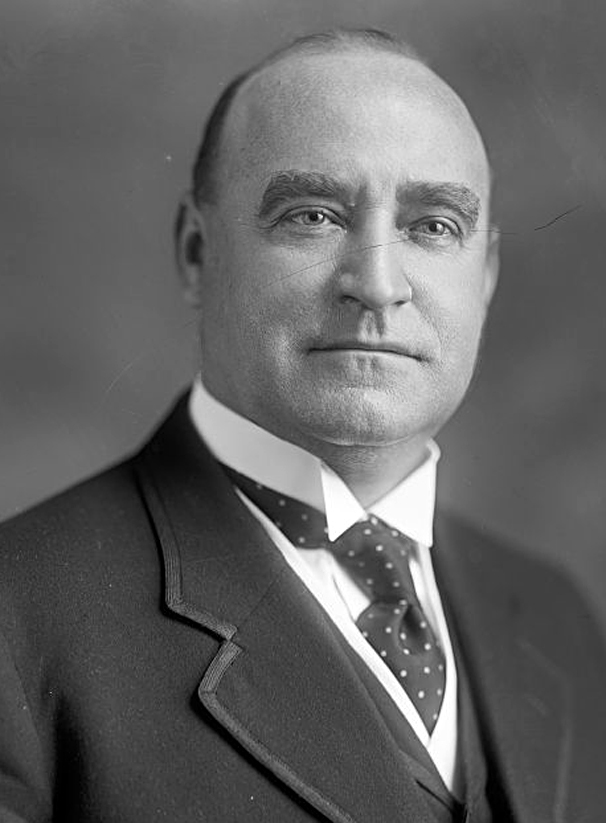
Historical · U.S. House · Oklahoma · District 4
Thomas McKeown
Former U.S. Representative · Oklahoma District 4 · 1917–1935 · Democratic
Thomas McKeown represented Oklahoma's District 4 in the United States House of Representatives (1917–1935) for the Democratic party. The page below collects sourced biographical facts, term history, committee roles, and provenance for McKeown.
Bioguide ID: M000511
Key facts
- Full name
- Thomas McKeown
- State
- Oklahoma
- District
- District 4
- Party
- Democratic
- House service
- 1917–1935
- First House term
- 1917
- Status
- Left office
- Current term ends
- —
- Born
- 1878
- Bioguide ID
- M000511
- Committee assignments
- —
- Dataset version
- 1.20260606
Biographical narrative
986 words · sourced from the Wikipedia REST extract
Thomas McKeown was a prominent figure in early 20th-century American politics, serving as a U.S. Representative for Oklahoma's 4th congressional district. A member of the Democratic Party, McKeown's political career spanned several terms in the House of Representatives, where he was involved in various legislative activities and local governance. His life was marked by a commitment to public service, law, and community engagement, reflecting the evolving landscape of American politics during his time.
Early life and career
Thomas Deitz McKeown was born on June 4, 1878, in Blackstock, South Carolina. He was the son of Theodore B. McKeown and Nannie B. Robinson McKeown. Growing up in the late 19th century, McKeown received his education through a combination of common schooling and private tutoring, which laid the foundation for his future academic pursuits. In 1898, he attended lectures at Cornell University in Ithaca, New York, which further enriched his educational background.
In 1899, McKeown was admitted to the bar and began his legal career in Malvern, Arkansas. His early professional life was characterized by a commitment to the legal field, and he quickly established himself as a capable attorney. In 1901, he relocated to Ada, in the Indian Territory, which would later become part of Oklahoma. There, he continued to practice law and became actively involved in the legal community. His contributions were recognized when he was appointed as a member of the first State Bar Commission of Oklahoma, where he served as president in 1909. This role highlighted his leadership abilities and his dedication to the legal profession.
McKeown's judicial career began when he was elected as judge of the seventh district of Oklahoma, a position he held from 1910 to 1914. His judicial experience was further enhanced when he served as the presiding judge of the fifth division of the Oklahoma Supreme Court Commission in 1915 and 1916. These roles provided him with valuable insights into the workings of the legal system and the challenges faced by the judiciary, experiences that would inform his later political career.
In 1917, McKeown transitioned from the judiciary to the legislative arena, marking the beginning of his tenure in the U.S. House of Representatives. His legal background and experience in public service positioned him well for a career in politics, where he would represent the interests of his constituents in Oklahoma.
House tenure
Thomas McKeown was elected to the Sixty-fifth Congress, beginning his first term on March 4, 1917. He served in the House of Representatives during a period of significant national and global change, including World War I and the subsequent social and economic shifts in the United States. His initial term lasted until March 3, 1921, after which he faced an unsuccessful bid for reelection to the Sixty-seventh Congress in 1920.
Despite this setback, McKeown returned to Congress by winning election to the Sixty-eighth Congress and subsequently secured re-election for five additional terms, serving from March 4, 1923, until January 3, 1935. His ability to regain a seat in Congress after a defeat demonstrated his resilience and the support he garnered from his constituents. Throughout his time in office, McKeown was involved in various legislative efforts and contributed to discussions on issues pertinent to his district and the nation.
During his tenure, McKeown navigated the complexities of the political landscape, which included addressing the needs of a growing population in Oklahoma and responding to the economic challenges of the Great Depression. His legislative activities reflected the priorities of his constituents, as he worked to advocate for policies that would benefit the people of Oklahoma. However, his political career in the House came to an end when he was not renominated in 1934, concluding his time in Congress.
Legislative focus and committees
Throughout his eight terms in the U.S. House of Representatives, Thomas McKeown's legislative focus encompassed a range of issues that were significant to his constituents and the broader American public. While specific details of the bills he sponsored or supported are not documented, it is evident that his legal background informed his approach to governance. As a former judge and practicing attorney, McKeown likely brought a legal perspective to his legislative work, emphasizing the importance of law and order, justice, and community welfare.
McKeown's involvement in various committees would have further shaped his legislative priorities. Committees in Congress play a crucial role in the legislative process, allowing members to focus on specific areas of policy and governance. While the exact committees on which McKeown served are not specified, it can be inferred that he participated in discussions and decisions that aligned with his legal expertise and the needs of his constituents.
In addition to his legislative work, McKeown remained engaged in local governance and community affairs after leaving Congress. Following his departure from the House, he moved to Chicago, Illinois, where he resumed his law practice for a brief period before returning to Ada, Oklahoma, in 1937. There, he engaged in farming and oil production, reflecting the economic activities prevalent in the region.
McKeown's commitment to public service continued as he served as a delegate to the Democratic State convention in 1942. He also held the position of county attorney for Pontotoc County, Oklahoma, from April 1, 1946, to January 1, 1947. His legal expertise was recognized once again when he was appointed county judge in 1947, a role he was subsequently elected to in 1948 and 1950. He served in this capacity until his death, demonstrating his enduring dedication to public service and the community.
Thomas McKeown passed away on October 22, 1951, in Ada, Oklahoma, at the age of 73. He is interred at Rosedale Cemetery in Ada, leaving behind a legacy of service in both the legal and political arenas. His life and career reflect the dynamic changes in American society during the early 20th century and the role of dedicated public servants in shaping the nation’s policies and governance.
Notable legislation
Sponsored and co-sponsored legislation for Thomas McKeown is pending operator curation. The biographical narrative above carries the same provenance trail until per-bill rows are written.
Sources
- [1]https://en.wikipedia.org/wiki/Tom_D._McKeownWikipedia · retrieved 2026-06-06
Notable quotes
Sourced quotes for Thomas McKeown are pending operator curation. Narrative-scope provenance remains attached below.
Sources
- [1]https://en.wikipedia.org/wiki/Tom_D._McKeownWikipedia · retrieved 2026-06-06
Key positions
Curated policy positions for Thomas McKeown are pending operator review. The biographical narrative above carries the same provenance trail until per-topic positions are written.
Sources
- [1]https://en.wikipedia.org/wiki/Tom_D._McKeownWikipedia · retrieved 2026-06-06
Terms served
- 1917–1919U.S. House · Term 1 · Democratic
- 1919–1921U.S. House · Term 2 · Democratic
- 1923–1925U.S. House · Term 3 · Democratic
- 1925–1927U.S. House · Term 4 · Democratic
- 1927–1929U.S. House · Term 5 · Democratic
- 1929–1931U.S. House · Term 6 · Democratic
- 1931–1933U.S. House · Term 7 · Democratic
- 1933–1935U.S. House · Term 8 · Democratic
Sources & provenance
Every attributable claim above carries a per-section [N] marker that resolves to the corresponding URL below. Each entry records the upstream provider, the canonical URL, and the timestamp at which the source was retrieved by the ingest pipeline.
Key facts
- https://bioguide.congress.gov/search/bio/M000511bioguide · retrieved 2026-06-06
- https://www.govtrack.us/congress/members/407505govtrack · retrieved 2026-06-06
Biographical narrative
- https://en.wikipedia.org/wiki/Tom_D._McKeownwikipedia · retrieved 2026-06-06
Find your representative
Every U.S. state elects representatives by district. Browse Oklahoma’s delegation, the full former-representative roster, or explore the role and term length.
Related on The Candidate
- Preceded by William MurrayEarlier holder of the Oklahoma District 4 House seat · Democratic.Open
- Succeeded by Percy GassawayLater holder of the Oklahoma District 4 House seat · Democratic.Open
- Bird McGuireFormer U.S. Representative · Oklahoma District 1 · RepublicanOpen
- Charles O’ConnorFormer U.S. Representative · Oklahoma District 1 · RepublicanOpen
- Dixie GilmerFormer U.S. Representative · Oklahoma District 1 · DemocraticOpen
- Everette HowardFormer U.S. Representative · Oklahoma District 1 · DemocraticOpen