
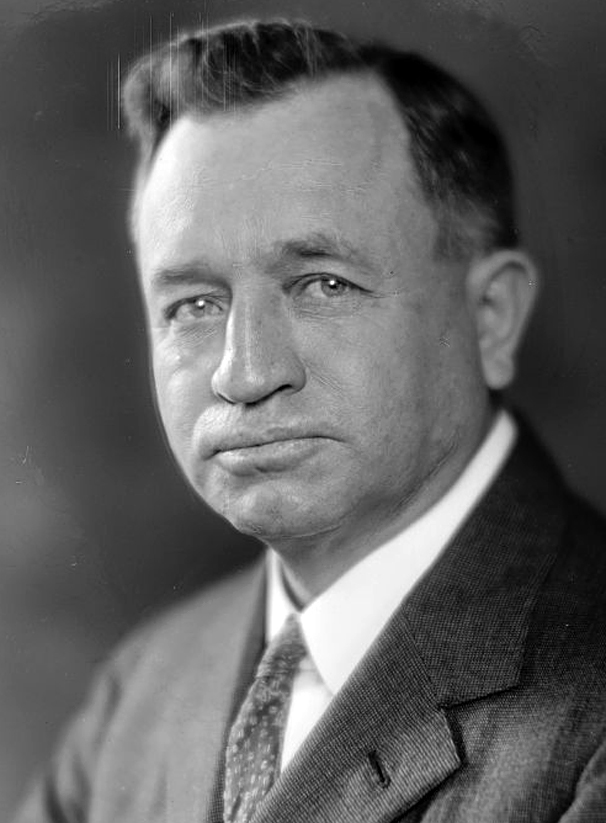
Historical · U.S. House · Oklahoma · District 5
Fletcher Swank
Former U.S. Representative · Oklahoma District 5 · 1921–1935 · Democratic
Fletcher Swank represented Oklahoma's District 5 in the United States House of Representatives (1921–1935) for the Democratic party. The page below collects sourced biographical facts, term history, committee roles, and provenance for Swank.
Bioguide ID: S001089
Key facts
- Full name
- Fletcher Swank
- State
- Oklahoma
- District
- District 5
- Party
- Democratic
- House service
- 1921–1935
- First House term
- 1921
- Status
- Left office
- Current term ends
- —
- Born
- 1875
- Bioguide ID
- S001089
- Committee assignments
- —
- Dataset version
- 1.20260606
Biographical narrative
840 words · sourced from the Wikipedia REST extract
Fletcher Swank was an American politician who served as a U.S. Representative for Oklahoma's 5th congressional district. A member of the Democratic Party, he held office for a total of six terms in the House of Representatives from 1921 until 1935. Swank's political career was marked by his involvement in local education and law, as well as his service in various judicial capacities prior to his congressional tenure. His life spanned significant periods in American history, and he remained active in his community after leaving office.
Early life and career
Fletcher Swank was born on April 24, 1875, near Bloomfield, Iowa. He was the son of Wallace and Melinda Wells Swank. In 1888, when Swank was thirteen years old, his family relocated to Beef Creek in the Indian Territory, which would later become part of Oklahoma. This move marked the beginning of his long connection to the region. Swank received his early education at an academy in Noble, Oklahoma, and later attended the University of Oklahoma in Norman, where he furthered his academic pursuits.
Swank began his professional career in education, initially working as a schoolteacher in Stella. His commitment to education led to his election as the Cleveland County school superintendent in 1902, a position he held from 1903 to 1907. During this time, he worked to improve educational opportunities in the area, reflecting his belief in the importance of education for community development.
In 1907, Swank transitioned into politics by becoming the private secretary to Congressman Scott Ferris, a role he held for two years. This experience provided him with valuable insights into the workings of Congress and helped him build a network within political circles. Alongside his political career, Swank pursued legal studies, attending the law department of Georgetown University in Washington, D.C., during 1907 and 1908. He graduated from Cumberland University in Lebanon, Tennessee, in 1909 and was admitted to the bar the same year, beginning his law practice in Norman, Oklahoma.
Swank's legal career included serving as the judge of the county court of Cleveland County from 1911 to 1915. He then advanced to become the judge of the fourteenth judicial district of Oklahoma, a role he held from 1915 until September 1920, when he resigned to focus on his political ambitions. His legal background and experience in public service positioned him well for a career in the U.S. Congress.
House tenure
Fletcher Swank's congressional career began when he was elected as a Democrat to the Sixty-seventh Congress, serving from March 4, 1921, to March 3, 1929. He was re-elected to the three subsequent Congresses, reflecting his continued support within his district. His tenure in the House of Representatives coincided with a period of significant change in the United States, including the Roaring Twenties and the onset of the Great Depression.
After his initial six-year term, Swank sought re-election in 1928 but was unsuccessful in his bid for the Seventy-first Congress. However, he returned to Congress by winning election to the Seventy-second and Seventy-third Congresses, serving from March 4, 1931, until January 3, 1935. His time in office was characterized by his involvement in various legislative initiatives, although specific details regarding his contributions during this period are not extensively documented.
Swank's congressional career came to an end when he was not renominated in 1934, losing to Josh Lee. Despite his defeat, he remained active in the political landscape, attempting to regain his seat in subsequent years. He ran for office again in 1936, 1937, and 1938, but these efforts were unsuccessful. Following his departure from Congress, Swank returned to Norman, Oklahoma, where he resumed his law practice, continuing to contribute to his community through his legal expertise.
Legislative focus and committees
While specific details regarding Fletcher Swank's legislative focus and committee assignments during his time in Congress are not provided, it can be inferred that his background in education and law likely influenced his interests in various legislative matters. As a former educator and judge, he may have been particularly attuned to issues related to education policy, judicial reform, and local governance.
Throughout his congressional tenure, Swank would have participated in the broader legislative processes of the House, engaging in debates and discussions on a range of topics pertinent to his constituents and the nation. His experience in local government and the judiciary would have equipped him with a unique perspective on the challenges facing his district and the country during a tumultuous period in American history.
After leaving Congress, Swank continued to be involved in his community, although specific details about his activities post-office are limited. He passed away on March 16, 1950, in Norman, Oklahoma, at the age of 74. Swank is interred at Odd Fellows Cemetery in Norman, where he is remembered for his contributions to the region and his service in the U.S. House of Representatives. His life and career reflect the complexities of American political life in the early 20th century and the ongoing evolution of the role of public servants in shaping local and national policies.
Notable legislation
Sponsored and co-sponsored legislation for Fletcher Swank is pending operator curation. The biographical narrative above carries the same provenance trail until per-bill rows are written.
Sources
- [1]https://en.wikipedia.org/wiki/Fletcher_B._SwankWikipedia · retrieved 2026-06-06
Notable quotes
Sourced quotes for Fletcher Swank are pending operator curation. Narrative-scope provenance remains attached below.
Sources
- [1]https://en.wikipedia.org/wiki/Fletcher_B._SwankWikipedia · retrieved 2026-06-06
Key positions
Curated policy positions for Fletcher Swank are pending operator review. The biographical narrative above carries the same provenance trail until per-topic positions are written.
Sources
- [1]https://en.wikipedia.org/wiki/Fletcher_B._SwankWikipedia · retrieved 2026-06-06
Terms served
- 1921–1923U.S. House · Term 1 · Democratic
- 1923–1925U.S. House · Term 2 · Democratic
- 1925–1927U.S. House · Term 3 · Democratic
- 1927–1929U.S. House · Term 4 · Democratic
- 1931–1933U.S. House · Term 5 · Democratic
- 1933–1935U.S. House · Term 6 · Democratic
Sources & provenance
Every attributable claim above carries a per-section [N] marker that resolves to the corresponding URL below. Each entry records the upstream provider, the canonical URL, and the timestamp at which the source was retrieved by the ingest pipeline.
Key facts
- https://bioguide.congress.gov/search/bio/S001089bioguide · retrieved 2026-06-06
- https://www.govtrack.us/congress/members/410542govtrack · retrieved 2026-06-06
Biographical narrative
- https://en.wikipedia.org/wiki/Fletcher_B._Swankwikipedia · retrieved 2026-06-06
Find your representative
Every U.S. state elects representatives by district. Browse Oklahoma’s delegation, the full former-representative roster, or explore the role and term length.
Related on The Candidate
- Preceded by Joseph ThompsonEarlier holder of the Oklahoma District 5 House seat · Democratic.Open
- Succeeded by Gomer SmithLater holder of the Oklahoma District 5 House seat · Democratic.Open
- Bird McGuireFormer U.S. Representative · Oklahoma District 1 · RepublicanOpen
- Charles O’ConnorFormer U.S. Representative · Oklahoma District 1 · RepublicanOpen
- Dixie GilmerFormer U.S. Representative · Oklahoma District 1 · DemocraticOpen
- Everette HowardFormer U.S. Representative · Oklahoma District 1 · DemocraticOpen