
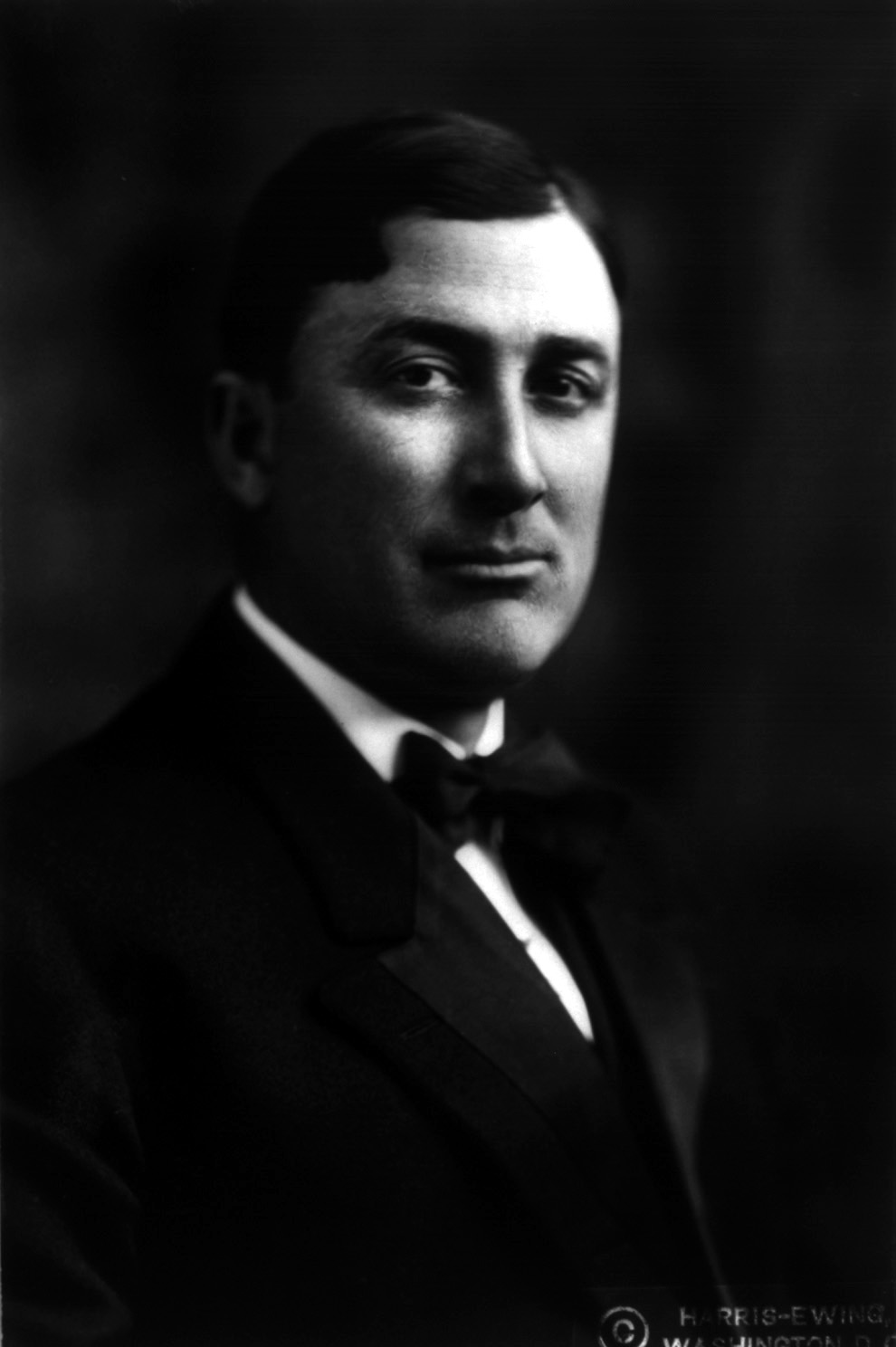
Historical · U.S. House · Oklahoma · District 6
Scott Ferris
Former U.S. Representative · Oklahoma District 6 · 1907–1921 · Democratic
Scott Ferris represented Oklahoma's District 6 in the United States House of Representatives (1907–1921) for the Democratic party. The page below collects sourced biographical facts, term history, committee roles, and provenance for Ferris.
Bioguide ID: F000091
Key facts
- Full name
- Scott Ferris
- State
- Oklahoma
- District
- District 6
- Party
- Democratic
- House service
- 1907–1921
- First House term
- 1907
- Status
- Left office
- Current term ends
- —
- Born
- 1877
- Bioguide ID
- F000091
- Committee assignments
- —
- Dataset version
- 1.20260606
Biographical narrative
981 words · sourced from the Wikipedia REST extract
Scott Ferris was a prominent U.S. Representative from Oklahoma, serving in the House of Representatives for a total of seven terms from 1907 until 1921. A member of the Democratic Party, Ferris played a significant role in the early political landscape of Oklahoma following its admission to the Union. His legislative career was marked by his leadership as chairman of the Committee on Public Lands and his involvement in various national political conventions. After his tenure in Congress, Ferris continued to be active in politics and business until his death in 1945.
Early life and career
Scott Ferris was born on November 3, 1877, in Neosho, Missouri, to parents Scott and Annie M. Ferris. His early education took place in local public schools, culminating in his graduation from Newton County High School in 1897. Following his high school education, Ferris pursued a legal career, enrolling in the Kansas City School of Law, where he completed his studies and graduated in 1901. Upon passing the bar examination in the same year, he began his legal practice in Lawton, Oklahoma, marking the start of his professional career in the newly established state.
Ferris's political career began shortly after he settled in Oklahoma. He served as a member of the territorial Oklahoma House of Representatives during the years 1904 and 1905. This experience provided him with a foundation in legislative processes and governance, which would later prove beneficial during his time in the U.S. Congress. His political aspirations were realized when Oklahoma was admitted as a state in 1907. Ferris was elected as a Democrat to the 60th Congress, representing Oklahoma's 6th congressional district. His election was a significant milestone, as it coincided with the state’s transition from territory to statehood.
On June 23, 1906, Ferris married Grace Hubbert, the daughter of a well-known attorney, George Washington Hubbert. Their marriage further solidified his connections within the legal and political communities of Oklahoma, as Grace's family was prominent in the state’s legal circles. Together, they navigated the complexities of political life, with Grace often supporting Ferris in his endeavors.
House tenure
Scott Ferris's congressional career began on November 16, 1907, and spanned over a decade, concluding on March 3, 1921. Throughout this period, he was re-elected to six additional terms, demonstrating a sustained level of support from his constituents. His tenure in the House of Representatives coincided with a time of significant change and development in the United States, particularly in the context of the Progressive Era, which sought to address issues such as social justice, economic reform, and government accountability.
During his time in Congress, Ferris served as chairman of the Committee on Public Lands from the 62nd through the 65th Congresses. This position allowed him to influence legislation related to land use, management, and conservation, which were critical issues for a state like Oklahoma, where agriculture and land ownership were central to the economy. His leadership in this committee underscored his commitment to addressing the needs of his constituents and the broader public interest concerning land policies.
Ferris's legislative focus included various aspects of public land management and agricultural development, reflecting the priorities of his district and the state of Oklahoma. His ability to navigate the complexities of congressional procedures and build coalitions was instrumental in advancing the interests of his constituents. Despite his successes in the House, Ferris did not seek renomination after his seventh term. Instead, he pursued a bid for the U.S. Senate, where he faced incumbent Thomas P. Gore in the Democratic primary. Although he won the primary, he was ultimately defeated in the general election by Republican candidate John W. Harreld, receiving a notable percentage of the vote.
Legislative focus and committees
Throughout his congressional career, Scott Ferris was deeply engaged in issues that were vital to Oklahoma and the broader American landscape. His role as chairman of the Committee on Public Lands placed him at the forefront of discussions surrounding land policy, which was particularly relevant given the agricultural focus of Oklahoma's economy. Ferris's leadership in this committee allowed him to advocate for policies that supported landowners, farmers, and the sustainable management of public lands.
In addition to his work on public lands, Ferris was involved in various legislative initiatives that aimed to improve the lives of his constituents. His commitment to addressing the needs of farmers and landowners was evident in his support for measures that promoted agricultural development and resource management. Ferris's legislative efforts were reflective of the broader Progressive movement, which sought to implement reforms that would benefit the public and address social inequities.
Ferris's political engagement extended beyond his congressional duties. He participated as a delegate in the Democratic National Conventions in both 1912 and 1916, further solidifying his role within the Democratic Party and contributing to the national dialogue on key political issues of the time. His involvement in these conventions allowed him to connect with other party leaders and influence the direction of the party's platform.
After leaving Congress in 1921, Ferris transitioned into the oil business, which was a significant industry in Oklahoma. He remained active in this sector until 1924, after which he returned to Oklahoma and resumed his legal practice. His continued involvement in politics was evident through his role as the Democratic National Committeeman from Oklahoma, a position he held from 1924 until 1940. This role allowed him to remain influential in state and national politics, even after his congressional career had ended.
Scott Ferris's legacy is marked by his contributions to the early political framework of Oklahoma and his commitment to addressing the needs of his constituents. He passed away on June 8, 1945, in Oklahoma City, Oklahoma, at the age of 67. He is interred at Rose Hill Burial Park in Oklahoma City, leaving behind a legacy of public service and dedication to the state he helped shape during its formative years.
Notable legislation
Sponsored and co-sponsored legislation for Scott Ferris is pending operator curation. The biographical narrative above carries the same provenance trail until per-bill rows are written.
Sources
- [1]https://en.wikipedia.org/wiki/Scott_FerrisWikipedia · retrieved 2026-06-06
Notable quotes
Sourced quotes for Scott Ferris are pending operator curation. Narrative-scope provenance remains attached below.
Sources
- [1]https://en.wikipedia.org/wiki/Scott_FerrisWikipedia · retrieved 2026-06-06
Key positions
Curated policy positions for Scott Ferris are pending operator review. The biographical narrative above carries the same provenance trail until per-topic positions are written.
Sources
- [1]https://en.wikipedia.org/wiki/Scott_FerrisWikipedia · retrieved 2026-06-06
Terms served
- 1907–1909U.S. House · Term 1 · Democratic
- 1909–1911U.S. House · Term 2 · Democratic
- 1911–1913U.S. House · Term 3 · Democratic
- 1913–1915U.S. House · Term 4 · Democratic
- 1915–1917U.S. House · Term 5 · Democratic
- 1917–1919U.S. House · Term 6 · Democratic
- 1919–1921U.S. House · Term 7 · Democratic
Sources & provenance
Every attributable claim above carries a per-section [N] marker that resolves to the corresponding URL below. Each entry records the upstream provider, the canonical URL, and the timestamp at which the source was retrieved by the ingest pipeline.
Key facts
- https://bioguide.congress.gov/search/bio/F000091bioguide · retrieved 2026-06-06
- https://www.govtrack.us/congress/members/404048govtrack · retrieved 2026-06-06
Biographical narrative
- https://en.wikipedia.org/wiki/Scott_Ferriswikipedia · retrieved 2026-06-06
Find your representative
Every U.S. state elects representatives by district. Browse Oklahoma’s delegation, the full former-representative roster, or explore the role and term length.
Related on The Candidate
- Succeeded by Lorraine GensmanLater holder of the Oklahoma District 6 House seat · Republican.Open
- Bird McGuireFormer U.S. Representative · Oklahoma District 1 · RepublicanOpen
- Charles O’ConnorFormer U.S. Representative · Oklahoma District 1 · RepublicanOpen
- Dixie GilmerFormer U.S. Representative · Oklahoma District 1 · DemocraticOpen
- Everette HowardFormer U.S. Representative · Oklahoma District 1 · DemocraticOpen
- Democratic PartyFederal candidates and office holders on the Democratic line.Open