
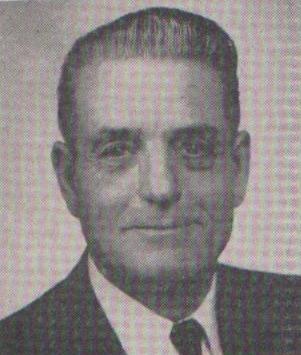
Historical · U.S. House · Oklahoma · District 6
Toby Morris
Former U.S. Representative · Oklahoma District 6 · 1947–1961 · Democratic
Toby Morris represented Oklahoma's District 6 in the United States House of Representatives (1947–1961) for the Democratic party. The page below collects sourced biographical facts, term history, committee roles, and provenance for Morris.
Bioguide ID: M000991
Key facts
- Full name
- Toby Morris
- State
- Oklahoma
- District
- District 6
- Party
- Democratic
- House service
- 1947–1961
- First House term
- 1947
- Status
- Left office
- Current term ends
- —
- Born
- 1899
- Bioguide ID
- M000991
- Committee assignments
- —
- Dataset version
- 1.20260605
Biographical narrative
1,018 words · sourced from the Wikipedia REST extract
Toby Morris was an American politician who served as a U.S. Representative from Oklahoma. A member of the Democratic Party, he held office during a significant period in American history, spanning from the post-World War II era through the early 1960s. Morris's political career was marked by his involvement in various legal and judicial roles prior to his tenure in Congress, as well as his service in the military during World War I. His legislative record reflects a complex engagement with the pressing social issues of his time, including civil rights.
Early life and career
Toby Morris was born on February 28, 1899, in Granbury, Texas. He was the son of Lon Morris and Ida Henderson Morris. In 1906, when Morris was just seven years old, his family relocated to what was then Comanche County, Oklahoma, seeking new opportunities in the burgeoning territory. By 1913, they had settled in Walters, Oklahoma, where Morris completed his education in the public school system. His early life in Oklahoma would shape his future career and political outlook.
In 1917, during World War I, Morris left high school in his senior year to enlist in the United States Army. He served with the 110th Combat Engineers, which was part of the 35th Division. His military service lasted from October 1917 until May 1919, during which he rose through the ranks from private to corporal and then to sergeant. This experience in the military not only instilled in him a sense of duty and leadership but also provided him with a broader perspective on the challenges facing the nation.
After returning from the war, Morris pursued a legal education and was admitted to the bar in 1920. His early career in law began with a position as the court clerk of Cotton County, Oklahoma, where he served from 1921 to 1925. Following this role, he became the prosecuting attorney for the county from 1925 to 1929. In 1929, he established a private law practice in Walters, Oklahoma, where he continued to build his professional reputation.
Morris's judicial career began in earnest when he was appointed as the district judge of the twenty-first judicial district of Oklahoma, a position he held from 1937 until 1946. His time on the bench provided him with valuable experience in the legal system and a deeper understanding of the issues affecting his community, which would later inform his legislative priorities.
House tenure
Morris's political career in the U.S. House of Representatives began when he was elected as a Democrat to the 80th Congress, taking office on January 3, 1947. He successfully won re-election to the two subsequent Congresses, serving in total for five terms in the House. His initial tenure in Congress lasted until January 3, 1953. During this period, he was involved in various legislative discussions and decisions that were critical to the post-war era, including issues related to economic recovery and social reform.
After his first stint in Congress, Morris sought renomination for the 83rd Congress in 1952 but was unsuccessful. Following this setback, he returned to the judiciary, serving as a district judge for the fifth judicial district of Oklahoma from January 1955 to December 1956. His judicial experience during this time likely influenced his later legislative work.
In 1956, Morris was elected again to the House, representing Oklahoma's 6th congressional district in the 85th and 86th Congresses. He served from January 3, 1957, until January 3, 1961. His second tenure in Congress coincided with a transformative period in American society, marked by significant civil rights movements and legislative efforts aimed at addressing racial inequality.
Throughout his time in the House, Morris's voting record included opposition to the Civil Rights Acts of 1957 and 1960. These votes reflected the complex and often contentious nature of civil rights legislation during this era, as well as the varying perspectives within the Democratic Party regarding these critical social issues.
After his final term in Congress, Morris again sought renomination for the 87th Congress in 1960 but was unsuccessful. Following his departure from Congress, he continued to serve in the judiciary, taking on the role of judge for the Oklahoma State Industrial Court from July 1, 1961, to July 17, 1963. His extensive legal background and experience in public service contributed to his understanding of the intersection between law and public policy.
Legislative focus and committees
During his time in the U.S. House of Representatives, Toby Morris's legislative focus encompassed a range of issues pertinent to his constituents and the broader national landscape. While specific details regarding the committees he served on are not provided, it is common for members of Congress to engage with committees that align with their interests and the needs of their districts. Given his legal background, it is likely that Morris participated in committees related to judicial matters, civil rights, and local governance.
Morris's voting record, particularly his opposition to key civil rights legislation, suggests that his legislative priorities may have been influenced by the political climate of his district and the prevailing attitudes of his constituents at the time. The 1950s and early 1960s were marked by significant social upheaval, and the responses of elected officials varied widely based on their political affiliations and personal beliefs.
In addition to civil rights, Morris's legislative work would have involved addressing issues related to economic development, infrastructure, and education, all of which were critical to the constituents of Oklahoma's 6th congressional district. As a representative from a state with a strong agricultural and resource-based economy, he likely focused on policies that would support these sectors and promote growth.
After retiring from his judicial career in January 1971, Morris lived in Lawton, Oklahoma, until his death on September 1, 1973. His contributions to the legal and political landscape of Oklahoma, as well as his service in the U.S. Congress, reflect a career dedicated to public service and the complexities of governance during a pivotal time in American history. Morris is interred at Sunset Memorial Gardens in Lawton, Oklahoma, where he is remembered for his long-standing commitment to his community and the state of Oklahoma.
Notable legislation
Sponsored and co-sponsored legislation for Toby Morris is pending operator curation. The biographical narrative above carries the same provenance trail until per-bill rows are written.
Sources
- [1]https://en.wikipedia.org/wiki/Toby_Morris_(politician)Wikipedia · retrieved 2026-06-05
Notable quotes
Sourced quotes for Toby Morris are pending operator curation. Narrative-scope provenance remains attached below.
Sources
- [1]https://en.wikipedia.org/wiki/Toby_Morris_(politician)Wikipedia · retrieved 2026-06-05
Key positions
Curated policy positions for Toby Morris are pending operator review. The biographical narrative above carries the same provenance trail until per-topic positions are written.
Sources
- [1]https://en.wikipedia.org/wiki/Toby_Morris_(politician)Wikipedia · retrieved 2026-06-05
Terms served
- 1947–1949U.S. House · Term 1 · Democratic
- 1949–1951U.S. House · Term 2 · Democratic
- 1951–1953U.S. House · Term 3 · Democratic
- 1957–1959U.S. House · Term 4 · Democratic
- 1959–1961U.S. House · Term 5 · Democratic
Sources & provenance
Every attributable claim above carries a per-section [N] marker that resolves to the corresponding URL below. Each entry records the upstream provider, the canonical URL, and the timestamp at which the source was retrieved by the ingest pipeline.
Key facts
- https://bioguide.congress.gov/search/bio/M000991bioguide · retrieved 2026-06-05
- https://www.govtrack.us/congress/members/407959govtrack · retrieved 2026-06-05
Biographical narrative
- https://en.wikipedia.org/wiki/Toby_Morris_(politician)wikipedia · retrieved 2026-06-05
Find your representative
Every U.S. state elects representatives by district. Browse Oklahoma’s delegation, the full former-representative roster, or explore the role and term length.
Related on The Candidate
- Preceded by Jed JohnsonEarlier holder of the Oklahoma District 6 House seat · Democratic.Open
- Succeeded by Jed Johnson Jr.Later holder of the Oklahoma District 6 House seat · Democratic.Open
- Bird McGuireFormer U.S. Representative · Oklahoma District 1 · RepublicanOpen
- Charles O’ConnorFormer U.S. Representative · Oklahoma District 1 · RepublicanOpen
- Dixie GilmerFormer U.S. Representative · Oklahoma District 1 · DemocraticOpen
- Everette HowardFormer U.S. Representative · Oklahoma District 1 · DemocraticOpen