
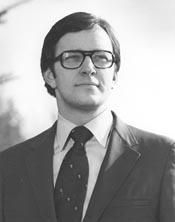
Historical · U.S. House · Oregon · District 1
Les AuCoin
Former U.S. Representative · Oregon District 1 · 1975–1993 · Democratic
Les AuCoin represented Oregon's District 1 in the United States House of Representatives (1975–1993) for the Democratic party. The page below collects sourced biographical facts, term history, committee roles, and provenance for AuCoin.
Bioguide ID: A000337
Key facts
- Full name
- Les AuCoin
- State
- Oregon
- District
- District 1
- Party
- Democratic
- House service
- 1975–1993
- First House term
- 1975
- Status
- Left office
- Current term ends
- —
- Born
- 1942
- Bioguide ID
- A000337
- Committee assignments
- —
- Dataset version
- 1.20260605
Biographical narrative
1,025 words · sourced from the Wikipedia REST extract
Walter Leslie AuCoin is a former American politician who served as a U.S. Representative for Oregon's 1st congressional district from 1975 until 1993. A member of the Democratic Party, AuCoin was notable for being the first Democrat elected to this district since its establishment in 1892. His tenure in the U.S. House of Representatives spanned 18 years, during which he became known for his advocacy on various issues, including environmental protection, civil rights, and national security. AuCoin's legislative career was marked by his involvement in significant policy discussions and his leadership roles within the House, making him a prominent figure in Oregon politics.
Early life and career
Les AuCoin was born on October 21, 1942, in Portland, Oregon. He was raised in a challenging environment after his father abandoned the family when AuCoin was just four years old. His mother, Alice Audrey Darrar, worked as a waitress, and the family moved to Redmond, Oregon, where they lived modestly on her income. Despite these hardships, AuCoin excelled in school, attending Redmond High School, where he was recognized as the most valuable player on the basketball team and contributed to the school newspaper. His early exposure to writing laid the groundwork for his future career in journalism and politics. In 1960, he became the first male in his extended family to graduate from high school.
Following high school, AuCoin enrolled at Pacific University in Forest Grove, Oregon, before transferring to Portland State University. In 1961, he enlisted in the United States Army, serving as a public information specialist in various divisions, including the 2nd Infantry Division and the 10th Mountain Division. His military service took him to several locations, including Fort Ord, California; Fort Slocum, New York; and Fort Campbell, Kentucky, among others. During his time in the Army, AuCoin wrote for several publications, including The Nashville Banner and Stars and Stripes. His experiences, particularly a near race riot he witnessed while stationed in the segregated South, significantly influenced his progressive political views.
After completing his military service, AuCoin returned to journalism, working briefly at The Redmond Spokesman newspaper. He then took a position as the director of public information at Pacific University while finishing his Bachelor of Arts degree in journalism, which he obtained in 1969. In 1964, he married Susan Swearingen, and the couple had two children, Stacy and Kelly.
AuCoin's political career began in earnest in 1968 when he co-chaired Eugene McCarthy's presidential campaign in Oregon. His involvement in the campaign, particularly his opposition to the Vietnam War, motivated him to seek public office. In 1970, he successfully ran for an open seat in the Oregon House of Representatives, representing Washington County. He was re-elected in 1972 and became the House Majority Leader during his second term, at the young age of 31. Throughout his time in the Oregon legislature, AuCoin championed various issues, including environmental protection, consumer rights, and civil rights. He played a significant role in passing legislation that provided substantial funding for public schools and established statewide land use planning rules.
House tenure
AuCoin's entry into the U.S. Congress came in 1974 when he won the Democratic primary for Oregon's 1st congressional district after Congressman Wendell Wyatt announced he would not seek re-election. AuCoin secured more than 50% of the vote in a competitive primary and subsequently faced Republican candidate Diarmuid O'Scannlain in the general election. Capitalizing on the political climate following the Watergate scandal, AuCoin became the first Democrat elected to represent the district, winning the election with 56% of the vote.
Over the course of his nine terms in the House, AuCoin was re-elected eight times, despite being initially viewed as a vulnerable candidate by the national Republican Party. His tenure was characterized by a commitment to progressive policies and a focus on issues that resonated with his constituents. AuCoin's leadership and advocacy helped solidify the Democratic Party's hold on the district, which has remained in Democratic hands since his election.
During his time in Congress, AuCoin served on various committees, including the House Appropriations Committee, where he was appointed to the subcommittee on Defense appropriations. His involvement in defense issues included a critical stance on the militarization of space and opposition to the Strategic Defense Initiative. AuCoin's legislative efforts also extended to environmental matters, where he played a pivotal role in opposing initiatives that threatened natural resources, including a significant ban on oil exploration in the Pacific Outer Continental Shelf.
Legislative focus and committees
Throughout his congressional career, AuCoin was known for his strong advocacy on several key issues, including abortion rights, environmental protection, and national security. He was an early proponent of establishing diplomatic relations with the People's Republic of China and pursued arms control agreements with the Soviet Union. His critical perspective on U.S. foreign policy included opposition to American support for the Nicaraguan Contras and the rightist government in El Salvador during the 1980s.
AuCoin's legislative focus extended to local and national environmental issues, where he championed policies aimed at sustainable management of federal forests and protection of natural resources. His commitment to environmental advocacy was evident in his efforts to promote multiple-use management practices, ensuring that public lands were utilized responsibly and preserved for future generations.
In addition to his work on environmental and foreign policy issues, AuCoin was actively involved in civil rights initiatives. He played a significant role in efforts to ratify the Equal Rights Amendment and advocated for consumer protection measures throughout his time in office. His leadership within the House culminated in his position as a majority whip-at-large and his status as the dean of the Oregon House delegation by the time of his retirement in 1993.
After leaving Congress, AuCoin transitioned to a career as a full-time author, writer, lecturer, and occasional blogger. He remains engaged in civic discourse and is a member of the ReFormers Caucus of Issue One, reflecting his ongoing commitment to public service and political engagement. AuCoin resides in Portland, Oregon, with his wife, Susan. His legacy in Oregon politics is marked by his significant contributions to legislative processes and his role in shaping the Democratic presence in the state's congressional representation.
Notable legislation
Sponsored and co-sponsored legislation for Les AuCoin is pending operator curation. The biographical narrative above carries the same provenance trail until per-bill rows are written.
Sources
- [1]https://en.wikipedia.org/wiki/Les_AuCoinWikipedia · retrieved 2026-06-05
Notable quotes
Sourced quotes for Les AuCoin are pending operator curation. Narrative-scope provenance remains attached below.
Sources
- [1]https://en.wikipedia.org/wiki/Les_AuCoinWikipedia · retrieved 2026-06-05
Key positions
Curated policy positions for Les AuCoin are pending operator review. The biographical narrative above carries the same provenance trail until per-topic positions are written.
Sources
- [1]https://en.wikipedia.org/wiki/Les_AuCoinWikipedia · retrieved 2026-06-05
Terms served
- 1975–1977U.S. House · Term 1 · Democratic
- 1977–1979U.S. House · Term 2 · Democratic
- 1979–1981U.S. House · Term 3 · Democratic
- 1981–1983U.S. House · Term 4 · Democratic
- 1983–1985U.S. House · Term 5 · Democratic
- 1985–1987U.S. House · Term 6 · Democratic
- 1987–1989U.S. House · Term 7 · Democratic
- 1989–1991U.S. House · Term 8 · Democratic
- 1991–1993U.S. House · Term 9 · Democratic
Sources & provenance
Every attributable claim above carries a per-section [N] marker that resolves to the corresponding URL below. Each entry records the upstream provider, the canonical URL, and the timestamp at which the source was retrieved by the ingest pipeline.
Key facts
- https://bioguide.congress.gov/search/bio/A000337bioguide · retrieved 2026-06-05
- https://www.govtrack.us/congress/members/400987govtrack · retrieved 2026-06-05
Biographical narrative
- https://en.wikipedia.org/wiki/Les_AuCoinwikipedia · retrieved 2026-06-05
Find your representative
Every U.S. state elects representatives by district. Browse Oregon’s delegation, the full former-representative roster, or explore the role and term length.
Related on The Candidate
- Preceded by Wendell WyattEarlier holder of the Oregon District 1 House seat · Republican.Open
- Succeeded by Elizabeth FurseLater holder of the Oregon District 1 House seat · Democratic.Open
- Albin Norblad Jr.Former U.S. Representative · Oregon District 1 · RepublicanOpen
- Andrew ThayerFormer U.S. Representative · Oregon District 1 · DemocraticOpen
- Binger HermannFormer U.S. Representative · Oregon District 1 · RepublicanOpen
- David WuFormer U.S. Representative · Oregon District 1 · DemocraticOpen