
Historical · U.S. House · Oregon · District 1
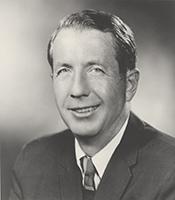
Wendell Wyatt
Former U.S. Representative · Oregon District 1 · 1963–1975 · Republican
Wendell Wyatt represented Oregon's District 1 in the United States House of Representatives (1963–1975) for the Republican party. The page below collects sourced biographical facts, term history, committee roles, and provenance for Wyatt.
Bioguide ID: W000778
Key facts
- Full name
- Wendell Wyatt
- State
- Oregon
- District
- District 1
- Party
- Republican
- House service
- 1963–1975
- First House term
- 1963
- Status
- Left office
- Current term ends
- —
- Born
- 1917
- Bioguide ID
- W000778
- Committee assignments
- —
- Dataset version
- 1.20260605
Biographical narrative
978 words · sourced from the Wikipedia REST extract
Wendell Wyatt was an American attorney and politician who served as a Republican U.S. Representative for Oregon's 1st congressional district from 1964 until 1975. His tenure in the House of Representatives was marked by significant contributions to legislation affecting Oregon's infrastructure and natural resources. Born in Eugene, Oregon, Wyatt's early life and career were shaped by his education, military service, and involvement in local politics, which paved the way for his eventual election to Congress.
Early life and career
Wendell Wyatt was born on June 15, 1917, in Eugene, Oregon. His family later relocated to Portland, where he completed his secondary education at Jefferson High School, graduating in 1935. Following high school, Wyatt pursued higher education at the University of Oregon, where he earned a Bachelor of Laws degree in 1941. His academic background in law laid the foundation for his future career as an attorney.
During World War II, Wyatt served in the United States Marine Corps from 1942 to 1946. His military service contributed to his leadership skills and commitment to public service. After the war, he settled in Astoria, Oregon, where he joined the law firm of A. W. Norblad, a former governor of Oregon and his law partner. Wyatt's involvement in the Republican Party began in earnest during this period; he served as Chairman of the Oregon State Republican Central Committee from 1955 to 1957. His political engagement and legal expertise positioned him as a prominent figure within the state's Republican establishment.
In 1962, Wyatt married Faye Hill, marking a personal milestone in his life. Prior to this marriage, he had been married to Anne Buchanan, from whom he later divorced. These personal experiences, combined with his professional background, contributed to his understanding of the issues facing his constituents and the broader community.
House tenure
Wendell Wyatt's congressional career began in 1964 when he won a special election to fill the vacancy left by the death of A. Walter Norblad, who was also his law partner. Wyatt's election marked the beginning of a six-term tenure in the U.S. House of Representatives, during which he was reelected to four consecutive terms. His time in Congress was characterized by a focus on local issues, particularly those related to infrastructure and environmental conservation.
Throughout his time in the House, Wyatt served on several important committees, including the Interior Committee and the Appropriations Committee. His committee assignments allowed him to influence legislation that directly impacted Oregon and its residents. Notable achievements during his tenure included his involvement in the creation of Oregon's Scoggins Dam on Scoggins Creek, which played a crucial role in water management and recreation in the region. Additionally, he was instrumental in establishing a 40-foot shipping channel in the Columbia River, facilitating trade and transportation between Astoria and Portland.
Wyatt also contributed to environmental conservation efforts, including the establishment of the Cascade Head Scenic Area, which aimed to protect the natural beauty and ecological integrity of the Oregon coast. His work in Congress also extended to land management, as he supported initiatives to purchase ranch land for conversion into public recreation areas along the Snake River. These legislative efforts reflected his commitment to both economic development and environmental stewardship.
Wyatt's voting record included support for significant civil rights legislation. He voted in favor of the Voting Rights Act of 1965, which aimed to eliminate racial discrimination in voting, and the Civil Rights Act of 1968, which addressed issues of housing discrimination. His support for these landmark laws demonstrated his alignment with the broader civil rights movement of the era.
Legislative focus and committees
Wyatt's legislative focus during his time in Congress was primarily centered on issues pertinent to his constituents in Oregon, particularly in the areas of infrastructure development, environmental protection, and civil rights. His committee assignments on the Interior Committee and the Appropriations Committee provided him with the platform to advocate for policies that would benefit the state and its residents.
His work on the Interior Committee allowed him to engage with a range of issues related to natural resources, public lands, and environmental conservation. Through this committee, Wyatt played a role in shaping policies that aimed to balance development with the preservation of Oregon's natural landscapes. His efforts in establishing the Cascade Head Scenic Area exemplified his commitment to protecting the environment while also promoting recreational opportunities for the public.
On the Appropriations Committee, Wyatt was involved in the allocation of federal funds for various projects, including infrastructure improvements. His support for the creation of the shipping channel in the Columbia River was a significant achievement that facilitated economic growth in the region by enhancing transportation capabilities. Additionally, his advocacy for Scoggins Dam demonstrated his focus on water management and resource development, which were critical issues for Oregon's agricultural and recreational sectors.
Wyatt's legislative contributions were recognized beyond his immediate district. His involvement in civil rights legislation reflected a broader commitment to social justice and equality, aligning him with national movements aimed at addressing systemic discrimination. His votes in favor of the Voting Rights Act and the Civil Rights Act indicated his support for the principles of democracy and civil liberties.
After retiring from Congress in 1975, Wyatt faced legal challenges when he was found guilty of failing to report outlays from a secret cash fund during his involvement in the Richard Nixon campaign in Oregon. Despite this controversy, he continued his career in law as a partner at the firm Schwabe, Williamson & Wyatt.
Wendell Wyatt's legacy is also commemorated through the naming of the Edith Green - Wendell Wyatt Federal Building in downtown Portland, which honors both him and Congresswoman Edith Green, with whom he served during most of his congressional tenure. Wyatt passed away on January 28, 2009, in Portland, Oregon, at the age of 91, leaving behind a complex legacy of public service and legal practice.
Notable legislation
Sponsored and co-sponsored legislation for Wendell Wyatt is pending operator curation. The biographical narrative above carries the same provenance trail until per-bill rows are written.
Sources
- [1]https://en.wikipedia.org/wiki/Wendell_WyattWikipedia · retrieved 2026-06-05
Notable quotes
Sourced quotes for Wendell Wyatt are pending operator curation. Narrative-scope provenance remains attached below.
Sources
- [1]https://en.wikipedia.org/wiki/Wendell_WyattWikipedia · retrieved 2026-06-05
Key positions
Curated policy positions for Wendell Wyatt are pending operator review. The biographical narrative above carries the same provenance trail until per-topic positions are written.
Sources
- [1]https://en.wikipedia.org/wiki/Wendell_WyattWikipedia · retrieved 2026-06-05
Terms served
- 1963–1965U.S. House · Term 1 · Republican
- 1965–1967U.S. House · Term 2 · Republican
- 1967–1969U.S. House · Term 3 · Republican
- 1969–1971U.S. House · Term 4 · Republican
- 1971–1973U.S. House · Term 5 · Republican
- 1973–1975U.S. House · Term 6 · Republican
Sources & provenance
Every attributable claim above carries a per-section [N] marker that resolves to the corresponding URL below. Each entry records the upstream provider, the canonical URL, and the timestamp at which the source was retrieved by the ingest pipeline.
Key facts
- https://bioguide.congress.gov/search/bio/W000778bioguide · retrieved 2026-06-05
- https://www.govtrack.us/congress/members/411927govtrack · retrieved 2026-06-05
Biographical narrative
- https://en.wikipedia.org/wiki/Wendell_Wyattwikipedia · retrieved 2026-06-05
Find your representative
Every U.S. state elects representatives by district. Browse Oregon’s delegation, the full former-representative roster, or explore the role and term length.
Related on The Candidate
- Preceded by James MottEarlier holder of the Oregon District 1 House seat · Republican.Open
- Succeeded by Les AuCoinLater holder of the Oregon District 1 House seat · Democratic.Open
- Albin Norblad Jr.Former U.S. Representative · Oregon District 1 · RepublicanOpen
- Andrew ThayerFormer U.S. Representative · Oregon District 1 · DemocraticOpen
- Binger HermannFormer U.S. Representative · Oregon District 1 · RepublicanOpen
- David WuFormer U.S. Representative · Oregon District 1 · DemocraticOpen