
Historical · U.S. House · Oregon · District 3
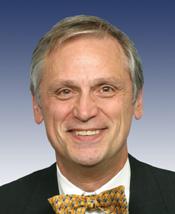
Earl Blumenauer
Former U.S. Representative · Oregon District 3 · 1996–2025 · Democratic
Earl Blumenauer represented Oregon's District 3 in the United States House of Representatives (1996–2025) for the Democratic party. The page below collects sourced biographical facts, term history, committee roles, and provenance for Blumenauer.
Bioguide ID: B000574
Key facts
- Full name
- Earl Blumenauer
- State
- Oregon
- District
- District 3
- Party
- Democratic
- House service
- 1996–2025
- First House term
- 1996
- Status
- Left office
- Current term ends
- —
- Born
- 1948
- Bioguide ID
- B000574
- Committee assignments
- —
- Dataset version
- 1.20260603
Biographical narrative
965 words · sourced from the Wikipedia REST extract
Earl Blumenauer is an American lawyer, author, and politician who served as a U.S. Representative for Oregon's 3rd congressional district from 1996 until January 3, 2025. A member of the Democratic Party, Blumenauer is recognized for his long tenure in public service, which includes over two decades in various political roles within Portland, Oregon. His congressional district encompasses a significant portion of Portland, particularly the area east of the Willamette River. Throughout his career, Blumenauer has been known for his advocacy of transportation issues, particularly mass transit and bicycle commuting, as well as his involvement in various legislative initiatives.
Early life and career
Earl Blumenauer was born on August 16, 1948, in Portland, Oregon. He completed his secondary education at Centennial High School in 1966 and subsequently enrolled at Lewis & Clark College. There, he pursued a major in political science, earning a Bachelor of Arts degree in 1970. Blumenauer continued his education at the Northwestern School of Law, now known as Lewis & Clark Law School, where he received his Juris Doctor degree in 1976. Prior to entering law school, he worked as an assistant to the president of Portland State University from 1970 until 1977.
Blumenauer's political career began in earnest in the late 1960s when he led the "Go 19" campaign in Oregon, which aimed to lower the voting age. Although the campaign did not succeed at the state level, it contributed to the national movement that ultimately resulted in the ratification of the Twenty-sixth Amendment to the U.S. Constitution, which established 18 as the minimum voting age. In 1972, Blumenauer was elected to the Oregon House of Representatives, representing the 11th district in Multnomah County. He was reelected in 1974 and 1976, serving until the end of the 1979 legislative session.
Following his tenure in the Oregon legislature, Blumenauer served on the Multnomah County Commission from 1979 to 1986. He ran for a seat on the Portland City Council in 1981 but was defeated. However, he was elected to the City Council in May 1986, beginning his term in January 1987. During his time on the council, he was appointed as the Commissioner of Public Works, overseeing the Portland Bureau of Transportation. Blumenauer's influence in local politics was notable, and he was recognized for his understanding of the city's operations. He sought the mayoral position in 1992 but was defeated in that election. After serving on the City Council for nearly a decade, he resigned in May 1996 to pursue a congressional seat.
House tenure
Earl Blumenauer was elected to the United States House of Representatives in 1996, filling the vacancy left by Ron Wyden's election to the U.S. Senate. In the special election, Blumenauer secured a significant majority of the vote, receiving approximately 69%. He subsequently won a full term in the general election later that year and continued to be reelected in subsequent elections, often with a substantial majority, reflecting the Democratic leanings of his district. Throughout his congressional career, Blumenauer was known for his effective campaigning and ability to connect with constituents, which contributed to his longevity in office.
During his time in Congress, Blumenauer served as Oregon's campaign chair for both John Kerry's and Barack Obama's presidential campaigns, demonstrating his active involvement in national politics. His legislative focus included strong advocacy for mass transit initiatives, particularly those benefiting the Portland area, such as the MAX Light Rail and the Portland Streetcar. Blumenauer was also a proponent of bicycle commuting, often utilizing his bicycle for transportation between his residence and the Capitol, as well as for meetings at the White House.
Blumenauer sponsored several significant pieces of legislation during his tenure. Notable among these are the Bunning-Bereuter-Blumenauer Flood Insurance Reform Act of 2004 and the Senator Paul Simon Water for the Poor Act of 2005. Additionally, he played a role in the passage of the Legal Timber Protection Act as part of the 2008 Farm Bill and the Bicycle Commuter Act, which was included in the 2008 bailout bill. His legislative efforts often focused on environmental issues, public transportation, and social justice.
Blumenauer was also active in advocating for humanitarian efforts, particularly during the Darfur conflict, where he pushed for increased U.S. involvement in addressing the crisis. He expressed concerns regarding natural disasters, notably Hurricane Katrina, emphasizing the need for preparedness and infrastructure improvements in vulnerable areas. His remarks highlighted the potential risks faced by cities like New Orleans and the importance of proactive measures to mitigate such threats.
Legislative focus and committees
Throughout his congressional career, Blumenauer maintained a strong focus on transportation, environmental sustainability, and public health. His commitment to mass transit and bicycle infrastructure was a hallmark of his legislative agenda. He sought to enhance public transportation options in Oregon and beyond, advocating for policies that would support sustainable urban development and reduce reliance on automobiles.
In addition to his work on transportation, Blumenauer was involved in various committees and caucuses that aligned with his interests and expertise. His participation in these groups allowed him to collaborate with fellow lawmakers on initiatives related to infrastructure, environmental protection, and social equity. Blumenauer's legislative efforts often intersected with broader national discussions on climate change, urban planning, and public health, reflecting his belief in the interconnectedness of these issues.
As of January 2025, following the conclusion of his congressional tenure, Blumenauer transitioned to a role as a senior fellow at Portland State University and served as a special advisor to the university president. This position allows him to continue contributing to public discourse and policy development in Oregon, leveraging his extensive experience in public service and advocacy. Throughout his career, Blumenauer has demonstrated a commitment to civic engagement and the promotion of progressive policies that address the needs of his constituents and the broader community.
Notable legislation
Sponsored and co-sponsored legislation for Earl Blumenauer is pending operator curation. The biographical narrative above carries the same provenance trail until per-bill rows are written.
Sources
- [1]https://en.wikipedia.org/wiki/Earl_BlumenauerWikipedia · retrieved 2026-06-03
Notable quotes
Sourced quotes for Earl Blumenauer are pending operator curation. Narrative-scope provenance remains attached below.
Sources
- [1]https://en.wikipedia.org/wiki/Earl_BlumenauerWikipedia · retrieved 2026-06-03
Key positions
Curated policy positions for Earl Blumenauer are pending operator review. The biographical narrative above carries the same provenance trail until per-topic positions are written.
Sources
- [1]https://en.wikipedia.org/wiki/Earl_BlumenauerWikipedia · retrieved 2026-06-03
Terms served
- 1996–1997U.S. House · Term 1 · Democratic
- 1997–1999U.S. House · Term 2 · Democratic
- 1999–2001U.S. House · Term 3 · Democratic
- 2001–2003U.S. House · Term 4 · Democratic
- 2003–2005U.S. House · Term 5 · Democratic
- 2005–2007U.S. House · Term 6 · Democratic
- 2007–2009U.S. House · Term 7 · Democratic
- 2009–2011U.S. House · Term 8 · Democratic
- 2011–2013U.S. House · Term 9 · Democratic
- 2013–2015U.S. House · Term 10 · Democratic
- 2015–2017U.S. House · Term 11 · Democratic
- 2017–2019U.S. House · Term 12 · Democratic
- 2019–2021U.S. House · Term 13 · Democratic
- 2021–2023U.S. House · Term 14 · Democratic
- 2023–2025U.S. House · Term 15 · Democratic
Sources & provenance
Every attributable claim above carries a per-section [N] marker that resolves to the corresponding URL below. Each entry records the upstream provider, the canonical URL, and the timestamp at which the source was retrieved by the ingest pipeline.
Key facts
- https://bioguide.congress.gov/search/bio/B000574bioguide · retrieved 2026-06-03
- https://blumenauer.house.govhouse.gov · retrieved 2026-06-03
Biographical narrative
- https://en.wikipedia.org/wiki/Earl_Blumenauerwikipedia · retrieved 2026-06-03
Find your representative
Every U.S. state elects representatives by district. Browse Oregon’s delegation, the full former-representative roster, or explore the role and term length.
Related on The Candidate
- Preceded by Robert DuncanEarlier holder of the Oregon District 3 House seat · Democratic.Open
- Albin Norblad Jr.Former U.S. Representative · Oregon District 1 · RepublicanOpen
- Andrew ThayerFormer U.S. Representative · Oregon District 1 · DemocraticOpen
- Binger HermannFormer U.S. Representative · Oregon District 1 · RepublicanOpen
- David WuFormer U.S. Representative · Oregon District 1 · DemocraticOpen
- Democratic PartyFederal candidates and office holders on the Democratic line.Open